Teachers’ Strike Demands Pension Reform, Fair Wages
 By Aura Moreno | Journalist & Industry Analyst -
Thu, 05/15/2025 - 18:12
By Aura Moreno | Journalist & Industry Analyst -
Thu, 05/15/2025 - 18:12
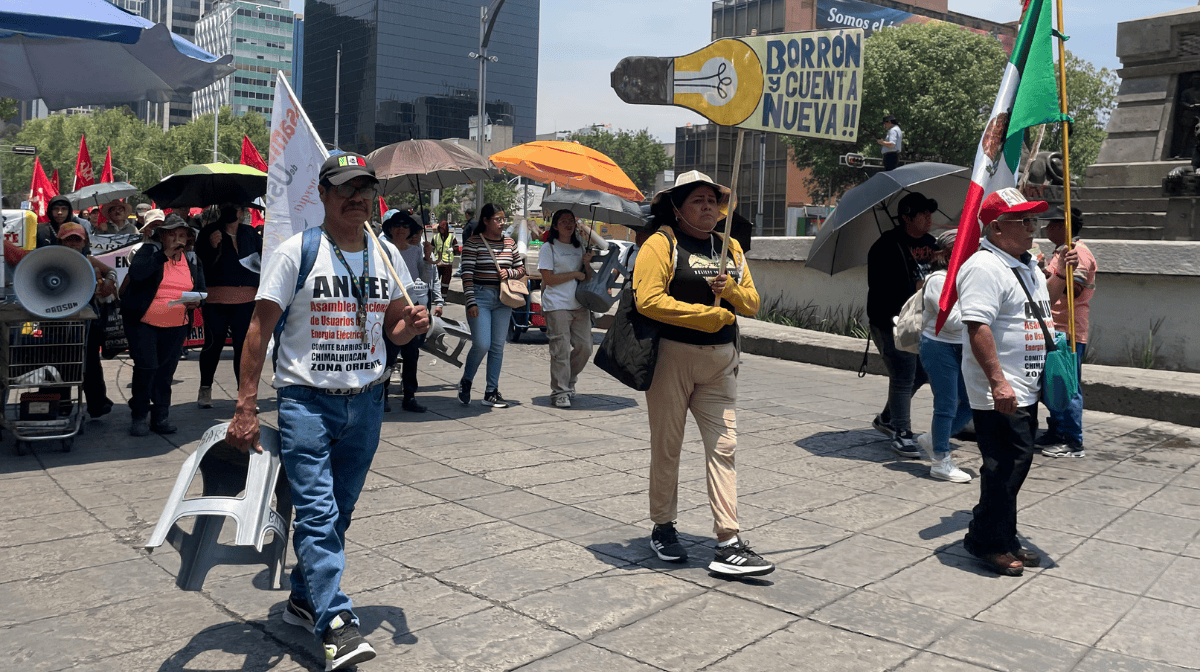
Despite recent federal concessions, Mexico’s national teachers’ strike continues to press for the repeal of the 2007 ISSSTE pension reform and broader changes to labor conditions amid Teacher’s Day.
“We are protesting the 2007 reform to the ISSSTE Law,” explained the Section 22 representative for MBN. “Graduates after 2008 are restricted to retiring under an individual account system that ties their pension eligibility to an age beyond 65, an age at which most teachers are no longer physically able to continue classroom duties.”

The reform shifted the pension model from a solidarity-based structure to individual accounts managed by Afores, reports El Economista. Teachers argue this system produces retirement benefits that fail to reflect the realities of their profession. ISSSTE’s pension assets, currently over MX$707.6 billion (US$36.24 billion) are affected by market performance, causing uncertainty for retiring educators. Housing fund resources through Fovissste total MX$251.6 billion.
“Graduates from teacher training colleges after 2008 no longer qualify for proper pensions and must rely on an individual account scheme, resulting in uncertain and inadequate retirement benefits tied to an unrealistic retirement age for classroom workers,” explained a teacher from Section 22 in Oaxaca, CNTE, for MBN.
In parallel, teachers are voicing dissatisfaction over wage conditions. While the federal government announced a 10% salary increase, retroactive from Jan. 1 and finalized in September, some educators report no meaningful improvement in base pay.
For MBN, Francisco Falcón, PE Teacher from Mexico City, shared that he earns less than MX$8,000 monthly despite holding contracts across four schools, falling short of the MX$16,000 minimum wage cited during the administration of President López Obrador.
According to IMCO, in Mexico, teacher salaries increase progressively with the level of education taught, ranging from an average of MX$11,134 (US $570.58) per month for preschool educators to MX$26,728 (US$1,369) for those in higher education. Yet, this upward salary trend is accompanied by significant gender disparities.
While women earn more in secondary education, men out-earn women in most other categories, with the highest gap, 15.29%, observed at the higher education level. This suggests structural inequalities in compensation that are not addressed by current salary scales.
Teachers are also concerned about the use of their retirement contributions to support private market operations rather than ensure pension stability. Additional frustrations stem from healthcare issues within ISSSTE. María del Socorro Gutiérrez Méndez, Retired Teacher, noted prolonged waits for specialist care and reductions in pension amounts due to the use of the application of UMAs in pension payments, a mechanism that has significantly reduced the income of retired educators, resulting in losses of up to 60%.
“Healthcare services do not cover basic treatments, and specialist appointments can take six months or more,” explained Gutierréz for MBN. “To safeguard our health, we are forced to pay for private doctors and purchase medicine out of pocket,” Gutiérrez added.
In response to mounting pressure, President Claudia Sheinbaum withdrew a February 2025 reform proposal that would have recalculated pension contributions for higher-income public workers. Though the move was meant to open dialogue, CNTE has maintained its strike, organizing blockades and demanding direct negotiations.
“This national strike is not spontaneous. It is the result of years of legal, pedagogical, and social struggle. Now we are in the political phase; mobilization and negotiation are legitimate ways to demand respect for our rights,” concluded the CNTE representative.
As the strike continues, the Sheinbaum administration faces growing demands to overhaul the pension system, resolve wage disparities, and address long-standing issues affecting labor rights in the education sector.


Most popular