


Trump Threatens a 25% Tariff on iPhones Not Made in the US
 By Diego Valverde | Journalist & Industry Analyst -
Fri, 05/23/2025 - 10:15
By Diego Valverde | Journalist & Industry Analyst -
Fri, 05/23/2025 - 10:15
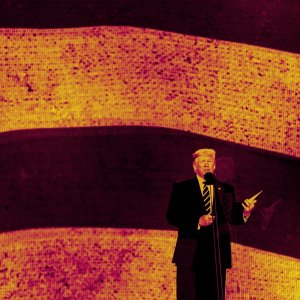
US President Donald Trump has threatened to impose a 25% tariff on Apple products if the company does not shift iPhone production to the United States. The announcement triggered an over 3% decline in Apple’s stock price during early trading on Wall Street.
“I have long ago informed Tim Cook [CEO, Apple] that I expect their iPhones that will be sold in the United States of America will be manufactured and built in the United States, not India, or anyplace else,” Trump writes on Truth Social. “If that is not the case, a tariff of at least 25% must be paid by Apple to the U.S.”
Apple has been gradually diversifying its manufacturing operations, including relocating a portion of its iPhone assembly to India. According to Cook’s statement during the company's most recent earnings call, Apple expects that “the majority of iPhones sold in the U.S. will have India as their country of origin.” This move is part of a broader strategy to reduce dependence on China amid geopolitical tensions and past disruptions caused by the COVID-19 pandemic.
Despite this diversification effort, Trump's administration has expressed explicit opposition to Apple’s overseas manufacturing strategy. During a recent Middle East trip, Trump reiterated his disapproval, stating he had asked Cook to halt further investment in Indian manufacturing facilities intended to produce US-bound devices, reports CNN. “I said to him, ‘Tim, you’re my friend. I treated you very good. You’re coming in with $500 billion.’ But now I hear you’re building all over India. I don’t want you building in India,” Trump said while in Qatar.
The potential tariff is part of Trump’s broader economic policy, which aims to reshore high-tech manufacturing. According to Scott Bessent, US Secretary of the Treasury, the administration aims to mitigate vulnerabilities in external production, particularly in semiconductors, and to encourage Apple to contribute to a more secure domestic supply chain. “One of our greatest vulnerabilities is this external production, especially in semiconductors,” Bessent tells Fox News. “We would like to have Apple help us make the semiconductor supply chain more secure.”
Apple already partners with Taiwan Semiconductor Manufacturing Company (TSMC), which has opened a US$500 billion chip manufacturing facility in Arizona. However, full-scale domestic production of iPhones presents considerable challenges. Apple’s global manufacturing relies on a robust ecosystem of suppliers and a labor force capable of delivering high-volume, precision assembly at scale. About 90% of Apple’s iPhone production and assembly is based in China, according to estimates from Dan Ives, Global Head of Technology Research, Wedbush Securities.
Apple says that relocating iPhone production to the United States would result in significant cost increases, not only due to labor costs but also because of the absence of a specialized industrial workforce. The United States does not have Apple's technical expertise and manufacturing experience, according to El País. China, meanwhile, has large complexes dedicated entirely to iPhone assembly.
Steve Jobs, Founder and Former CEO, Apple, highlighted this challenge during a 2010 meeting with Former President Barack Obama, explaining that Apple needed 30,000 industrial engineers to support its factory operations — workers that were not readily available in the US labor market. “You can’t find that many in America to hire,” said Jobs according to the biographic Steve Jobs by Walter Isaacson.
Cook has echoed this sentiment, stating in a 2012 interview that Apple’s influence would be directed at reshoring when feasible, but acknowledged the limitations imposed by infrastructure and education. “I want there to be [US-made products]… and you can bet that we’ll use the whole of our influence on this,” Cook said at the time.
The tariff threat arises despite previous exemptions Apple received under Trump’s trade policies. In earlier rounds of tariffs targeting Chinese imports, electronics such as smartphones and laptops were excluded in order to prevent inflationary impacts on consumer technology products. Nevertheless, Apple warned investors in its latest earnings report that it anticipates about US$900 million in additional costs this quarter due to newly implemented tariffs, even with the current exemptions.
Analysts suggest that moving iPhone production to the US is not economically viable in the short term. US-manufactured iPhones could cost more than three times their current price due to higher labor and infrastructure expenses, says Ives.
The policy direction under Trump also introduces regulatory uncertainties for other US tech firms operating global supply chains. The intensification of executive pressures on private firms has raised concerns regarding institutional stability, according to Wired.
Apple has yet to respond to Trump’s latest statements.
You May Like


Most popular








