

Mexico Holds a Winning Hand Amid Global Trade Storms: CAMESCOM





 By Fernando Mares | Journalist & Industry Analyst -
Mon, 01/19/2026 - 16:08
By Fernando Mares | Journalist & Industry Analyst -
Mon, 01/19/2026 - 16:08
Q: What key milestones have shaped Spain-Mexico economic relations over the past decade?
A: The economic and business relationship between Mexico and Spain is exceptionally robust, evidenced by the about 6,000 Spanish companies operating in the Latin American country, the second-highest number by nation. Mexico has also seen over US$90 billion in Spanish investment since 1999, according to the Ministry of Economy (SE).
While this relationship was historically unidirectional, with Spanish capital flowing into Mexico, a notable milestone of the last decade is the surge in Mexican investment in Spain. This shift has transformed the dynamic into a balanced, mutually beneficial partnership. Mexico now serves as the strategic gateway for Spanish firms into the North American market, while Spain has become the primary entry point for Mexican companies into the EU market. This synergy is strong across diverse sectors, including agribusiness and food, energy, infrastructure, hospitality, consumer goods, and construction. This new era of equilibrium ensures that the relationship continues to yield significant value for businesses in both countries.
Q: What have been the main milestones achieved in the bilateral business exchanges and trade over 2025?
A: Without a doubt, the most significant advancement is the Modernized Global Agreement between the European Union and Mexico. Beyond being a EU nation, Spain serves as the primary gateway to the region for Mexican firms and remains the most significant source of EU investment in Mexico, as the majority of EU capital in the country is Spanish.
In terms of trade, Germany and Spain stand out as Mexico’s most prominent EU partners. The strength of this relationship is undeniable, and the updated trade agreement will unlock vast new possibilities through 2026, 2027, and beyond. Following the final refinements made during 2025, the entry into force of this agreement will provide a powerful new impetus for bilateral growth in the coming years.
Q: What key expectations surround the new free trade agreement between Mexico and the European Union?
A: In recent years, we have seen a significant influx of small, highly sophisticated Spanish firms offering specialized technological solutions. While the major Spanish corporations are already established and committed to Mexico, the future lies with SMEs that focus on environmental and digital innovations.
We are seeing a new wave of arrivals providing cutting-edge solutions in areas such as digital healthcare, restaurant reservation systems, and AI. This marks a shift from the early 2000s, when large Spanish firms arrived and scaled up to become major employers. Modern trends require developers and researchers who can quickly enter the market and establish a widespread presence across the country through niche technological applications.
Q: What programs is CAMESCOM implementing to support Spanish and Mexican SMEs and startups in their expansion efforts?
A: While major corporations possess extensive departments for market analysis and commercial strategy, SMEs face a steeper learning curve when entering a foreign market. Navigating local business customs, identifying growth opportunities, and understanding the practicalities of doing business can be daunting.
CAMESCOM serves as a vital landing strip for these companies, providing the essential how-to and a foundational networking bridge. We offer basic yet critical services, from navigating tax registration (RFC) to facilitating early professional contacts. Within our ecosystem, large established firms act as tractors for newcomers; we often recommend that an SME secure its first contract with a major Spanish firm already in Mexico to gain stability while getting used to the local market before expanding to work with Mexican companies.
Conversely, we are seeing an increasing number of inquiries from Mexican companies looking to diversify. Traditionally, Mexican firms focused exclusively northward for internationalization, but they are now seeking alternatives. We facilitate this by connecting them with business organizations and chambers in Spain to ensure they have the same solid foundation for their EU expansion.
Q: What economic and regulatory challenges act as barriers to Spanish companies operating in Mexico?
A: The challenges Spanish companies face in Mexico are identical to those faced by Mexican firms or any other international investor. The primary challenges involve the need for long-term legal certainty and the requirement for public investment to stimulate and complement private capital. Furthermore, society needs to view the business community as a strategic ally.
Despite these challenges, the balance between risk and opportunity in Mexico remains highly favorable. With a population of 130 million, a highly open commercial framework, and its strategic integration into North America, Mexico offers immense potential in natural resources, financial systems, and infrastructure development.
The most accurate indicator of the economic climate is that FDI in Mexico remains strong, reaching record levels. This demonstrates that international investors, among whom the Spanish play a significant role, accounting for 15% of all foreign capital received by Mexico this year, view the country through a long-term lens. These investors see Mexico as a stable environment for investment over the next 15 to 20 years. While domestic investment may be more focused on short-to-medium-term considerations and requires further acceleration, the international perspective remains clear: Mexico is a country worth betting on for the long term.
The key requirements for growth are certainty and stability. To use a metaphor: foreign investment in Mexico is like a car traveling on a highway at 90km/h. The car is performing well, but it could reach 110km/h if there were fewer obstacles and a consistent supply of clean energy to fuel its progress.
Q: Mexico remains the third-largest recipient of Spanish FDI. What new sectors present the greatest opportunities for Spanish capital?
A: When we align Spain's global expertise with Mexico’s developmental needs, we find a perfect synergy in several areas. Spain is a global reference in fields where Mexico is poised for significant growth, such as infrastructure development and renewable energy generation. Our leadership in the financial sector also supports the ongoing need for increased banking penetration across the Mexican population.
Beyond these traditional pillars, there is immense potential for collaboration in digital healthcare, technology startups, and specialized tech developments. Spain’s world-class experience in tourism remains highly relevant, as does its expertise in the electrification of the automotive industry and all initiatives related to environmental sustainability. We need to bridge Spanish innovation with Mexican opportunities to drive progress in the sectors most vital to Mexico's future.
Q: How is CAMESCOM adapting its initiatives in Mexico to remain relevant amid global tariff disputes and regional trade tensions?
A: Our primary role is to provide clear information regarding the evolving negotiations of the North American trade framework and the impact of US regulatory policy on Mexico. In doing so, we aim to provide an objective outlook on the current landscape.
The overarching goal is to demonstrate that, amid global tariff storms, Mexico is positioned remarkably well compared to the rest of the world. Mexico is poised to emerge as one of the primary winners in this new commercial era. When analyzing the tariffs affecting other geographies, such as Northern Europe or Asia, it is evident that Mexico holds a distinct competitive advantage. It is increasingly clear that for Spanish and EU firms to effectively serve the North American market in the coming years, they must be physically established in Mexico.
Q: What are CAMESCOM's top priorities guiding the chamber's direction over the next five years?
A: During the next five years, CAMESCOM will focus on providing solutions and business development support primarily for startups. These emerging companies represent a different profile from the traditional multinational; they require a different approach to securing contracts and scaling operations in a new market.
When a startup arrives in Mexico, it must quickly identify potential clients, secure financing, and access a robust network that supports its initial steps. CAMESCOM will evolve to continue supporting established firms, while simultaneously serving as the primary gateway for young entrepreneurs developing innovative projects that could provide unimagined solutions for the country.
Our strategy is shifting from a passive approach to a proactive search. Instead of waiting for these neo-businesses to discover opportunities themselves, we will actively seek them out in Spain. We will provide them with a comprehensive ecosystem that bridges the gap between financing, client acquisition, and the practicalities of doing business in Mexico.
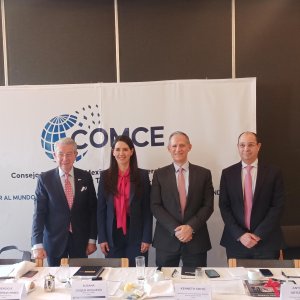
The Spanish Chamber of Commerce at Mexico (CAMESCOM) is a 135-year-old non-profit organization that works to strengthen economic and business ties between Spain and Mexico. The chamber promotes investment, facilitates trade, and supports companies through events, programs, and strategic partnerships, helping them navigate both markets and grow cross-border opportunities.
You May Like



Most popular








