


Mexico’s Tourism Industry Adds 127,000 Jobs in 2Q25
The tourism industry in Mexico remains the top employer of young people and the second of women in the country, reinforcing its role in economic inclusion. Mexico’s tourism sector generated 127,334 new jobs during 2Q25, marking a 2.6% increase compared to the same period in 2024, reported the Ministry of Tourism (Sectur).
Minister of Tourism Josefina Rodríguez Zamora said that by the end of June 2025, the sector employed 4.98 million people, accounting for 9.2% of the country’s total workforce. Compared to 1Q25, the industry created 18,113 additional jobs, representing a quarterly growth of 0.4%.
The figures highlight a sustained upward trend in tourism-related employment. When measured against 1Q20, tourism employed 500,830 more people, an increase of 11.2%.
Rodríguez Zamora emphasized that the creation of over 127,000 jobs underscores tourism’s role as a driver of economic growth and inclusion in Mexico. “The sector holds a strategic place in advancing labor inclusion,” Rodríguez Zamora said.
Meanwhile, industry leaders continue to debate labor reforms. At a forum in Cancún in July, Octavio de la Torre, president of the Confederation of National Chambers of Commerce, Services and Tourism (Concanaco), opposed the proposed reduction of the workweek to 40 hours, arguing the sector is not yet prepared to adjust to an eight-hour cut in weekly work schedules.
In related news, MBN reported that between January and June 2025, Mexico welcomed 23.4 million international tourists, a 7.3% increase over the same period in 2024, reported the Ministry of Tourism. Air arrivals totaled 12.1 million, down 16% year-over-year, while land entries rose 18.5% to 1.9 million. These figures exclude same-day visitors and cruise passengers.
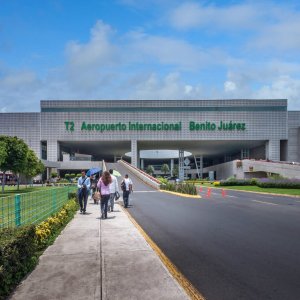
Mexico’s airports handled 94.5 million passengers in the first half of the year. Mexico City International Airport (AICM) led with 21.6 million passengers, followed by Cancun with 15.6 million and Guadalajara. Other key airports included Monterrey, Tijuana, Los Cabos, Puerto Vallarta, Merida, Leon, and Felipe Ángeles (AIFA).
Visitors from the US rose 2.4% to 7.3 million, including 1.2 million in June, while Canadian tourists increased 11.8% to 1.6 million. Air connectivity with the United States expanded to 4.6 million seats (+5.5%), making the US–Mexico corridor the world’s second-busiest international route after Spain–UK. Total tourist spending reached US$16.68 billion (+6.3%). Cruise passenger traffic increased 9.6% to 5.7 million, while female traveler arrivals grew 1.8%.
You May Like







Most popular








