


Airlines Outpace Governments in SAF Targets for Aviation
 By Óscar Goytia | Journalist & Industry Analyst -
Fri, 11/22/2024 - 15:13
By Óscar Goytia | Journalist & Industry Analyst -
Fri, 11/22/2024 - 15:13
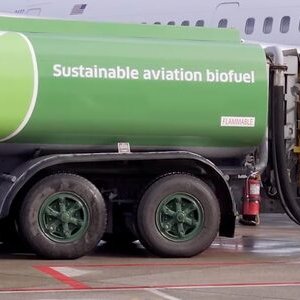
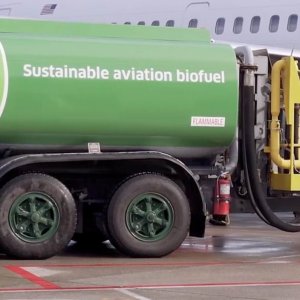
The global push to decarbonize aviation is gaining traction, with sustainable aviation fuel (SAF) emerging as a pivotal solution. However, a growing gap exists between government-mandated SAF demand and the more ambitious targets set by airlines.Insights from aviation intelligence firm IBA, developments at COP29, and regional initiatives in the UK and Hong Kong highlight both challenges and opportunities for SAF.
At COP29 in Baku, the International Civil Aviation Organization (ICAO) underscored SAF's critical role in reducing aviation's carbon footprint. ICAO estimates that scaling SAF production will require approximately US$3.2 trillion by 2050, urging greater investment.
“Globally, 136 airports now distribute SAF, and over 250 refineries have announced SAF production,” noted ICAO.
Current global SAF production is approximately 1 million metric tons (MT) annually. However, IBA forecasts rapid growth to 26.8 million MT by 2030, with Asia-Pacific leading the way, driven by facilities such as Neste’s Singapore plant. Europe’s capacity is also expected to expand from 0.42 million MT to 2.2 million MT by 2025.
"Market-based measures will be essential for scaling SAF production and stimulating technology investments," said Jennifer Stanley, ESG Manager, IBA.
In the UK, a new SAF mandate will take effect on Jan. 1, 2025, requiring 2% of jet fuel demand to come from SAF, increasing to 10% by 2030 and 22% by 2040. This policy raises critical questions about production scalability, cost-sharing, and long-term sustainability.
In Hong Kong, Cathay Pacific, HSBC, and EcoCeres have partnered to purchase 3,400 MT of SAF derived from traceable used cooking oil, aiming to reduce lifecycle carbon emissions by 11,800 MT—equivalent to the emissions of 10,000 roundtrip economy-class flights between Hong Kong and London.
“Our goal is to establish a SAF usage target next year to significantly cut emissions in aviation,” said Lam Sai-hung, Secretary for Transport and Logistics in Hong Kong.
Despite its potential, SAF faces significant hurdles. High production costs, limited feedstock availability, and insufficient infrastructure present obstacles. Concerns over the environmental impact of feedstock sourcing, such as biodiversity and water use, also persist. ICAO highlights the importance of investment in green hydrogen and renewable electricity for producing power-to-liquid SAF, which currently lacks adequate infrastructure.
Nonetheless, IBA projects a surge in SAF demand, with combined mandated and targeted volumes rising from 1 million MT in 2024 to 19.1 million MT by 2030.
You May Like



Most popular








