


CANAERO Calls for TUA Revenue Exclusivity for AICM Maintenance
 By Óscar Goytia | Journalist & Industry Analyst -
Fri, 04/12/2024 - 17:39
By Óscar Goytia | Journalist & Industry Analyst -
Fri, 04/12/2024 - 17:39
The National Chamber of Air Transport (CANAERO) has urged that revenues from the Airport Usage Fee (TUA) at the Mexico City International Airport (AICM) should be earmarked exclusively for the airport's maintenance.
Diana Olivares, CANAERO's President, stressed the crucial need to allocate these funds solely to the airport's upkeep rather than diverting them for other purposes, such as settling debts stemming from the Texcoco project cancellation.
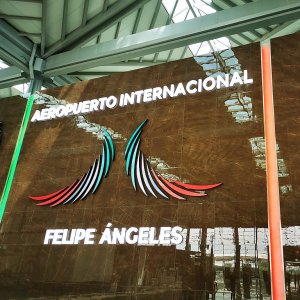
"We need the TUA revenue, which comprises approximately 50 to 60% of the ticket, to be allocated directly towards the airport's maintenance. We need a robust airport despite the existence of the Felipe Ángeles International Airport (AIFA), as the former will continue operating and requires substantial funding,” stressed Olivares.
In discussions at the Tianguis Turístico, airlines are formulating a proposal to ensure connectivity within the Mexico City Valley, encompassing AICM, AIFA, and Toluca airports, each serving specific traveler segments.
Olivares highlighted ongoing aviation priorities, including policy development, sustainability initiatives with Sustainable Aviation Fuels (SAF), and optimizing taxation to foster technological innovation.
Acknowledging recent operational changes at AICM, Olivares noted improvements in passenger experience and airline punctuality due to reduced operations. However, she emphasized the necessity of investments to restore previous operational levels, expressing confidence in recovering the 52 lost operations by late 2024 or early 2025.
Looking ahead, Olivares outlined key tasks for the incoming government, including resolving AICM infrastructure issues and enhancing ground connectivity with AIFA, to accommodate growing service demand.
CANAERO has initiated dialogues with presidential candidates' teams, focusing on technical aspects to enhance national and international connectivity.
Recent data from AICM shows a 3.64% decrease in passenger traffic during the first two months of the year compared to the same period in 2023. This decline, totaling 7,283,455 passengers, resulted from a reduction in hourly air operations mandated by the Federal Civil Aviation Agency (AFAC)to address terminal building occupancy saturation.
As a result, the number of hourly air operations decreased from 52 to 43, with a total of 53,054 operations recorded in the first two months of the year, representing an 11.76% decrease compared to the previous year.
You May Like



Most popular








