


Chinese EV Makers Rally as EU Weighs Tariff Alternatives
Shares of Chinese electric vehicle manufacturers rose on Jan. 13 after the European Commission said it is considering a minimum pricing system to replace import tariffs on Chinese-made EVs, a move investors view as supportive of margins and sales growth. BYD shares climbed as much as 4.8% in Hong Kong trading, Xpeng gained 5.3%, and Shanghai-listed SAIC Motor advanced up to 3.6%, according to market data.
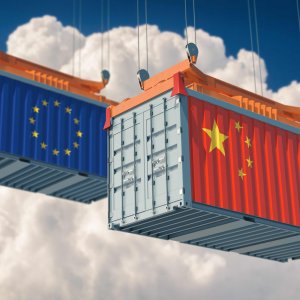
Under the proposal outlined by the European Union, Chinese exporters would be required to submit plans detailing minimum import prices, annual volume limits, and future investments in Europe for review by the Commission. The mechanism would replace tariffs imposed in 2024 on Chinese-made EVs, which reach as high as 35%. Those duties followed a yearlong EU investigation that concluded Chinese automakers benefited from state subsidies, giving them an unfair competitive advantage.
“In general, this should be positive for improving ties between the EU and Chinese automakers and could allow European manufacturers such as Volkswagen to use China as an EV export hub,” said Eugene Hsiao, head of China equity strategy, Macquarie Capital Ltd. He added that any minimum pricing framework would need sufficient flexibility to accommodate differences across models and vehicle categories.
Analysts said the proposal could support the expansion of Chinese EV makers in Europe, even as companies continue to localize production to mitigate trade risks. “Pending further details, we view this as constructive for the growth of Chinese EV sales in Europe,” Morgan Stanley analysts wrote in a note. “Key players such as BYD, SAIC and Geely stand to benefit.”
China exported 579,000 battery electric vehicles to Europe in the first 11 months of 2025. BYD, SAIC and Zhejiang Geely Holding Group each accounted for roughly 10% to 15% of those shipments, according to Morgan Stanley estimates. The average price of China-made EVs sold in Europe was about €25,000 (US$29,140), compared with an overall average import price of roughly €30,000 (US$35,000) for battery electric vehicles.
The potential policy shift comes as the EU seeks to stabilize trade relations amid broader geopolitical tensions and mounting pressure to protect its domestic auto industry. European automakers are facing intensifying competition from Chinese manufacturers offering lower-priced EVs not only in Europe, but across global markets.
The minimum price proposal could also affect non-Chinese brands that manufacture EVs in China, including Tesla, which are currently subject to the same tariff regime. Negotiations between Brussels and Beijing have continued since the tariffs were introduced, as both sides seek to avoid broader trade retaliation. China has previously responded by targeting European sectors such as dairy, pork and brandy.
Market reaction suggests investors view the proposal as a step toward reducing uncertainty for Chinese automakers operating in Europe. The announcement also comes as Mexico considers imposing tariffs of up to 50% on vehicles from China, a move that could force at least half of the more than 30 Chinese automotive brands operating in the country to exit.
You May Like


Most popular








