


EU Ponders Chinese EV Tariffs Amid Growing Trade Tensions
 By Óscar Goytia | Journalist & Industry Analyst -
Thu, 07/04/2024 - 10:59
By Óscar Goytia | Journalist & Industry Analyst -
Thu, 07/04/2024 - 10:59
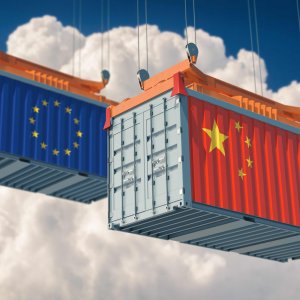
European Union (EU) members are divided over the decision to impose additional tariffs on Chinese-manufactured electric vehicles (EVs) as Beijing threatens retaliatory measures.
Germany, with significant automotive industry stakes in China, opposes the proposed tariffs. According to a government source, Germany's carmakers derived a third of their sales from China last year. Conversely, France remains a strong proponent of the tariffs. A recent informal poll by Reuters indicated that many EU countries are still assessing the implications of the trade dispute.
The issue will be subjected to an advisory vote in the coming weeks, marking the first official gauge of support for the European Commission’s (EC) initiative. This investigation is notable as it was launched without an industry complaint, a first for the Commission. On Jul. 4, the EU is expected to confirm provisional duties of up to 37.6% on Chinese brands such as BYD and Geely, as well as on China-made models from Tesla, BMW, and other Western automakers.
Analysts predict that these tariffs could result in billions of dollars in new costs, potentially hindering the expansion of these carmakers in Europe. The EU members will also vote in October on whether to implement multi-year tariffs following the investigation. A "qualified majority" of at least 15 countries representing 65% of the EU population is needed to block the proposed tariffs. France, Italy, and Spain, representing 40% of the EU population, have signaled their support for the tariffs.
Spain's economy ministry stated, "Europe must defend itself if our companies are harmed and do not compete on equal terms." However, countries like the Czech Republic, Greece, Ireland, and Poland are still undecided, while Belgium's caretaker government and the recently formed Dutch government are also yet to finalize their positions.
Germany has emphasized the necessity for a negotiated resolution with Beijing. German automakers argue that tariffs would have adverse effects, outweighing potential benefits. In a final attempt to influence the outcome, Germany's auto association VDA urged Brussels to reconsider the tariffs, highlighting that increased EV costs could undermine the EU’s goal of achieving carbon neutrality by 2050. Tesla has already indicated that it will raise prices in response to the tariffs.
The European Commission maintains that the tariffs aim to address unfair subsidies such as cheap loans, land, and raw materials provided to Chinese manufacturers, rather than excluding them from the market. The Commission asserts that these measures are intended to ensure a level playing field.
Beijing has warned of possible retaliatory tariffs on EU exports, including cognac, pork, and luxury cars. The proposed tariffs could also provide the EU with leverage in negotiations with Beijing, potentially encouraging producers to manufacture within the EU.
Hosuk Lee-Makiyama, director, European Centre for International Political Economy, stated, "Clear majorities either way could embolden tariff opponents or supporters. Final positions at the end of the investigation will depend on what Beijing offers in negotiations." He added, "If we go to a vote then, it means negotiations have failed."
The EV investigation could mark the beginning of a more stringent EU stance on Beijing, reflecting concerns over China's state interference and subsidies. A comprehensive 712-page report released in April details these concerns and highlights a broad range of industries affected, including semiconductors, telecom equipment, and renewable energy.
You May Like


Most popular








