


Japan Deploys Passenger Aircraft to Track Climate Changes
 By Óscar Goytia | Journalist & Industry Analyst -
Thu, 12/18/2025 - 14:00
By Óscar Goytia | Journalist & Industry Analyst -
Thu, 12/18/2025 - 14:00
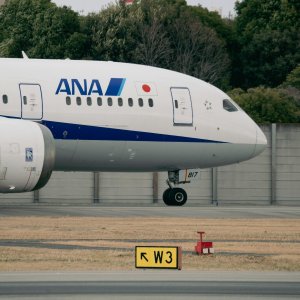
ANA and the Japan Aerospace Exploration Agency (JAXA) are expanding the use of sensors installed on commercial aircraft to enhance the monitoring of greenhouse gas emissions, integrating aviation-based measurements with satellite data to address gaps in climate observation. The initiative has moved from testing to active operation on a modified Boeing 737 operating regular domestic routes in Japan, according to a joint statement from the airline and the space agency.
The sensor system, tested since 2020, is designed to measure atmospheric gases, including carbon dioxide, at a level of detail that can exceed some satellite-based observations. The equipment is installed in a modified section of the aircraft and operates during normal commercial flights, enabling frequent and repeated data collection over populated areas and established air corridors.
In the joint statement, ANA and JAXA said the system is intended “to track gases such as carbon dioxide and provide more detailed measurements than some satellites.” The organizations said the transition from testing to regular operation marks a step toward operational use of commercial aviation assets for environmental monitoring.
ANA and JAXA plan to equip an additional domestic aircraft with a similar sensor package. The airline is also evaluating ways to use the resulting data commercially, signaling potential applications beyond research and regulatory reporting. ANA said it is “studying methods to generate revenue from the data,” though it did not specify potential customers or business models.
The project reflects broader efforts by governments and companies to improve emissions monitoring as regulatory and disclosure requirements expand. Satellite systems remain a primary tool for global observation, but they can face limitations related to resolution, coverage, cloud interference and revisit frequency. Aircraft-based sensors can complement satellites by providing high-resolution measurements along flight paths and repeated observations over the same regions.
JAXA said the collaboration with ANA will allow the agency to integrate aircraft data with satellite observations to improve accuracy. “By combining satellite observations with more detailed aircraft data, we can achieve greater precision, particularly in urban areas,” JAXA said. Urban regions are among the most challenging environments for emissions monitoring due to concentrated sources, complex airflow patterns and infrastructure density.
Aircraft-based measurements can help address known data gaps, especially over cities and industrial regions where emissions are concentrated and where satellite data alone may be insufficient. Frequent flights allow for temporal resolution that can capture daily and seasonal variations, supporting more accurate modeling and verification.
ANA, Japan’s largest airline, has not disclosed how many sensors it ultimately plans to deploy across its fleet or when additional aircraft will be equipped. JAXA also has not released technical specifications of the sensors or details on data access and sharing. However, both organizations have emphasized the role of collaboration between the aviation and space sectors in improving climate observation infrastructure.

Most popular








