US DOT Clears Southwest Fine Amid Airline Deregulation Shift
 By Óscar Goytia | Journalist & Industry Analyst -
Fri, 12/12/2025 - 12:55
By Óscar Goytia | Journalist & Industry Analyst -
Fri, 12/12/2025 - 12:55
The Trump administration’s latest regulatory actions have extended a deregulatory trend that is reshaping oversight of the US airline industry. On Dec. 5, 2025, the Department of Transportation (DOT) forgave the remaining US$11 million of a civil penalty imposed on Southwest Airlines over its 2022 operational collapse. The decision followed two earlier moves: the withdrawal of a Biden-era rule that would have required airlines to provide cash compensation for controllable delays and cancellations, and the postponement of key provisions of the proposed Wheelchair Rule until at least late 2026.
Taken together, these decisions mark a significant shift in airline accountability and consumer protection frameworks, while aligning closely with industry lobbying priorities expressed during public-comment periods.
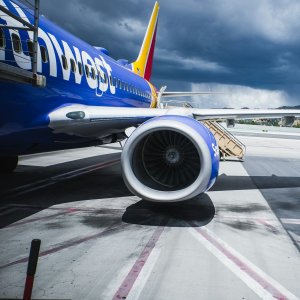
Southwest Airlines had been fined US$140 million in December 2023 after the DOT determined that the carrier failed to provide timely refunds, accurate flight-status notifications, and adequate customer service during its 2022 disruption. The episode resulted in more than 17,000 canceled flights, stranded an estimated 2 million passengers during the holiday travel period, and generated up to US$825 million in revenue losses and penalties for the airline.
Southwest had agreed to pay US$35 million to the US Treasury and completed two US$12 million installments in 2024 and 2025. The final US$11 million payment was due in January 2026. Instead, the DOT issued a consent order granting the airline a US$11 million credit, citing Southwest’s US$112 million investment in improving network operations, on-time performance, and regulatory compliance. The department said the resolution was in the “public interest.”
On Nov. 17, 2025, the DOT formally withdrew a proposed rule that would have mandated cash compensation for passengers whose flights were canceled or significantly delayed for reasons within airline control. Under the Biden administration’s proposal, airlines would have been required to pay up to US$300 for domestic delays of three to six hours and up to US$775 for delays of nine hours or more.
The DOT said the withdrawal was based on two Trump-era executive orders: Unleashing Prosperity Through Deregulation and Ensuring Legal Governance and Implementing the President’s Deregulation Initiative “Government Efficiency.”
Industry leaders had openly signaled expectations that a second Trump administration would remove such requirements. Two weeks after the 2024 election, Delta Air Lines CEO Ed Bastian said Trump would be “a breath of fresh air” after what he called “overreach” under the Biden administration.
Critics argued the rule’s withdrawal reflected industry influence. Former Transportation Secretary Pete Buttigieg wrote, “Our billionaire president put an airline lobbyist in charge of the Department of Transportation… so no, it is not a surprise.” Current Secretary of Transportation Sean Duffy previously worked as a lobbyist for the airline sector.
On Sept. 30, 2025, the DOT postponed implementation of major provisions of the Biden administration’s proposed Wheelchair Rule until at least Dec. 31, 2026. The rule would have enabled easier enforcement of penalties for damaged wheelchairs and mobility devices, mandated annual airline staff training and required airlines to promptly reunite passengers with misplaced or delayed devices.
More than 15,000 wheelchairs and mobility devices are damaged by airlines each year, according to DOT data.
You May Like


Most popular