


Drought, High Temperatures Slash Mexico's Bean Production in 2023
 By Eliza Galeana | Junior Journalist & Industry Analyst -
Mon, 08/12/2024 - 15:22
By Eliza Galeana | Junior Journalist & Industry Analyst -
Mon, 08/12/2024 - 15:22
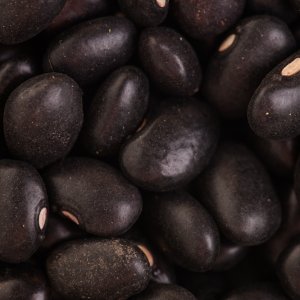
Bean production in Mexico plummeted in 2023 due to extreme temperatures and severe drought, forcing the country to rely on record-high imports to meet domestic demand. Despite recent rains, experts warn that the damage to the crop cycle is already significant.
Victor Villalobos, Minister of Agriculture, reported that bean harvest was one of the most affected by drought in 2023. Being a crop highly dependent on irrigation, bean planting was hampered by the extreme temperatures recorded in various regions of Mexico. “Agriculture is a risky activity and is 70% dependent on rainfall,” Villalobos stated.
The national production decline in 2023 reached 723,642t, a 56% decrease compared to 2022, when 1.2Mt were harvested, according to reports from the Ministry of Agriculture and Rural Development (SADER). In this regard, it was necessary to resort to imports to meet domestic demand.
In 2023, Mexico set a record for bean imports, with 313,000t, equivalent to nearly one-third of national consumption, valued at US$369 million. The main exporting countries were the United States, Canada, Argentina, China, Guatemala, and Spain. This figure represented a 231.5% increase in purchases from abroad compared to 2022, according to data from INEGI.
Similarly, during 1H24, imports totaled 232,913t, a 143% increase from January to June of the previous year, according to figures from the Agricultural Markets Consulting Group (GCMA). During this period, the United States, the primary supplier of the legume, sent 178,237t, mainly from Colorado, North Dakota, and Idaho.
Héctor Hernández, President, the Bean Product System, explained that of the total hectares planted in Chihuahua, around 12,000 are irrigated, and the rest are rain-fed. “This year it has rained, but the bean cycle is already over. It is possible that if it rains this week, some producers may still bet on beans; otherwise, they will have to wait to see if it rains to plant oats,” stated the bean growers' leader.
The specialist highlighted that despite the rains this year, recent ones have not benefited all regions of the state due to the intensity and lack of consistency of the water. So far, 30,000ha have been planted, possibly reaching 40,000ha if the rains continue. “If it keeps raining, we could obtain an average of 1t/ha,” underscored Hernández.
In Durango, there are 220,000ha allocated for bean planting throughout the state, of which 180,000ha were planted this year. Rubén Ibarra, President, State Bean Product System, highlighted that the intensity of the rains has affected the plants, requiring greater effort from producers to safeguard their crops. “There is so much water that it is like strangling the plant, so the producer has to keep loosening the soil so it softens and the root can keep growing," Ibarra declared.
In Zacatecas, between 77% and 80% of the ha intended for bean cultivation were planted, reaching 500,000ha. Fernando Galván, Leader, Bean Growers' Organization in the northern part of the state, explained that this is due to the high price of inputs and the lack of support from state and federal governments. “What has been planted is doing well; work is already underway, and we hope that it will rain again for the crop to develop,” he said.
Hernández emphasized the importance of consuming beans, as they are considered a superfood, with high levels of protein, minerals, antioxidants, and other nutrients. He also mentioned that the current average consumption of beans is 7kg per year, compared to 30 years ago when it was double, according to data from the 2024 Agri-Food Outlook published by the Agricultural and Fisheries Information Service (SIAP).
During the second National Congress of Agricultural Health and Safety, Villalobos emphasized that with the arrival of the rainy season, bean production is expected to recover before the end of the year. “We anticipate a harvest of 1.1Mt for 2024,” he said. Additionally, the minister added that Mexico has not experienced a food crisis despite the challenging times caused by drought and assured that the increase in the prices of some products is only seasonal.
You May Like



Most popular








