


Green Tech Americas Drives Innovation in Agriculture
 By Eliza Galeana | Junior Journalist & Industry Analyst -
Mon, 03/31/2025 - 23:02
By Eliza Galeana | Junior Journalist & Industry Analyst -
Mon, 03/31/2025 - 23:02
Factors such as increasing food demand, climate change, water scarcity, and international policies require innovative and sustainable solutions to ensure that agriculture remains a profitable activity while respecting the environment. Green Tech Americas, one of the leading events for promoting protected agriculture in Mexico and Latin America, brought together experts who emphasized the importance of sustainability, energy efficiency, and the impact of climate change on controlled-environment farming.
The fifth edition of Green Tech Americas took place from May 25 to 27 in Queretaro, bringing together more than 230 experts from different countries. Industry leaders highlighted the role of technology, international cooperation, and market diversification in ensuring food security amid increasingly complex environmental challenges. “Controlled-environment agriculture has proven to be an effective solution for maximizing production while minimizing environmental impact,” stated Rosendo Anaya, Queretaro’s Minister of Agricultural Development.
Alina Escobar, Group Show Director, Informa Markets, emphasized that Queretaro has become Mexico’s hub for protected agriculture, standing out for its cutting-edge infrastructure, adoption of advanced technologies, and ability to produce a wide variety of high-quality horticultural products.
According to Oscar Woltman, Consultant, Mexican Association of Protected Horticulture (AMHPAC), Mexico currently has between 11,000 and 12,000ha of greenhouses, of which approximately 2,000ha are high-tech facilities. Queretaro alone accounts for around 250ha, representing about 12% of the country’s high-tech greenhouse space, making it a key player in the industry’s development.
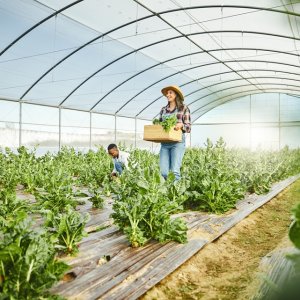
These agricultural facilities are distinguished by their integration of heating systems, CO₂ enrichment, and advanced water recycling methods. Thanks to these innovations, productivity increases significantly. For instance, a high-tech greenhouse can yield up to 70kg/m2 of tomatoes, whereas open-field production ranges between 8 and 10kg. Moreover, these systems optimize resource use, reducing water consumption by up to 80% compared to traditional methods.
Wilfred Mohr, Ambassador of the Kingdom of the Netherlands to Mexico, stressed the need for market diversification and stronger international cooperation to address the agricultural sector’s vulnerabilities. He also highlighted the modernization of the Free Trade Agreements between Mexico and the European Union as an opportunity for Mexican producers to expand exports beyond the United States.
Mohr pointed out that the updated agreement would lead to tariff reductions in the agricultural sector, facilitating the entry of Mexican agricultural products into the European market. Regarding agriculture, Mexico mainly exports avocados, limes, and other high-quality products to the Netherlands. In Latin America, Mexico is the Netherlands’ second-largest partner in investments and trade, after Brazil.
“We are living in complex global times—every day, there are new tariffs, new deadlines, new percentages. All of this creates great uncertainty. Unfortunately, this uncertainty also affects Mexico, which is highly vulnerable due to its heavy dependence on the US market. My prediction is that this will not change in the short term, so diversification is key,” Mohr stated.
According to the diplomat, this edition of Green Tech Americas welcomed 35 Dutch companies and a significant number of visitors from the Netherlands, reflecting the strong collaboration and commitment between both nations.
Santiago Ruy Sánchez, General Coordinator for International Affairs, Ministry of Agriculture and Rural Development (SADER), pointed out that technology must be accessible to all producers, regardless of their size or location. He urged all sectors to contribute to ensuring that small and medium-sized farmers can also access these advancements.
“For the Ministry of Agriculture, it is a priority that these innovations translate into opportunities for all producers, granting them access to cutting-edge technologies and more sustainable practices. Only in this way can we fulfill the aspiration of building a country where the land nourishes its people equitably and Mexico plays a key role in global food security,” Sánchez stated.
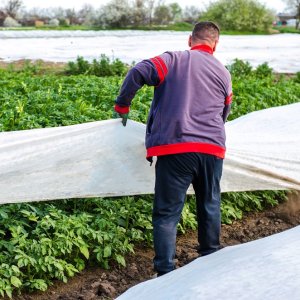
Protected agriculture in Mexico has grown significantly in recent years, reaching 77,417ha in 2022 with technologies such as greenhouses, shade nets, and macro tunnels. Key crops include tomatoes, which in 2022 covered 34.7% of the total protected agriculture area and accounted for 62% of national production; blackberries, with a production of 237,330t; cucumbers, with 6,360ha under protected systems generating 74.5% of the national harvest; and strawberries, with 6,397ha, contributing 36.9% of total production.
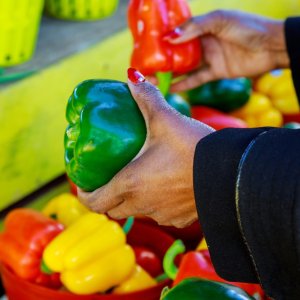
Mexico exports approximately 5.8Mt of fruits and vegetables annually, valued at US$7.8 billion. The United States is the primary destination, receiving 78% of exports, followed by Canada with 5%. The most exported products include tomatoes, which account for 55% of horticultural exports, along with cucumbers and bell peppers, each representing around 20%.
You May Like



Most popular








