Mexico Advances Plan to Reduce Cattle Methane Emissions
 By Eliza Galeana | Junior Journalist & Industry Analyst -
Thu, 12/04/2025 - 10:47
By Eliza Galeana | Junior Journalist & Industry Analyst -
Thu, 12/04/2025 - 10:47
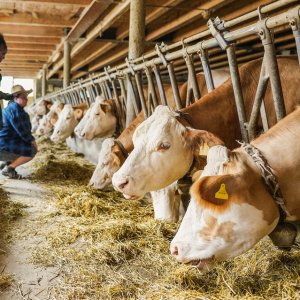
The Ministry of Agriculture and Rural Development (SADER) and the International Fund for Agricultural Development (IFAD) held the event, Cattle Ranching and Climate Change: Strategies to Reduce Methane Emissions from the Beef Cattle Sector in Mexico, with the goal of outlining a national strategy to reduce methane emissions from cattle ranching and to provide key information for the country’s climate targets.
During the event, two fundamental tools were presented: the baseline for methane emissions in the country’s cattle production systems, and a roadmap outlining potential strategies to reduce these emissions.
Xochitl Ramírez, General Coordinator of Sustainability and Climate Resilience, SADER, pointed out that the main source of methane emissions in Mexico, as in many other countries, is livestock. “IFAD’s support for Mexico to advance its strategy to reduce emissions is very important for implementing the public policy that this government is pursuing,” she emphasized.
Globally, livestock is responsible for 12% of greenhouse gas emissions generated by human activities, according to FAO data. In Mexico, of the 17% of polluting emissions generated by livestock and agriculture, 72% comes from cattle, mainly from enteric fermentation and manure management, explained Verónica Bunge, Director General of Sustainability, SADER.
Daniel Anavitarte, Director, IFAD Mexico, highlighted that all planning and implementation of the strategy must include the producers living in rural areas to maintain a sustainable focus. “The Ministry of Agriculture has laid very solid foundations in terms of technical assistance to sustain food systems through programs such as Farmer Field Schools,” he said.
Santiago Fariña, Senior Agriculture and Livestock Program Officer, Global Methane Hub (GMH), noted that it is excellent news that the Mexican government, IFAD, and GMH aim to support the implementation of win-win technologies in livestock: those that effectively increase productivity and profitability for producers, while also reducing methane emissions associated with meat and milk production.
“This meeting will allow us to design an action plan that listens to the voices of all key actors in the value chain and local communities in Mexico to achieve healthier and cleaner development,” Fariña added.
Carlos Rodríguez, Deputy Director General of Sectoral Intelligence, FIRA, stated that the first step is to communicate to financial institutions the importance of looking beyond agricultural production alone and instead financing a complete system. “It is not about a linear model of a cow that eats and produces carbon, but about a circular economy process; this is essentially what lies behind a regenerative model. That is what we ultimately want,” he explained.
Luciana Ludlow, Sustainable Landscapes Coordinator, Global Green Growth Institute (GGGI), highlighted the tools developed by SADER alongside other institutions. “I believe the multisectoral work that the government is carrying out is extremely valuable, working in a coordinated way, aligning objectives, adding efforts and resources. It provides a very clear direction for where actions and financing can be targeted,” she said.
Global Impact of Livestock Methane; Pathways for Climate Action
According to FAO, livestock is one of the main sources of methane emissions. This gas accounts for roughly 20% of global greenhouse gas emissions and traps 25 times more heat in the atmosphere than carbon dioxide. To illustrate its impact, the organization notes that if cows were a country, it would be the third-largest emitter of greenhouse gases in the world.
The impact of livestock extends beyond methane emissions. It also drives land-use change in forests and jungles worldwide, and the activity places heavy demands on water resources. “The rainforests of South America are being cleared to plant soybeans and create pasture for cattle, while on average a quarter-pound beef burger consumes around 1,695L of water,” FAO underscores.
To reduce its climate impact, the UN proposes increasing productivity across the entire value chain through techniques that increase milk yields or reduce the age at which animals are sent to slaughter. It also notes that improving animal feed and health not only boosts productivity but also reduces mortality rates.
Selective breeding for specific genetic traits, the use of additives that support digestion, and reducing food waste are also among the recommendations. Additionally, FAO suggests reducing meat consumption, but warns that the impact is limited if meat is replaced with vegetables grown in greenhouses or out-of-season fruit transported by air. “If people follow official dietary recommendations, this should lead to reduced meat consumption in wealthy countries and to lower emissions,” the organization states.
You May Like






Most popular