


Seed Industry Leaders to Analyze Plan México, USMCA Challenges
 By Fernando Mares | Journalist & Industry Analyst -
Thu, 07/24/2025 - 11:56
By Fernando Mares | Journalist & Industry Analyst -
Thu, 07/24/2025 - 11:56
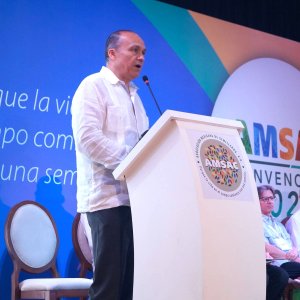
The opportunities and challenges presented by Plan México and the USMCA revision will be central topics for the Mexican Seed Association (AMSAC) 2025 convention. The association considers that addressing political, commercial, and technical challenges is key to Mexico’s seed industry, which is projected to reach US$2.3 billion by 2030.
AMSAC will hold its annual convention on Aug. 7 and 8, 2025, in Puerto Vallarta, Jalisco. The event will bring together key actors from the agri-food chain, including government officials, business leaders, and executives from companies that produce and market improved seeds.
The event will feature key figures in the sector, including Minister of Agriculture Julio Berdegué, along with officials from the National Agro-Alimentary Health, Safety and Quality Service (SENASICA), and the National Seed Inspection and Certification Service (SNICS).
The convention's agenda is divided into two main blocks. The political-commercial block will analyze the opportunities and challenges that Plan México presents for improved seed suppliers, as well as legislative trends impacting the sector and the potential effects of the upcoming USMCA review.
The technical-scientific block will feature conferences on topics such as the future of Clustered Regularly Interspaced Short Palindromic Repeats (CRISPR) technology in agriculture, trends in seed treatment technologies, and mathematical modeling for plant breeding, with presentations from specialists in these areas. “Thanks to CRISPR-Cas, new crops are being developed to provide food for developing countries in Africa and Latin America. At the same time, these technologies are enabling the development of new varieties that meet specific market demands, such as rice that reduces allergic reactions, a banana that turns brown more slowly and has longer shelf life, and soybeans that produce fewer greenhouse gas emissions during cultivation,” Mario Puente, Executive Director, AMSAC, explained in a MBN Expert Contributor piece.
According to data from the consulting firm Mordor Intelligence, the Mexican seed market was estimated at US$1.75 billion in 2024 and is expected to reach US$2.35 billion by 2030.
You May Like







Most popular








