

The Triple Challenge: Tariffs, Food Sovereignty, Agri-Food Chains




STORY INLINE POST

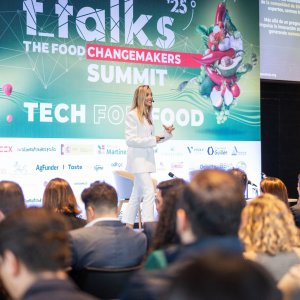


 By Patricia Toledo | Vice President of Sustainability and Corporate Social Responsibility -
Fri, 04/25/2025 - 08:30
By Patricia Toledo | Vice President of Sustainability and Corporate Social Responsibility -
Fri, 04/25/2025 - 08:30
Not all hits come from political debates or public squares. In agriculture, they arrive through trade decisions that strike at the core of national food systems. In Mexico, we have a phrase for these sudden shocks: jitomatazos—not literal tomato-throwing, but symbolic punches to an industry that sustains millions. The latest blow? A possible quota of 20.91% by the US government on Mexican tomato exports would jeopardize the stability of the agri-food chain in North America.
Mexico is no minor player in the global tomato market. It is the seventh-largest producer worldwide and the top global exporter. Mexico supplies 90% of the tomatoes imported from the United States. In 2024, Mexico produced 3.2 million metric tons and exported nearly 1.9 million, 98% of which went to US consumers.
This controversy is not new. It dates back to the 2019 Suspension Agreement, which set a minimum export price. Despite Mexico’s compliance, allegations persist, though conclusive evidence from US authorities remains absent.
Nonetheless, the economic impact is real and immediate: market volatility, supply chain disruptions, and growing anxiety among small and medium-scale farmers who lack the buffer to absorb such financial shocks.
More than a trade dispute, this situation threatens regional food security. Unilateral actions and weakly supported claims undermine the systems that ensure stable, affordable food supplies. And in the end, it is consumers on both sides of the border who shoulder the consequences.
In this context, the Mexican government has introduced a bold national strategy under its Plan Mexico initiative. President Claudia Sheinbaum announced a plan to secure food sovereignty and self-sufficiency with an initial investment ofMX$53.971 billion *US$2.8 billion) in 2025, scaling up to more than MX$83 billion by 2030. The focus: direct support to small and midsized producers of staple crops, such as corn, beans, rice, cacao, and honey.
A new initiative, "Harvesting Sovereignty," complements existing programs like "Production for Well-being" and "Fertilizers for Well-being" to strengthen the national agricultural base. A key feature is the purchase of crops from smallholders at fair prices, followed by processing and distribution through a network of "Well-being Stores" in vulnerable regions.
Among these efforts is the newly launched Frijol del Bienestar (Beans for Well-being), produced in Zacatecas, Mexico’s leading bean-producing state. With a guaranteed price of MX$27 per kilo and a target to boost production by 300,000 tons, this program aims to reduce import dependency — currently, 75% of consumed beans come from the United States — while empowering local farmers.
Faced with tariff-driven jitomatazos, the solution must be both structural and forward-looking. It’s not enough to brace for impact, we must reimagine the agricultural model to be more resilient, equitable, and shielded from unpredictable political and economic shifts. Regardless of the legitimacy of dumping claims, trade policies should never become weapons against the fundamental right of growers to compete and thrive.
A practical solution lies in establishing a North American Agricultural Resilience Framework, a trilateral mechanism involving Mexico, the United States, and Canada. This framework would promote data sharing, align fair-trade principles, and de-escalate trade disputes before they jeopardize food systems. It could include joint price-monitoring tools, binational early-warning systems for dumping allegations, and cooperative strategies to improve market access for small and medium-scale producers.
Additionally, diversifying export destinations through targeted diplomacy and trade partnerships would reduce overdependence on any single market and increase Mexico’s global leverage in agricultural trade.
This is a pivotal moment to turn crisis into clarity. Food security must not be left at the mercy of foreign trade policies. Reinforcing internal value chains, innovation, expanding global market opportunities, and building an inclusive agricultural vision are not luxuries, they are strategic imperatives.
If there’s one thing recent years have shown us, it’s that jitomatazos never arrive with a warning. But with foresight and preparation, we can transform each one into a seed of sustainable change.
In Mexico, we stand united to establish clear rules for agri-food trade. It is time to call for a reestablishment of dialogue and trust, and to find solutions that avoid impacting consumers.
You May Like


Most popular








