


CIIAM 2025 Highlights USMCA Review, Supply Chain Integration
 By Óscar Goytia | Journalist & Industry Analyst -
Fri, 10/03/2025 - 15:30
By Óscar Goytia | Journalist & Industry Analyst -
Fri, 10/03/2025 - 15:30
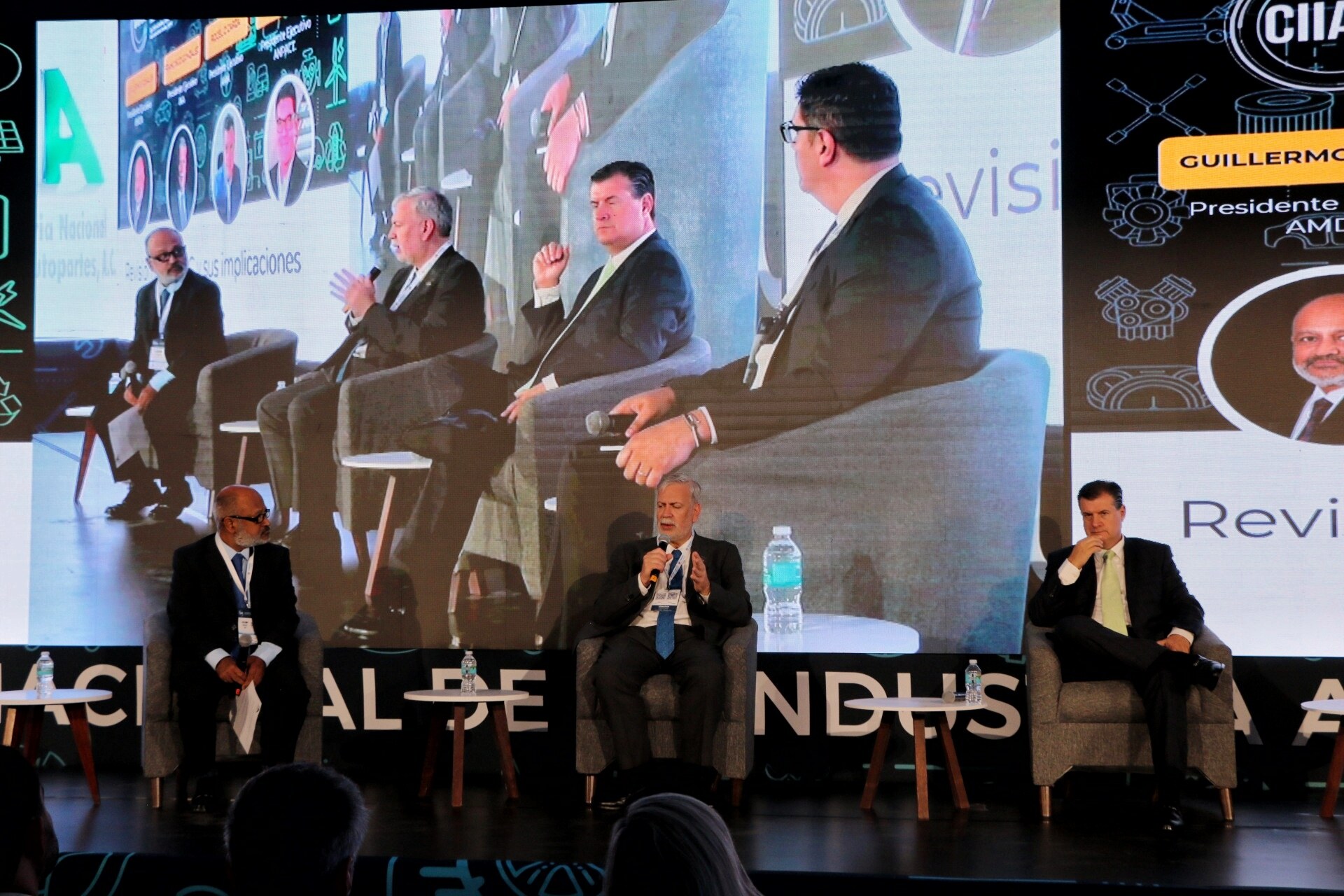
The XXIII International Congress of the Automotive Industry in Mexico (CIIAM 2025) was held on Oct. 1-2 in Mexico City, gathering leaders from government, business chambers, and OEMs to discuss challenges ahead of the 2026 USMCA review, tariff uncertainty, and the transformation of regional supply chains.
Organized by the National Auto Parts Industry Association (INA) under the theme “Strengthening Regional Supply Chains,” the event highlighted that the sector’s competitiveness depends on integration, supplier development, and adaptation to new technological and trade conditions.
Francisco González, INA’s executive president, warned of risks linked to a so-called “tariff metaverse,” where unclear global trade rules could lead to multiple duties on a single product. “For the 2026 USMCA review—not renegotiation—we must reinforce areas where we rely on external inputs. Our region’s resilience depends on strengthening small and medium-sized suppliers,” he said.
Between July 2024 and June 2025, 83% of Mexico’s automotive exports went to the United States, totaling US$137 billion. González emphasized the integrated nature of production in the region: “Mexico and the United States not only trade, they produce together. Seventy-four percent of inputs in vehicles assembled here come from the United States, while less than 5% rely on Asian suppliers.”
Alejandro Malagón, President, CONCAMIN, highlighted the sector’s economic significance: “Last year, Mexico produced a record 4.2 million light vehicles and exported 3.5 million units, nearly 6% more than the previous year. This represents 32% of total exports and 4.5% of GDP.” He added that the USMCA review will take place amid protectionist trade policies and global pressure on electrification: “The industry must remain united with clear strategies. Mexico must compete regionally with the United States and Canada.”
From the Ministry of Economy, Ismael Ortiz underscored Mexico’s trade performance: “Mexico is the 13th largest economy in the world, with total trade above US$1.2 trillion. Every minute, Mexico exports US$1.2 million, and including imports, the country trades US$3 million per minute globally.”
Customs integration was another key theme. Claudia Ávila, director general for Customs Affairs, National Customs Agency of Mexico (ANAM), emphasized the role of customs in competitiveness under USMCA rules: “One component can cross the border an average of eight times before becoming a finished vehicle, undergoing two inspections each time. Customs must facilitate trade and competitiveness, not just collect taxes.” She also noted Mexico’s long-standing trade deficit with China, where more than half of imports are intermediate goods used for export production.
CIIAM’s agenda included sessions on supply chain resilience, renewable energy for automotive manufacturing, public policy shifts, and supplier empowerment. Companies represented included Stellantis, Toyota, ZF, Iberdrola, and MEMA. INA, in collaboration with the International Finance Corporation (IFC), recognized 16 anchor firms participating in the Supplier Development Program (PDP), which has supported over 50 SMEs with training, financing, and new business opportunities. Awarded companies included Lear, Bosch, Yazaki, Marelli, and Gestamp.
The conference also addressed logistics infrastructure, digital customs, and platforms such as Catena-X for supply chain traceability. Industry leaders agreed that Mexico must raise regional content to at least 70% to fully capture nearshoring opportunities.
North America produces about 15 million vehicles and US$460 billion in auto parts annually, reflecting the scale of its integration. “The automotive industry has shown resilience in the face of global uncertainty and tariff challenges,” Malagón said.
You May Like





Most popular








