


Manufacturing Faces Talent Crunch in Innovation Era
 By Óscar Goytia | Journalist & Industry Analyst -
Thu, 07/17/2025 - 17:21
By Óscar Goytia | Journalist & Industry Analyst -
Thu, 07/17/2025 - 17:21
The manufacturing industry, particularly in sectors such as automotive and aerospace, is undergoing rapid transformation—driven by increasingly complex automation systems, digital and interconnected processes, and growing market demand for higher quality and safety at competitive prices.
Today, companies no longer compete solely on technology or production capacity, but also on their ability to attract, develop, and—most importantly—retain specialized talent and skilled labor. This includes not only advanced technical competencies but also adaptability and problem-solving skills in cross-sector environments.
In this context, manufacturers are rethinking their recruitment and training strategies to remain competitive in a dynamic global landscape, while addressing the expectations of younger generations who seek more flexible, inclusive, and socially conscious workplaces.
In the automotive sector alone, the Diálogo con la Industria Automotriz 2024 report—prepared by AMDA, AMIA, ANPACT, and INA—projects that by 2025, Mexico will need 10 times more IT professionals than in 2020, solely for the automotive industry. According to INEGI, 976,000 individuals were trained in computer science or ICT fields that year.
The same report forecasts the creation of 97 million new automotive-related jobs globally, including 2.1 million in Mexico’s supply chain and 883,000 in the auto parts sector. Meanwhile, cumulative investment in Mexico’s automotive industry reached US$23.98 billion by 2024, a 27.65% increase from 2023, according to the Automotive Investment Report by Directorio Automotriz.
The Technology–Education Gap
Global trends like nearshoring, friendshoring, and reshoring—fueled by supply chain disruptions and geopolitical tensions—have accelerated the adoption of advanced manufacturing technologies in Mexico. These include Industry 4.0 tools, such as smart factories and cyber-physical systems, aimed at optimizing efficiency and increasing productivity.
However, academic curricula are inherently reactive, often lagging behind industry needs in both development and implementation. Collaboration among government, industry, and educational institutions is essential to build a workforce that is trained, certified, and up to date.
“There needs to be a direct connection between academia and industry, which can happen through clusters and associations,” says Luciano Diorio, CEO, Grupo Hi-Tec. “Too often, what is taught in the classroom does not align with the realities of modern manufacturing.”
To bridge this gap, many companies have begun establishing in-house training centers—either on-site or via digital platforms offering basic to advanced courses.
“At GE Aerospace, we run programs like GE Girls to attract young women into STEM, host over 100 interns at any given time, and offer initiatives like the Lean Summer Experience, where students work on real projects,” says Andrés Soler, General Manager, GE Aerospace Mexico. “We also partner closely with universities in Queretaro to support student teams and curriculum development.”
Workforce Development: Industry and Academia in Sync
In Mexico, one of the most effective models for talent development is the dual education system—often called the German model—which combines classroom learning with hands-on company training. This model exists in three variations: the first splits students' time evenly between school and industry; the others focus more on either technical or administrative/engineering roles and may include on-campus company workshops or scheduled corporate visits.
“Dual education is the most effective way to integrate students into the labor market,” says Gylmar Mariel Cárdenas, Secretary of University Engagement UASLP. “The German model, which promotes collaboration between schools and businesses, has proven particularly successful.”
From Low-Value Labor to High-Value Design and Innovation
Until recently, Mexico was largely seen as a hub for low-cost labor. Production lines requiring minimal skill—often relocated to Mexico under subcontracting models—reinforced that view. However, nearshoring and the influx of new investment have shifted expectations, creating an urgent need for workforce upskilling and, in some cases, complete reskilling.
“The hardest talent to find is the technician—not quite an engineer, but someone with post-high school training who can operate machinery, perform preventive maintenance, and troubleshoot issues on the floor,” explains Ernesto Sánchez, CEO, Serauber. “Engineers may design components, but industries like instrumentation demand extreme precision and hands-on skills.”
Over the past decade, Mexico’s workforce—particularly in automotive and aerospace—has earned international recognition for its technical expertise. This has spurred the establishment of more R&D and innovation centers across the country, and demand for high-value profiles continues to rise.
“Manufacturing wages are no longer as low as they once were. Today, individuals with specialized knowledge can command much higher salaries,” says Diorio. “Now, Mexican engineers compete not only nationally, but globally.”
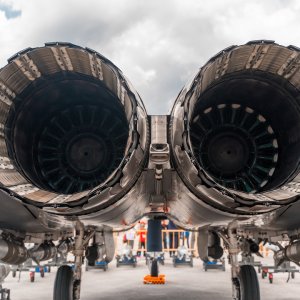
Notable examples include Ford’s Global Technology and Business Center, which operates alongside its Engineering and Product Development Center. Together, they have generated more than 252 patents—more than any other Ford division. Likewise, GE Aerospace’s Advanced Engineering Center in Querétaro designs and develops jet engines and components for the company’s global operations.
“We are now tackling global technology challenges,” says Soler. “For example, we recently co-authored a paper with a NASA engineer on hybrid propulsion modeling. We’re building the solutions of tomorrow.”
Looking Ahead: Talent Strategies in an Uncertain Trade Landscape
The evolution of talent will play an increasingly critical role as the region approaches the 2026 USMCA review—a milestone already surrounded by uncertainty. Just a year ago, Francisco González, Executive President, INA, predicted a smooth ratification. But the return of Donald Trump and his protectionist trade stance could reshape that outlook dramatically.
Beyond the economic implications, a more hostile trade environment could accelerate transformation within Mexico’s manufacturing sector—forcing companies to double down on talent development and retention to stay competitive amid shifting rules and new barriers.
Follow our MBS 2025 tag and don’t miss our coverage leading to Mexico Business Summit 2025 on October 28–29, 2025. On Tuesday, July 8, 2025, we will delve more into the opportunities for industrial parks to benefit from on-site generation.
Interested in staying ahead in the nearshoring landscape? Mexico Business Summit 2025 offers exclusive insights from leading industry experts and government officials on the key trends, risks, and opportunities fueling Mexico’s emergence as a global nearshoring powerhouse. Discover how supply chain innovations, workforce development, and sustainability strategies can strengthen your competitive edge.
Register now to secure your place and position your business at the forefront of this dynamic market: https://mexicobusiness.events/MBS/2025
You May Like




Most popular








