


The Grid Challenge: The Week in Energy
The year 2025 marked President Claudia Sheinbaum’s first full year in office, largely aligned politically with her predecessor. While her administration represented a clear continuation of MORENA’s policy orientation, the energy sector experienced a notable shift in tone where addressing a balance between grid stability and generation became the middle ground for private-public sector cooperation.
Ready for more? Here is the weekly roundup!
Grid Stability, A Problem for All to Solve: The Year in Energy
Communication between the public and private sectors became more structured, and greater clarity emerged around the new energy reform framework. The publication of secondary legislation, implementing regulations, and General Administrative Provisions across several segments of the sector helped define the new rules of the game, generating cautious optimism and a sense of relief among market participants seeking regulatory certainty.
This transition unfolded against the backdrop of a new energy model in Mexico, representing a decisive departure from the 2014 reform. However, the deployment of this new framework has been constrained by significant infrastructure limitations. As put by Gamaliel Corral Flores, CEO, GDM & MIP CINCO Gas, “Rarely do so many transformative forces converge at the same time: institutional restructuring, geopolitical tension, global supply chain realignment, technological disruption, the accelerating pace of the energy transition, and an unprecedented surge in industrial demand.”
Tariff Impact: Reshaping Mexico’s Industrial Energy Strategy
Expert Contributor and Female Leader María José Treviño, Country Manager, Acclaim Energy, writes of the energy trends that will shape Mexico’s industrial future this year. Treviño discusses that global trade has entered a period of renewed protectionism, strategic competition, and tariff-based diplomacy. For Mexico, one of the world’s most open, export-driven economies, commercial tariffs have become a critical variable shaping industrial competitiveness, supply-chain resilience, and long-term investment planning. While Mexico benefits from deep integration with North American markets under the United States–Mexico–Canada Agreement (USMCA), the global shift toward unilateral tariff actions is increasingly influencing production decisions, export flows, and broader economic stability.
CNE Authorizes Cogeneration Plants for Minsa
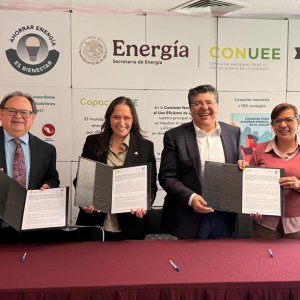
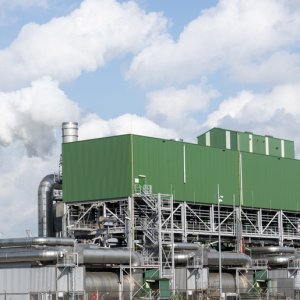
SENER has authorized Minsa to build four natural gas cogeneration plants to supply electricity to its factories and provide process gases for corn drying ovens. The permits were granted by CNE under the administration of President Claudia Sheinbaum, enabling plants in Veracruz, Jalisco, Coahuila and Sinaloa, all under the self-consumption cogeneration model.
Minsa, a leading producer of nixtamalized corn flour in Mexico with six domestic plants and two in the United States, first applied for the permit in February 2025 for a facility in Jaltipan, Veracruz. The company subsequently submitted documentation in September 2025 for the other three sites after the dissolution of CRE, at the request of the previous federal government.
Renewable Jobs Grow Amid Automation, Friction
The renewable energy sector, which employs millions of people across the world, is growing steadily. However, job growth in the sector is slowing due to automation, higher productivity, and economies of scale. This is expected to lead to fewer low-skill jobs but stronger demand for specialized, technical, and digital skills, potentially reshaping the job market across the sector.
The renewable energy sector generated 16.6 million jobs in 2024, marking a modest increase from 16.2 million in 2023, according to the ILO’s Renewable Energy and Jobs: Annual Review 2025. Solar photovoltaic (PV) technologies continue to be the largest employer, supporting 7.2 million jobs worldwide, followed by biofuels at 2.6 million, hydropower at 2.3 million, and wind energy at 1.9 million. Other sectors, including heat pumps, solid biomass, and solar heating, account for 2.6 million jobs. Despite record capacity additions, overall employment growth in renewables is slowing due to rising labor productivity, automation, and economies of scale, particularly in China, which accounts for nearly 44% of global renewable energy jobs.
China on Track to Cut Energy Emissions by 2051, Study Finds
A new study published in the journal RSC Sustainability projects that China could eliminate all air pollution and carbon emissions from energy use by 2051 if it maintains its current pace of renewable energy deployment, making it the fastest large economy on track to fully decarbonize. By contrast, the United States and India are projected to reach the same milestone only after 2140, underscoring wide disparities in national transition speeds.
Analyzing recent renewable installation rates across 150 countries, the study finds that the world as a whole is on track to eliminate energy-related emissions by 2094. Seven countries—including Laos, Estonia and Lithuania—could reach that point before 2036, while several others, such as Norway, Switzerland and Portugal, could do so before 2048.
You May Like




Most popular








