


Mexico Bolsters Power System With New Plants, Grid Upgrades
 By Andrea Valeria Díaz Tolivia | Journalist & Industry Analyst -
Tue, 07/22/2025 - 12:08
By Andrea Valeria Díaz Tolivia | Journalist & Industry Analyst -
Tue, 07/22/2025 - 12:08
Mexico’s energy sector is undergoing a robust strengthening process aimed at guaranteeing a reliable electricity supply across the country, especially during periods of peak demand driven by seasonal weather patterns according to the federal government. Both Luz Elena González, Mexico’s Minister of Energy, and Emilia Esther Calleja, Director General, CFE, have outlined a comprehensive strategy that integrates new generation capacity, as well as transmission and distribution infrastructure upgrades, to meet the nation’s growing energy needs.
At a recent morning press conference hosted by President Claudia Sheinbaum, González emphasized that one of the administration’s key priorities within the National Energy Plan is to ensure sufficient electricity for both residential and industrial consumers nationwide. She highlighted that this strategy directly responds to President Sheinbaum’s instructions to prioritize the continuity of supply during months of heightened demand, often driven by heat waves and other climatic factors. To prevent interruptions, González Escobar explained that the government focuses on addressing three main causes of outages. Two are foreseeable: first, the lack of generation capacity during peak demand periods, and second, challenges within transmission and distribution infrastructure, which act as the “highways” that carry electricity from power plants to end users. These issues are mitigated through rigorous maintenance schedules and equipment renewal programs. The third category encompasses unforeseen events such as hurricanes, earthquakes, and acts of vandalism, which authorities manage through strict emergency protocols designed to restore service promptly.
Since December 2024, the government has put in place a multi-faceted short-term strategy to enhance reliability. This includes daily monitoring by a specialized committee composed of officials from the Ministry of Energy, CFE, CENACE, and CENAGAS. This group actively tracks demand fluctuations and infrastructure conditions, maintaining close communication with state governors and private sector entities to rapidly address any issues. Maintenance operations have been optimized to keep generation plants, both public and private, operating effectively during critical periods, particularly in the summer months when demand spikes. At the same time, the transmission and distribution networks have received heightened attention. CFE manages an extensive network with more than 110,000km of transmission lines and over 1 million km of distribution lines, all of which undergo regular upkeep and risk assessments. Efforts have also focused on securing fuel supply chains to ensure no generation plant is forced offline due to fuel shortages.
These combined efforts have yielded measurable improvements. Minister González reported that the National Electricity System’s operational reserve margin, which is the extra capacity available to cover unexpected demand spikes or outages, has remained above 12% this year, twice the regulatory minimum of 6%. She underscored that maintaining this margin is essential for system reliability and security, enabling Mexico to face periods of intense energy consumption without risking blackouts.
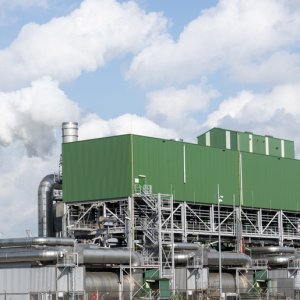
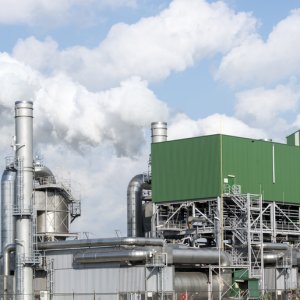
In addition to short-term measures, González highlighted ongoing and future investments in new generation infrastructure. Several combined-cycle plants, including those in Salamanca and San Luis Potosi, have recently begun operations, adding reliable and cleaner energy to the grid. Further plants planned between 2025 and 2027, such as El Sauz in Queretaro, Manzanillo, and Merida, will contribute over 6,700MW of additional clean capacity. Additionally, tenders for four more plants in Salamanca, Altamira, Tula, and Mazatlan are underway, with expected commissioning before 2030. González highlighted that the government is looking to add a total of an additional 29GW in the next three years, that would represent over a 20% increase to the current installed capacity of around 95GW.
Calleja elaborated on the utility’s integrated approach. She noted that supply security has been strengthened through coordinated efforts across generation, transmission, and distribution. The utility has improved availability rates, reporting that on July 7, it offered 30,850MW to the grid, representing over half (52.5%) of total system supply. Including other state-owned generation sources, the public sector’s share reached 65.3%. Calleja explained that a predictive maintenance strategy is critical to reducing costly, disruptive repairs by identifying and addressing faults proactively. Field teams conduct ongoing technical inspections in coordination with state governments to detect localized issues and resolve them quickly.
Regarding transmission, CFE maintains 99.5% availability for transmission lines and 99% for transformation and regulation capacity. The utility has initiated 64 expansion and modernization projects, with 45 currently under construction and 19 slated for upcoming tenders. These efforts will benefit 25 states and 15.1 million users in the near term, with a plan to expand service coverage to nearly 38.5 million users by 2030. Notable projects include the I20 transmission line, which will bolster capacity between northeastern and western Mexico, and reinforcements in the Yucatan Peninsula aimed at improving regional reliability. Infrastructure improvements have also included the installation of critical autotransformers to increase capacity on key routes such as Malpaso to Tabasco.
On the distribution side, Calleja emphasized the system’s robustness and capacity to accommodate current and future demand. With network utilization around 67% of installed capacity, the system maintains sufficient flexibility to absorb demand growth while preserving reliability.
Despite challenges posed by natural disasters and incidents such as recent outages in Guerrero, Oaxaca, and Mexicali, both officials underscored the effectiveness and speed of recovery efforts. González praised CFE’s restoration work, noting that service in Guerrero and Oaxaca was fully reinstated within approximately 95 days after disruptions caused by extreme weather events.
You May Like






Most popular








