Grid Stability, A Problem for All to Solve: The Year in Energy
 By Perla Velasco | Journalist & Industry Analyst -
Wed, 01/14/2026 - 09:34
By Perla Velasco | Journalist & Industry Analyst -
Wed, 01/14/2026 - 09:34
The year 2025 marked President Claudia Sheinbaum’s first full year in office, largely aligned politically with her predecessor. While her administration represented a clear continuation of MORENA’s policy orientation, the energy sector experienced a notable shift in tone where addressing a balance between grid stability and generation became the middle ground for private-public sector cooperation.
Communication between the public and private sectors became more structured, and greater clarity emerged around the new energy reform framework. The publication of secondary legislation, implementing regulations, and General Administrative Provisions across several segments of the sector helped define the new rules of the game, generating cautious optimism and a sense of relief among market participants seeking regulatory certainty.
This transition unfolded against the backdrop of a new energy model in Mexico, representing a decisive departure from the 2014 reform. However, the deployment of this new framework has been constrained by significant infrastructure limitations. As put by Gamaliel Corral Flores, CEO, GDM & MIP CINCO Gas, “Rarely do so many transformative forces converge at the same time: institutional restructuring, geopolitical tension, global supply chain realignment, technological disruption, the accelerating pace of the energy transition, and an unprecedented surge in industrial demand.”
Transmission and distribution networks, grid capacity, and interconnection processes remain critical bottlenecks, limiting the development of additional generation capacity, both clean and transitional, including utility-scale solar projects and natural gas–fired power plants. These constraints not only affect generation growth but also undermine system reliability and the integration of new demand centers associated with industrial expansion.
Within this context, the federal government acknowledged the scale of the challenge and outlined an ambitious plan to modernize aging energy infrastructure. CFE committed to develop key transmission and distribution projects under the recently published National Electric System Development Plan (PLADESE), the successor to PRODESEN. CFE identified 15 transmission expansion and two modernization projects across the country, with a portfolio of 66 transmission projects worth roughly US$1.9 billion scheduled for rollout in 2025–26 to ease bottlenecks and expand capacity. These include reinforcing essential corridors and deploying strategic infrastructure aimed at linking remote generation with load centers.
Despite these initiatives, grid strain remains a core challenge, with industry analysts warning that transmission has lagged behind demand growth for more than a decade. Grid congestion in industrial hubs and regions like the Yucatan Peninsula has driven up marginal prices and forced companies to ration power during peak hours, signaling that physical infrastructure is struggling to keep pace with electrification and industrial demand.
Grid modernization is not merely a matter of capacity but also of advanced technology. Mexico is increasingly focusing on smart grid tools, digital monitoring systems, and robust planning frameworks to improve operations, which is critical as renewables and intermittent resources rise. But the gap between planning and execution persists, partly due to bureaucratic delays and seasonal investment shortfalls that restrain transmission buildout.
Regulatory Reforms in 2025: Balancing State Role and Private Participation
2025 brought the secondary legislation of a significant legal reform aimed at reconfiguring the sector’s governance. Regulatory updates to the Electricity Sector Law and accompanying regulations emphasize stronger state planning and public control, addressing limited avenues for private investment in generation and grid-adjacent opportunities.
The electricity sector reforms reinforce state oversight and planning instruments intended to align long-term expansion with national policy goals, while also codifying storage services under the grid operator’s purview and enabling third-party financing for transmission projects, albeit with state asset ownership maintained.
The new Regulation of the Electric Industry Law (RLSE) presents opportunities for private investors for which “compliance with national planning instruments and social standards will be essential, while new mechanisms, such as storage permits and strategic project designation, offer potential advantages for well-positioned developers,” says Luis Arias Osoyo, CFO, AINDA Energía & Infraestructura.
These reforms reflect a policy philosophy that prioritizes national sovereignty and central coordination, yet leave room for private sector participation in select areas such as self-supply, hybrid projects, and binding generation planning processes (since now the projects must be binding with PLADESE). Private developers looking to build clean capacity must now demonstrate how their projects contribute not only to capacity add-on but also to system balance and reliability in their permitting submissions, a regulatory signal aimed at aligning investment with grid needs.
Renewable Generation and Storage Growth: Toward Clean Energy Targets
Despite policy complexity and a historically uneven investment climate, renewable energy continued to make gains in 2025, especially in wind and solar deployment. The federal government granted 20 new power generation permits to national and international companies across 11 states by year-end, bolstering solar and wind capacity in the pipeline. Wind operators, long under investor uncertainty, saw renewed momentum as multiple developers secured authorizations to build farms totalling over 3,320MW of capacity and generating nearly US$4.75 billion in investment commitments.
The government is also moving forward with high-profile renewable buildouts such as Phase III of the Puerto Peñasco photovoltaic complex in Sonora, projected to add up to 300MW by 2027.
Adding to generation growth, energy storage regulation, published in March 2025, formally establishes storage’s role in grid stability and renewable integration. Under Mexico’s long-range electricity development plans, storage becomes a requisite tool to manage variability and improve grid reliability as clean energy penetration increases.
However, clean generation has not grown as fast as some targets would suggest. Although total installed renewable capacity expanded and policy frameworks aim for a larger clean share of the generation mix by 2030, actual renewable contributions to meeting consumption requirements remain constrained by grid access and planning hurdles, underscoring the urgent link between infrastructure and clean energy deployment.
Natural Gas and Flexible Generation: A Core to Transition
Natural gas remains essential as a transition fuel, supporting combined-cycle gas turbine (CCGT) plants that provide firm capacity and flexibility to balance variable renewables. According to Corral, perhaps the most important element that will determine whether Mexico can seize on opportunities or remain constrained by structural vulnerabilities will be natural gas.
Natural gas utilization as a transition fuel leaped from a cliché to a renewed necessity. As explained by Guadalupe Paredes, Director General, Luxem, the company decided to add natural gas to its portfolio considering the challenges to focus only on solar development in the country, as clients sought ways to stay competitive in the growing industrial sector. “We have worked closely with industrial clients to deliver these solutions, but we have also seen growing interest from generators. This does not refer exclusively to large scale generation projects. For example, some industrial park operators are exploring the installation of gas fired generation plants on site. In these cases, there is a clear opportunity to integrate electricity generation and natural gas infrastructure.”
Natural gas stands as a stabilizing force but faces deep challenges. While most countries' natural gas reserves stand at over 30 days, Mexico’s is only four, leaving it vulnerable to its US dependence. Corral explains three main scenarios for the future of natural gas in Mexico:
-
Mexico accomplishes effective regulatory implementation, expands infrastructure, builds storage, accelerates LNG deployment, and aligns energy strategy with industrial growth.
-
Progress occurs but is slow and uneven. Natural gas continues to fuel competitiveness, but systemic risks remain.
-
The most pessimistic: regulatory delays, insufficient storage, and infrastructure bottlenecks constrain industrial growth (Mexico loses part of the nearshoring window).
The difference between the first and second scenarios is execution, the difference between the second and third is urgency. In this context, “Mexico cannot afford passive strategies. It cannot wait another six years to start implementing its national strategies, it cannot afford slow implementation and to underestimate its vulnerabilities,” says Corral.
Distributed and Customer-Side Solutions: Continued Importance
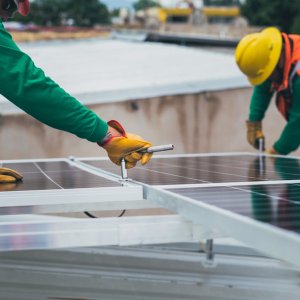
A notable trend in 2025 has been the growth of distributed energy resources, such as Distributed Generation (DG). Commercial and industrial consumers, facing grid bottlenecks or reliability concerns, increasingly pursue on-site generation and storage, microgrids, and behind-the-meter systems to manage costs, hedge outage risk, and support sustainability goals. Rooftop solar and hybrid systems with battery storage are becoming viable alternatives that reduce dependence on large transmission infrastructure, especially as technology costs decline.
As grid constraints shape consumption and project planning, on-site generation offers an adaptive strategy for industrial parks and nearshoring clusters to maintain operations without waiting for large-scale grid upgrades. This aligns with global corporate decarbonization commitments and provides resilience when facing grid congestion or reliability issues.
EPC company KIIN Energy’s CEO, Humberto García, highlights the increase of DG from 0.5MW to 0.7MW as an opportunity but points out self-supply as the most interesting segment now that these projects can be up to 20MW on-site. However, as explained by Paredes and other leaders, the government is making sure that these projects are completely off-the-grid; selling these projects depends highly on the reliability of EPC firms. Still, these developments make business-sense for actors, especially after a whole six-year period with limited generation projects.
“Previously, to reach a 20MW capacity through DG which was capped at 500KW, we needed 40 separate clients. This required managing 40 projects, 40 contracts, and 40 locations, which ultimately affected our profitability and execution capacity. If we can now develop much larger, unified projects, up to 20MW, with the same number of clients, we could potentially sell 10 to 20 times more. This new regulation creates a substantial market advantage, and companies that are well-prepared and organized with trained teams stand to capitalize on it,” says García.
The rising importance of distributed and customer-side energy solutions reflects both necessity and opportunity in Mexico’s current energy landscape. As Mexico continues to expand its solar capacity, significant bottlenecks in energy storage and grid integration persist, limiting the full realization of renewable potential and reinforcing the value of on-site generation.
According to Marcos Ripoll Vidal, CEO, Solar180, while solar additions are projected to grow in 2026, challenges around storage capacity threaten to constrain how much clean energy can be effectively deployed and integrated into the system, particularly where transmission bottlenecks exist. In this context, DG, hybrid systems and behind-the-meter storage offer practical paths for industrial and commercial consumers to reduce dependence on centralized infrastructure, improve resilience, and meet decarbonization goals. The expansion of project size thresholds and greater flexibility in on-site solutions further enhance the business case for distributed generation, positioning distributed energy not only as a hedge against grid constraints, but as a strategic asset in Mexico’s broader energy transition.
Digitalization and Data-Driven Operations
The energy sector in Mexico is also experiencing a wave of digital transformation. Advanced data analytics, predictive maintenance, IoT sensors, AI-assisted forecasting, and energy management platforms are improving how both utilities and industrial users plan and operate. Digitalization enhances reliability, supports renewable integration, and facilitates more precise asset utilization, all critical as Mexico balances legacy systems with modern grid needs.
In the context of industrial growth, companies are increasingly asked to be experts regarding their energy consumption. NXT Group stands as one of the companies that seeks to “[equip] companies with the tools and resources needed to purchase energy, reduce costs, and lower emissions,” taking advantage of technology and data. The access to this data can help companies “to avoid greenwashing, ensuring companies can make accurate claims about their renewable energy use, backed by verifiable data,” says Diego Arriola, Founding Board Member, NXT Group.
In parallel, industrial and commercial consumers are being pushed to develop a deeper understanding of their own energy profiles. As industrial activity expands and margins remain under pressure, energy intelligence is no longer optional. Companies are increasingly expected to manage consumption, emissions and costs with the same level of sophistication applied to core operations. Solutions that combine real-time data, traceability and actionable insights are gaining relevance across sectors. Metron is another example of utilizing businesses’ data to help them hit their energy, environmental and financial targets by using advanced tools for traceability. Metron highlights how advanced analytics and energy intelligence platforms allow businesses to align energy performance with financial and environmental targets.
These approaches reflect a broader trend in which data, rather than infrastructure alone, becomes a key lever for efficiency, resilience and competitiveness in Mexico’s evolving energy landscape. “We often refer to what we call the TOP factory: Transparency, Optimization, Productivity. Data visibility also allows companies to optimize production schedules based on energy prices, demand response incentives, or other external variables. This enables better decision-making across the board. Productivity improvements include demand-side management, energy arbitrage, and more. Once data is centralized, companies gain significant leverage when negotiating with energy providers,” underscores Pierre Groleau, Global Vice President, Metron.
You May Like







Most popular