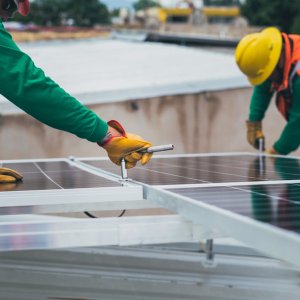
CFE, Sonora Advance Puerto Peñasco Solar Expansion
 By Duncan Randall | Journalist & Industry Analyst -
Tue, 01/06/2026 - 11:07
By Duncan Randall | Journalist & Industry Analyst -
Tue, 01/06/2026 - 11:07
The government of Sonora has provided details on Phase III of the Puerto Peñasco photovoltaic power plant, Latin America’s largest solar complex currently in development. According to Governor Alfonso Durazo, the plant is projected to add up to 300MW of installed capacity by July 2027, reaching up to 1,000MW once Phase IV is completed in 2028.
The expansion, led by the Federal Electricity Commission (CFE), represents an investment of US$347 million. According to official estimates, the additional capacity will help reduce between 1 million and 1.4 million metric tons of CO2 emissions per year. State authorities say this reduction supports Mexico’s climate commitments and demonstrates that economic development and emissions mitigation can advance together.
Through social media posts released as part of a status update on the project, Durazo says the investment reflects federal support for his state’s role in Mexico’s energy transition. “The support of President Claudia Sheinbaum and the CFE has been decisive, allowing Sonora to continue developing clean energy infrastructure with environmental, social, and economic impact,” Durazo says. While the investment will increase generation capacity and strengthen electrical infrastructure, he adds that the project is also crucial to strengthening national energy sovereignty.
Durazo adds that large-scale renewable investments can promote regional development, attract further capital, and improve access to electricity under a model focused on energy justice. He says the continuation of the project sends a signal of certainty to investors and reinforces Sonora’s long-term vision of using its natural resources to support sustainable growth. “This confidence is translated into investment, clean electricity generation and a stronger national energy system,” says Durazo.
The Puerto Peñasco plant forms part of a broader strategy to anticipate sustained growth in electricity demand and strengthen the reliability of the National Electric System. In December, Emilia Calleja, Director General, CFE, provided an update on a wide range of projects focused on the improvement and modernization of the National Transmission and Distribution System.
Beyond Sonora, CFE has initiated five firm generation projects that will add close to 3,000MW of capacity, supported by an investment of US$4.3 billion. These plants, located in Hidalgo, Guanajuato, Tamaulipas, Sinaloa, and Baja California Sur, are intended to provide geographic balance and operational resilience to the system.
The first of these projects — the Francisco Pérez Ríos Tula II combined-cycle plant in Tula, Hidalgo — has already begun operations and will contribute over 1,000MW to the national grid. The remaining plants, each representing investments exceeding US$45 million, are in various stages of development.
While Calleja stresses the importance of renewable energy and firm generation projects to Mexico’s energy sovereignty, a portfolio of 66 transmission projects comprise the core of CFE’s nationwide expansion strategy. The projects, representing an estimated investment of US$1.9 billion, have been scheduled for priority execution in 2026. According to CFE, 22 projects were completed in 2025, with another 44 set to be completed in 2026. Calleja says that tenders and publication processes will continue to be staggered as they are concluded.
The update came amid mounting pressure on Mexico’s electric system driven by sustained demand growth. According to analysis from the Mexican Institute for Competitiveness (IMCO), national electricity consumption reached nearly 360,000GWh in 2024, with annual growth of 2.3%, in line with the average projected growth of 2.5% over the next 15 years. Peak demand is expected to rise more than 50% by 2039, a trend that will require not only additional generation but also robust transmission and distribution infrastructure to manage critical consumption periods.
You May Like




Most popular