

Reliability First: Lessons for Energy Storage


STORY INLINE POST


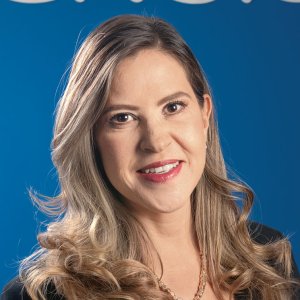
 By Perla Velasco | Journalist & Industry Analyst -
Tue, 12/23/2025 - 11:21
By Perla Velasco | Journalist & Industry Analyst -
Tue, 12/23/2025 - 11:21
Q: What role has the company played in the energy storage industry and how has it positioned itself so far?
A: The company has over 20 years of experience in lithium battery manufacturing and developing battery management systems. While energy storage has gained significant attention in the past few years, particularly since 2024, our trajectory is much longer. We believe energy storage must be dependable; this accumulated experience allows us to offer reliable batteries designed to operate safely over many years.
We bring a high quality and competitively priced product to the market, and we place strong emphasis on service. We support installers from the project design stage through installation and aftersales services. This is essential in storage, where many users and even some installers still face a learning curve. Our goal is to provide the guidance needed to ensure correct system design, proper implementation, and long term performance.
Q: The year 2025 brought more clarity to the sector, particularly with new policies and regulations for energy storage. What changes have had the greatest impact on your operations?
A: I observe these changes from three perspectives. First, the legislative reforms established new rules for how storage interacts with existing photovoltaic systems and how it will operate within the grid. I see this as a positive development because it strengthens grid stability, creates new opportunities for savings, and allows users to scale their systems more effectively. It opens a broader set of options for the industry. Some details remain pending, such as the final DACGs, but the direction appears promising.
Second, technology is advancing rapidly. Battery cell capacity has increased significantly, which has transformed the market. Not long ago, 5kWh batteries were the standard. Today, we see systems of 15-16kWh in much more compact formats. This shift reshapes the possibilities for both system design and end user expectations.
The third factor is the commercial environment, especially the international trade tensions that have resulted in various tariff measures. These do not necessarily reflect whether policies are good or bad, but they do create uncertainty in pricing. Mexico has been somewhat insulated so far, but changes may still come. For manufacturers and distributors, decisions on inventory and purchasing timing are becoming increasingly important.
Q: How do users perceive storage systems today? How familiar are they with these, and what opportunities do you see for broader adoption?
A: User perception is evolving quickly. People are curious and ask questions, but both installers and end users still have many doubts. It is common for someone to ask for a system large enough to back up their entire home, only to realize that such a system exceeds their budget. In many cases, what they truly need is a smaller, essential load solution. This is where education becomes critical. Manufacturers have a responsibility to help users understand the technology, its appropriate applications, and how to get the most value from it.
The situation resembles the early days of solar energy, when people questioned whether installing panels was even allowed. We are at a similar stage with storage, and it is important to learn from the mistakes made in the photovoltaic market.
One of the main lessons is that the industry must value itself and its products. If storage becomes undervalued the way solar once did, it could harm long term business viability. Quality, expertise, and proper system design must remain priorities.
Q: What is your view on building networks and community within the industry, particularly for SMEs? How is the company approaching this?
A: Our approach is based on strong collaboration with distribution partners. Together, we work to build a healthy and sustainable market by training installers, providing technical support, and staying close to the people implementing the systems. At the same time, I fully agree that broader community building is essential. The industry is large, and there is room for everyone. Working together benefits the entire ecosystem.
Storage systems require multiple components. A battery manufacturer needs inverter partners, installers rely on various technologies, and clients benefit most when these elements work in harmony. Building alliances, supporting installers, and prioritizing their real needs over short term sales is fundamental. When systems are designed and installed correctly, end users have a better experience, word spreads, and the industry grows in a healthy direction.
If installation quality declines or companies prioritize volume over reliability, the industry risks developing a negative reputation. Working collectively, sharing knowledge, and building responsible networks is the best path forward.
Q: Professionalization has been an important topic for installers. What role will proper training and integration of storage systems into solar installations play moving forward?
A: Training is significantly more important for storage systems than for photovoltaic installations. Solar, while requiring knowledge and good practice, is ultimately a forgiving technology. Panels connected to an inverter will usually produce energy even if the system is not optimally installed, which allowed many installers to enter the market without full professionalization.
Storage is very different. These systems often support critical loads, including medical facilities or essential household functions. Any installation that is not executed with precision can compromise safety, performance, and reliability, and may even lead to accidents. Proper configuration and system design require deeper technical understanding, because the goal is to ensure performance precisely at the moment when the grid is unavailable.
This makes professional training indispensable. Installers must fully understand system design, load calculation, and equipment configuration to guarantee a reliable and safe installation.
Q: From Pytes perspective, which recent projects best demonstrate the quality and impact of your work?
A: Several of our most meaningful projects are located in remote off-grid communities, both in Mexico and the Caribbean, where residents had no previous access to electricity. These systems have provided communities with reliable energy and enabled forms of modernization that would not have been possible otherwise. In parallel, we have executed high-end projects in regions with strong purchasing power, including emerging tourist developments that previously lacked reliable energy service.
Across all segments, our focus has been to combine social impact with technical excellence. Our R&D team has prioritized innovation that makes installations simpler, more intuitive, and less prone to error. This focus on reliability and ease of deployment is a central part of our identity, and we have a full project catalogue that illustrates the breadth of our work.
Q: What are Pytes main objectives for the coming year?
A: Pytes aims to differentiate itself as a battery manufacturer that collaborates closely with a wide range of brands. Installers need flexibility. Instead of limiting them to a closed ecosystem, we prioritize compatibility with high-quality Tier 1 inverter manufacturers certified under standards such as UL. Our strategy is to remain open and interoperable, rather than isolating our technology.
For 2026 our focus is to support installers and solar companies that are transitioning into energy storage. We intend to stay close to them throughout the entire project cycle, from system design and financial modeling to procurement, installation, commissioning, and configuration. Our engineering team handles detailed calculations, ROI analyses, and on-site technical support for both batteries and inverters.
Our goal is to help installers deliver profitable and well-designed projects while providing end users with long-term reliability. As the number of projects grows, maintaining high-quality support will be a demanding challenge, but it is central to our mission.
Finally, ongoing monitoring and remote diagnostics will allow us to assist customers throughout the life of their systems. We want clients to become long-term partners and advocates of Pytes. Our objective is to build relationships in which both our clients and Pytes grow together through a consistent, high-quality, end-to-end support model.
Pytes is a global technology firm specialized in the design, manufacturing, and supply of advanced Lithium-ion Battery Systems.
You May Like




Most popular








