


INRLGII Deploys Next-Gen CT Scanner to Strengthen Public Care
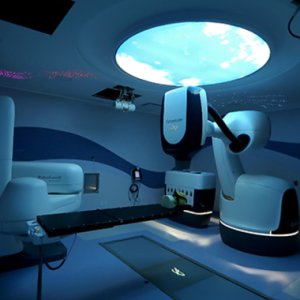
The National Institute of Rehabilitation Luis Guillermo Ibarra Ibarra (INRLGII) has installed a high-speed CT scanner that will provide free diagnostic imaging to more than 6,500 patients annually, aiming to reduce wait times and improve diagnostic accuracy.
The new device, one of seven of its kind in Mexico, was acquired through support from the Administration of Public Charity Assets (APBP). According to SSA, the scanner cuts exam time in half compared to previous models, allowing the institute to manage high demand more efficiently, as it can perform a 360-degree scan in 0.27 seconds,
“The CT scanner we inaugurated today will enable us to conduct a greater number of studies, directly benefiting patients at no cost,” said Carlos Pineda Villaseñor, Director General, INRLGII. Pineda added that the installation marks progress in closing the technology gap between public and private healthcare facilities in Mexico. “Democratizing access to advanced diagnostic technology is a key element in the fight against health inequality,” he said.
The machine includes a spectral imaging mode that distinguishes tissue types with greater clarity by capturing data at different energy levels. This allows for improved identification of subtle lesions and better evaluation of implants, enhancing diagnostic precision.
The equipment also significantly reduces exposure risks. It operates with up to 70 percent less radiation and requires 60 percent less contrast medium, benefiting patients who need frequent imaging. According to INRLGII, these improvements support more timely, accurate, and individualized treatment plans.
In addition to its clinical value, the implementation supports broader government goals outlined in Mexico’s National Development Plan (PND) 2025–2030. Under Axis 2, "Development With Well-Being and Humanism," the federal plan prioritizes modernizing healthcare infrastructure
and ensuring the right to health protection. Strategy 2.7.7 specifically calls for strengthening medical equipment and facilities to address demographic and epidemiological needs.
You May Like






Most popular








