


Brugada Delivers 200+ Affordable Homes in Coyoacan, Roma
The Mexico City government has delivered more than 200 affordable homes across the Coyoacan and Roma neighborhoods. These efforts, led by Mexico City Mayor Clara Brugada, aim to guarantee the right to dignified, accessible housing for working families and vulnerable communities. The most recent deliveries include 196 units in Coyoacan and 52 in Roma, reinforcing the city’s commitment to social equity, sustainability, and inclusive urban development.
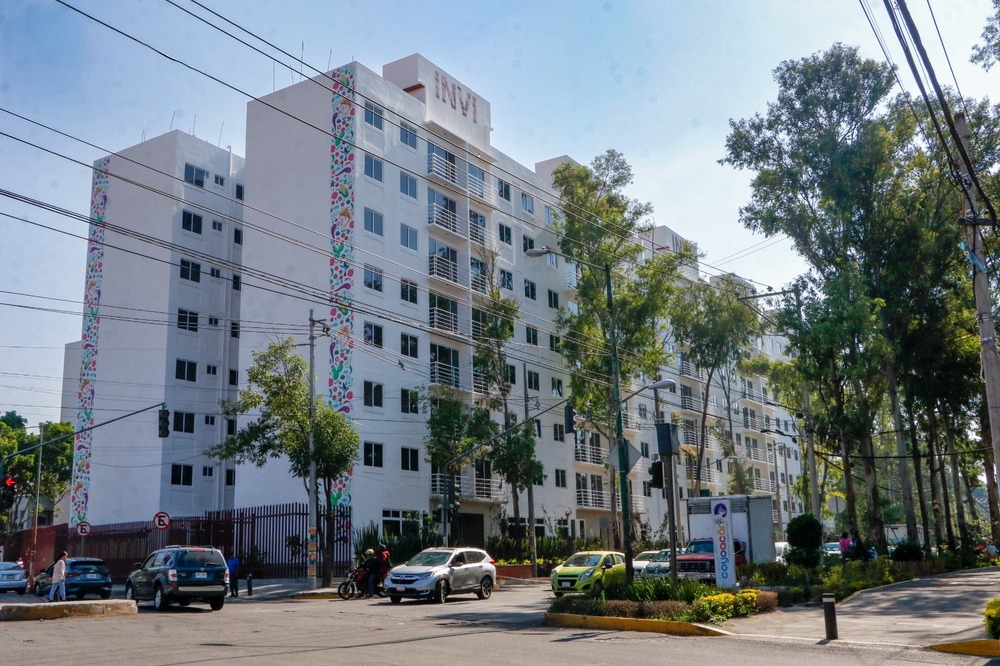
On May 16, Brugada handed over 196 housing units located on Calzada de La Virgen 2771, in the Coyoacan borough. This housing project, with apartments ranging from 60 to 65m², will benefit nearly 1,000 people and marks a significant milestone in the city’s social policy aimed at guaranteeing the right to dignified housing.
“We want to become a model government that guarantees the right to accessible housing: with homes for organized communities at low costs for those who truly need them. We want to build these types of homes across all of Mexico City,” said Brugada.
The housing units are part of a broader strategy to ensure that affordable homes are well-built, reasonably priced, and located in areas free from issues such as land subsidence or water scarcity.
The newly inaugurated complex in Coapa Culhuacan CTM VII will include community-focused infrastructure, such as a Child Care and Development Center, a communal dining hall, a public laundry facility, recreational spaces for the elderly, and rehabilitation facilities for people with disabilities.
Brugada added that thanks to changes in the rules of operation of the city’s Housing Institute (INVI), social housing can now exceed 60m², which is the new minimum. She also announced plans to update the regulations further so that future residents are not required to pay extra for construction costs, with the government providing full loans instead. “We do not want people to leave the city because of high housing prices and face long commutes to work. People deserve to live in decent homes, in dignified locations,” she added.
Inti Muñoz, Minister, INVI, highlighted that this residential complex will incorporate the city’s new Public Care System, with five dedicated cultural, educational, and social spaces for children, seniors, and persons with disabilities. “This is now a central component of Mexico City’s housing policy,” he said.
The government invested over MX$170 million (US$8.7 million) in the construction of these 196 apartments, which cost an average of MX$846,000 (US$43,694) each. Residents will pay for their homes over a 20-year period through a social credit scheme, representing the most accessible housing loan of its kind in Latin America, according to Muñoz.
Each unit is equipped with solar heaters, rainwater harvesting systems, water-saving fixtures, and energy-efficient lighting. The 14,000m² project also included an environmental mitigation plan, such as improving 10,000m² of the Calzada de La Virgen median strip, new pedestrian crossings, sidewalks, and reforestation efforts.
Irene Soto, from the Nueva Generacion organization, called on new homeowners to continue caring for both their homes and the shared environment, reminding them that residents participated in the mitigation work themselves.
Earlier, on May 9, Brugada also delivered 52 housing units in the Roma neighborhood, part of the Cuauhtemoc borough, with an investment of MX$46 million (US$2.3 million) benefiting 196 people, including 50 from Indigenous communities.
She also stated that her administration is taking a firm stance against gentrification and displacement, ensuring that centrally located areas such as Roma and Condesa are inclusive. “We do not want exclusive zones. Mexico City should belong to everyone.”
In Roma, 12 apartments were rehabilitated at Durango 119, and 37 new homes were built at Cordoba 112, all priced below MX$1 million. “These units cost around MX$900,000, compared to the market price of MX$15 to MX$20 million in the same area. And families will pay less than MX$2,000 a month through an income-based loan,” she shared.
The homes also meet sustainability standards with solar heaters, rainwater harvesting, and energy-saving devices, promoting both environmental responsibility and economic relief for residents.
With a housing budget of MX$9 billion, double that of the previous year, Brugada aims to provide 200,000 housing solutions by the end of her term. According to Muñoz, 30,000 housing actions will be taken this year alone, including the restoration of nearly 200 architecturally valuable properties, primarily in the Historic Center.
“This policy protects against gentrification and preserves cultural heritage, while ensuring social inclusion,” said Muñoz.
You May Like







Most popular








