

Rising Through Volatility: How Pacific Trade Is Being Rebuilt


STORY INLINE POST






 By Adriana Alarcón | Journalist & Industry Analyst -
Tue, 01/13/2026 - 11:15
By Adriana Alarcón | Journalist & Industry Analyst -
Tue, 01/13/2026 - 11:15
Q: As the Pacific coast continues evolving with competition, how does Terminal Marítima Mazatlán (TMAZ) differentiate itself in terms of speed, flexibility, and market access?
A: TMAZ has been able to differentiate itself through operational agility, targeted investments, and close coordination with authorities and customers. While major importers and exporters tend to gravitate toward larger ports, Mexico’s overall cargo growth has opened space for terminals like Mazatlan to expand. This year, we expect to close 8%–10% above last year’s volume despite tariff-related uncertainty.
Our main driver has been over US$5 million in new equipment, including tractors, platforms, spreaders, and forklifts of various capacities. This has strengthened our position in our core segment — steel — and supported steady gains in container traffic. Most importantly, we have consolidated Mazatlan as a key automotive import gateway, handling over 160,000 vehicles for three consecutive years. This has been possible thanks to: fast operational turnarounds; strong coordination with customs and port authorities; and a growing automotive cluster around the port. Today, Mazatlan holds around 20% of Pacific-side automotive market share, with the Port of Lazaro Cardenas at about 80%.
Recent dynamics, especially Chinese automakers accelerating imports ahead of potential Mexican tariffs on over 1,500 Chinese products, have created temporary pressure across Pacific ports. Importers are bringing in 2026 models early and building inventory as a buffer. This follows a year in which companies had already adjusted to earlier US tariff threats.
Our ability to grow has come from anticipating volatility: investing early, advancing digitalization, and staying close to clients and industry chambers to understand their precise needs. This has allowed us to offer tailor-made logistics solutions that give customers confidence that once their cargo reaches Mazatlan, it will be handled efficiently, safely, and without delays.
Q: How have recent tariff adjustments on steel and metal products affected volumes, routing decisions, and client behavior at the terminal?
A: Despite the tariff adjustments, steel remains a stable cargo for us — particularly sheet and coil for the packaging and automotive industries, which are essential inputs for domestic production. That baseline has held firm.
Where we did see change was with Asian products that are transformed in Mexico and then exported to the United States. Some clients temporarily slowed imports as they assessed how higher prices and US tariff pressure would affect demand. A few had to restructure their logistics chains. However, many turned the challenge into an opportunity by diversifying their export markets. Several shifted part of their flows to Canada, others expanded into Latin America or the European Union, reducing their dependence on the US market.
Overall, the logistics chain has shown strong resilience and flexibility. Some clients still face cost pressures, but others have successfully reinvented their routing and market strategies, which has largely offset the initial impact of tariffs.
Q: Beyond your traditional steel segments, how has TMAZ worked with Asian suppliers and carriers to diversify cargo types and strengthen its commercial pipeline?
A: This year we focused heavily on expanding our presence in Asian markets. In February, we conducted a major commercial tour in Japan, meeting with leading carriers, mills, and steel traders. That visit helped us showcase TMAZ’s operational capabilities and opened markets we had not served before. As a result, beyond our traditional sheet and coil cargo, we are now handling new steel products such as plate, slab, wire rod, and bar, which reflects greater operational flexibility at origin.
We also strengthened our commercial work by engaging not only with clients in Mexico but also directly with suppliers abroad. Two months ago, we visited China, meeting with one of the world’s largest steel producers and with automotive companies. These visits allowed us to present our investments, growth plans, and service capabilities. This has already translated into more quotes, more visibility, and new business lines.
Q: How does TMAZ complement Sinaloa’s broader multimodal vision, which includes highways, rail, industrial zones, and regional production clusters?
A: Mazatlan’s multimodal role has expanded significantly. In 2024, our collaboration with Ferromex focused mainly on moving steel and vehicles. But in 2025 we launched a new 53ft intermodal container service operated jointly by TMAZ, Ferromex, and Baja Ferries, which strengthens Sinaloa’s broader logistics vision. This service connects cargo from the center of the country to Mazatlan by rail, where we handle the containers and transfer them onto Baja Ferries’ vessels for cabotage to Baja California. We move 100–150 intermodal containers per month, and we expect this number to keep growing.
Beyond cabotage, the model creates future opportunities for international import–export flows. Imported cargo could move inland by rail directly from the port, and domestic cargo from central Mexico could arrive by train, be deconsolidated at Mazatlan, and then exported.
TMAZ is helping build a more integrated multimodal ecosystem for Sinaloa, combining rail, maritime, and regional production clusters, and we see strong potential to expand these services next year.
Q: What new technologies or digital tools has TMAZ implemented this year, and how are they improving efficiency, traceability, or client service?
A: Our 2030 strategy is built on four pillars: growth, profitability, safety/quality, and sustainability. The last one is where most of our technological initiatives are concentrated. This year we advanced several digital and environmental projects that directly improve efficiency and client service. We are implementing a solar panel program to reduce the terminal’s energy consumption, and we launched projects to measure and lower both our water footprint and carbon footprint, aligning operations with sustainability goals.
We are also pushing a broad paperless initiative. We are eliminating manual, paper-based processes and replacing them with digital workflows that streamline interaction between clients, customs brokers, carriers, and the port. These tools speed up operations, reduce errors, and create a more seamless customer experience.
Q: What trends have you observed in terms of cargo flows, and which routes or services have shown the strongest demand at TMAZ?
A: Cargo trends will depend heavily on how Mexico advances its national port development agenda. Projects like Punta Colonet, Cuyutlan in Manzanillo, and expansions in Lazaro Cardenas, Veracruz, Progreso, and Altamira could significantly reshape cargo distribution. If these investments materialize at the pace the government has indicated, some flows will likely reconfigure toward new or expanded ports, creating both shifts and growth opportunities. Even US-bound cargo that moves through Long Beach could eventually be redirected to Mexican ports as capacity increases.
Another key trend is the evolution of carrier alliances. Hanseatic Global Terminals, our parent company and the ports and infrastructure arm of Hapag-Lloyd, has visibility into these global changes. The new Gemini cooperation between Hapag-Lloyd and Maersk is already improving schedule reliability, which benefits exporters and importers who need predictable transit times. As these alliances deepen, we expect more stable services and potentially new route configurations.
Overall, the combination of new port infrastructure, stronger carrier networks, and improvements in government processes, such as customs and ASIPONA management, will drive greater cargo mobility. These elements position Mexico to continue strengthening its role as a major global trade platform.
Q: What concrete advantages does Mazatlan offer to companies concerned about security, reliability, and long-term stability when choosing where to invest?
A: Security challenges exist throughout Mexico, whether rail theft in the Bajío or in high-risk highway corridors like Mexico–Puebla. Sinaloa often receives disproportionate media attention because of its historical association with organized crime, but that does not reflect the day-to-day reality for logistics and industrial operations. Over the past decade, the state has developed significant industrial clusters and strengthened its connectivity, particularly with the Mazatlan–Matamoros highway. This corridor has allowed us to grow Asian imports moving to Monterrey and the northeast, with shorter transit distances than through the Port of Manzanillo or the Port of Lazaro Cardenas.
Mazatlan also benefits from strong rail integration with Ferromex, giving the port access to virtually the entire country. Cargo arrives, is transferred to rail quickly, and continues inland without disruption. We have not experienced major security incidents affecting foreign trade operations. Trucks enter and exit safely, and cargo arrives and departs without issues. Continued coordination between the National Guard, the Mexican Navy (SEMAR), and local authorities has been essential, but operationally our clients are satisfied and feel confident in the port’s reliability.
Mazatlan offers real logistical advantages, strategic connectivity, an expanding industrial base, a resilient port ecosystem, and stable operational conditions. These fundamentals make Sinaloa, and Mazatlan in particular, a solid environment for ongoing investment.
Q: How have recent disruptions and tariff pressures influenced TMAZ’s investment plan for 2025–2030?
A: Our long-term investment plan is dynamic. While we operate under a five-year horizon, we reassess priorities annually based on cargo reconfiguration and market conditions. This year we already made significant equipment investments, and the next major step is the extension of our concession contract, which we are working to secure through 2044.
With a longer time horizon, our capital plan naturally expands. The original US$40 million for 2025–2030 will likely increase as we incorporate additional needs such as systems upgrades, civil works, infrastructure expansion, new equipment, and workforce development. Extending the concession allows us to plan for a larger, more ambitious investment cycle aligned with Mazatlan’s long-term growth.
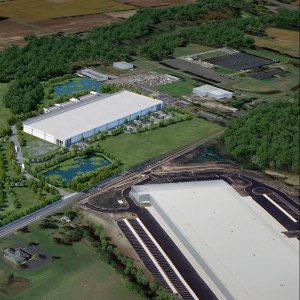
Terminal Marítima Mazatlán (TMAZ), located 220km south of the state capital, supports activities related to agriculture, livestock, fishing, and mining, among many others. The port plays a key role in the acquisition and distribution of quality raw materials and finished products.
You May Like


Most popular








