


Transpacific Tourist Train Proposed to Link Mazatlan, Acapulco
 By Adriana Alarcón | Journalist & Industry Analyst -
Mon, 07/21/2025 - 09:00
By Adriana Alarcón | Journalist & Industry Analyst -
Mon, 07/21/2025 - 09:00
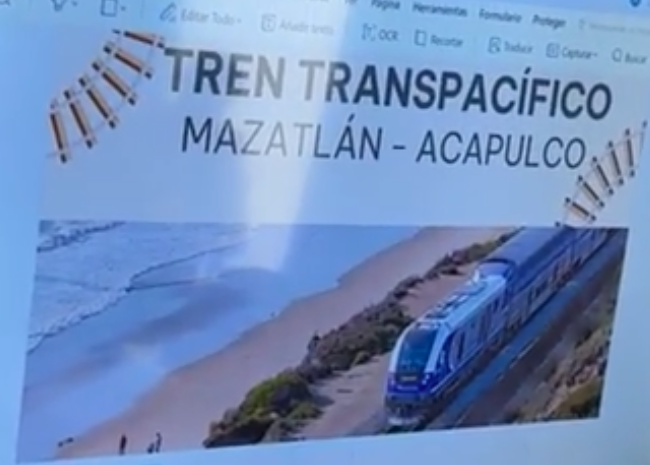
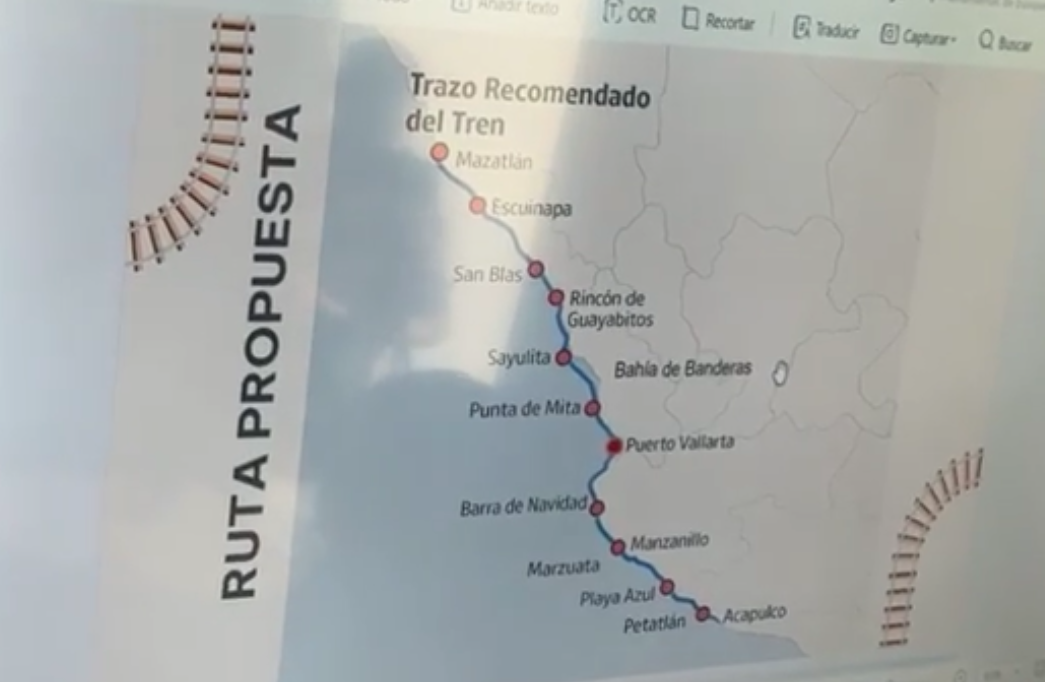
The National Chamber of Commerce, Services, and Tourism for Small Businesses (CANACOPE) and CANACO SERVYTUR in Puerto Vallarta and Bahia de Banderas have proposed the creation of a Transpacific Tourist Train connecting Mazatlan, Sinaloa, to Acapulco, Guerrero. The train would traverse 1,200km and 45 coastal destinations along Mexico’s Pacific corridor.
This initiative was originally introduced to the Senate in 1994, under the name “Tren Transpacífico Mazatlán-Acapulco.” The project seeks to showcase the natural and cultural richness of Mexico’s Pacific coastline, while fostering economic development in both well-established tourist hubs like Puerto Vallarta, Bahia de Banderas, and Acapulco, as well as in lesser-known emerging destinations across Michoacan, Colima, and Jalisco.
The project aims to offer tourists a scenic, multi-day journey with stops at various coastal towns and cities, similar to a cruise experience but by rail, complete with onboard entertainment and immersive local experiences in each stop.
“There are 45 destinations along this route, and 35% of the national hotel occupancy is concentrated here. It’s a corridor with enormous tourism potential,” says Carlo Gómez, President, CANACOPE Puerto Vallarta.
High-Level Support and International Interest
According to Gómez, the proposal has already reached federal authorities, including former Tourism Minister Miguel Torruco, and various state and municipal leaders. It has also garnered interest from major tourism entrepreneurs such as Marcos Constandse, Owner, Xcaret, and officials from Ferromex, which reportedly has available high-end train cars that could be used in the project.
While the project lacks a finalized route and executive plan with defined costs, initial conversations suggest the investment could surpass US$100 million. Discussions with the Chinese government and private investors are already underway to secure funding and explore collaboration, particularly in the areas of infrastructure development and train manufacturing.
“We know this is a multimillion-dollar investment, but we believe it is viable. Ferromex has the wagons; some railway segments already exist — it is about connecting the missing links,” says Gómez.
CANACOPE and CONCANACO say that the train is not just a tourism initiative; it is a regional development strategy. By improving connectivity and promoting tourism in smaller, often overlooked destinations, the project aims to reduce regional inequalities and support local economies, especially small and medium-sized enterprises (SMEs).
Gómez says that 87% of Mexican businesses are SMEs, many of which operate in or near the 45 destinations along the proposed route. The train could provide them with greater exposure and revenue opportunities by attracting consistent tourist traffic.
From Proposal to Reality
Although still in its early stages, the project has been met with optimism. Meetings with public and private stakeholders continue, and a familiarization trip to China is being organized to pitch the project and potentially secure investment or technological collaboration.
Ultimately, the promoters hope the government will take up the initiative, with private sector support to back it. The train, they argue, could replicate what happened with the Mayan Train project, but with even more tourism density, as the Mazatlan-Acapulco corridor already holds a significant share of Mexico’s tourism GDP.
“If we managed to build the Mayan Train in a region with fewer tourism hotspots, why not develop this train along the Pacific, where tourism is already thriving?” says Gómez.
You May Like







Most popular








