


Justin Trudeau Steps Down as Canada’s Prime Minister
 By Fernando Mares | Journalist & Industry Analyst -
Wed, 01/08/2025 - 09:09
By Fernando Mares | Journalist & Industry Analyst -
Wed, 01/08/2025 - 09:09
Canadian Prime Minister Justin Trudeau announced his resignation, signaling the end of his tenure as the leader of Canada’s Liberal Party and head of government for almost a decade. His departure comes as Canada faces critical challenges, including the future of its mining industry, which has gained importance amid the global energy transition, and shifting trade dynamics in North America.
“I intend to resign as party leader, as Prime Minister, after the party selects its new leader,” Trudeau said at a press conference in Ottawa.
The 53-year-old leader, who has been in his position since 2015, confirmed that Canada’s parliament would be suspended until March 24 to allow the Liberal Party time to choose a successor.
Trudeau’s resignation marks the conclusion of a political career that saw him lead the Liberal Party through multiple elections. His departure sets the stage for the selection of a new party leader ahead of the upcoming federal election.
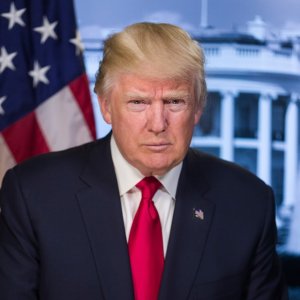
Trudeau’s resignation comes just 14 days before US president-elect Donald Trump is set to take office and a year ahead of the scheduled revision of the USMCA between Canada, Mexico, and the United States. His departure also coincides with heightened tensions among the three North American nations over trade deficits, the growing influence of China in the region, migration challenges, and the ongoing fentanyl crisis.
“Many people in Canada (would) love being the 51st state. The United States can no longer suffer the massive trade deficits and subsidies that Canada needs to stay afloat. Trudeau knew this and resigned. If Canada merged with the United States, there would be no tariffs, taxes would go way down, and they would be totally secure from the threat of the Russian and Chinese Ships constantly surrounding them,” Trump posted on Truth Social.
Mexican President Claudia Sheinbaum said that the change in the Canadian leadership is not expected to change the relationship between the three countries under USMCA and stressed the benefits the agreement brings to the three countries, as reported by MBN.
Canada Mining Relationship
Trudeau’s impact on Canada’s mining sector has left mixed opinions. His government introduced a critical minerals strategy, emphasizing metals crucial for the energy transition, and created tax credits to encourage investment. Industry insiders also consider that during Trudeau’s tenure there was a shift of paradigm toward the mining sector, as many Western countries stopped mining as they considered it a dirty sector, as reported by the Financial Post. However, industry leaders highlighted slow permitting processes, incomplete policies, and declining global competitiveness. While mining investment has grown recently, many argue that Canada has lost ground to other countries, and challenges like lengthy permitting times remain unresolved.
Despite mixed internal sentiment, Canada’s presence in Mexico remains significant. According to CAMIMEX, Canadian companies account for 32.1% of mining investments made by affiliated companies in Mexico. Furthermore, according to Canada’s Trade Commissioner Service, Mexico ranks seventh in Canadian mining assets abroad.
Dean McPherson, Head of Business Development for Global Mining, Toronto Stock Exchange (TSX) and TSX Venture Exchange (TSXV), told MBN that in 2023, Mexican projects represented over 10.33% of the projects listed on both stock exchanges. McPherson highlighted Mexico’s continued appeal for investors. “We aim to foster close partnerships with the country. Our ultimate objective is to attract more companies with projects in Mexico and strengthen our role as a global equity market,” he added.
You May Like







Most popular








