

Streaming: an Alternative Source of Financing
STORY INLINE POST

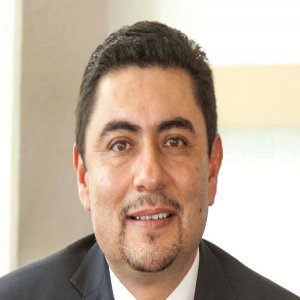

Q: Silver Wheaton is currently the world’s largest streaming company, having produced over 35 million ounces in 2013. To what would you attribute the company’s success?
A: Silver Wheaton was created out of a company called Wheaton River, which ultimately changed its name to Goldcorp. At Wheaton River, I worked on the creation of Silver Wheaton as a subsidiary in 2004 as a method of crystalizing the value of our non-core by product silver production to generate the necessary capital to continue growing Goldcorp. Silver Wheaton grew gradually and, as a consequence, Goldcorp fully divested the last of its shares in 2008. Silver Wheaton has been a standalone company ever since. The company created streaming back in 2004 and the business model has proved to be very strong. Since mining is a capital intensive industry, it is constantly in search of different sources of funding. The success of the streaming model has allowed Silver Wheaton to become as big as it has. In fact, the traditional royalty companies are now also implementing streaming because they have realized how much value can be created through streams as well as how much capital can be raised to help mining companies achieve sustained growth. Coming up with the business model and being the first in the streaming business definitely gave Silver Wheaton an advantage in terms of growing in size.
Q:How does the company adapt its business model to make the most of changing conditions in the market?
A: Commodity prices are very cyclical, so there are certain times for buying assets and certain times when it is better not to. When prices are high it is better not to buy assets, and instead build up cash flow, improve the balance sheet, and wait for commodity prices to go down. Commodity prices have always been cyclical, and there are going to be highs and lows. As the industry’s good times and bad times are directly correlated with commodity prices, when commodity prices are low that is the best time for us to step in and make acquisitions. That is when we get the best value, as there tends to be a lack of interest in the mining space on behalf of investors. We compete as a source of capital against traditional debt and equity solutions, but if banks are not lending and the stock markets are not doing well, streaming becomes an even more attractive funding option. When prices are high, we build up our cash flow and our balance sheet, keep the cash on hand, and wait. In the past we have gone two and a half years without making a transaction because we felt that prices were not sustainable. We are patient and we wait; Silver Wheaton has a strong enough portfolio that we do not have to rush.
Q: What are the reasons for Silver Wheaton’s decision to move into gold streaming?
A: Our last three transactions have been gold-focused. There was no clear strategy behind this beyond a dedicated focus on precious metals; these were simply the best properties available at that time. We made three transactions in 2013, all of which were pure gold. There was the US$1.9 billion transaction that we did with Vale, one of the largest mining companies in the world. The following deal was with Hudbay on Constancia for US$135 million, for 50% of their gold production. And the last deal in November was with a company called Sandspring, which has a project in Guyana. That consisted of US$13.5 million in investment as an initial payment, with an option to expand to US$148.5 million. All of those were gold-focused, but are very similar in structure to the silver projects we have streamed for in the past. The only difference is the commodity.
Q: How can streaming fit into a broader investment portfolio for mining companies?
A: Because this model sees the streaming company taking on project risk, it is generally considered an equity-type partnership. There is no guarantee that we will get our money back; if the mine shuts down tomorrow we will lose our investment. One of the reasons that streaming is very attractive right now is the depressed share prices of many companies. Most banks will require a company to put up a minimum of 25% of the capital required for a development project financing from equity and a maximum of 75% from debt. Companies have to choose how they acquire that 25%: they can either issue more shares, which are undervalued right now, or they can source a stream financing. Financing banks typically treat streaming as equity, so it is attractive for the operating company, especially if their share price is very low. When it comes to mergers and acquisitions there is usually a clear winner and a clear loser in the stock market as one stock will go down and the other will go up, but in the case of streaming, the share price goes up on both sides. It is a win-win situation through which Silver Wheaton creates value. We also work with base metal companies that typically have higher weighted average cost of capital and trade at lower stock market multiples than precious metal companies. When these base metal companies have gold or silver in their base metal deposits, we can buy these by products and introduce them to the market, and thus, create more value for them and for us. We are not interested in doing a transaction unless both partners win in this way; it is in our best interest to have happy and healthy partners.
Q: At what stage of a mining project does Silver Wheaton usually get involved?
A: We get involved either at the construction stage, or later at the production stage. Around half of the projects we have participated in have been to help fund the construction, and the other half are assets that are already operating, where the company wants to strengthen its balance sheet and needs capital. In fact, some of our mines have been operating for well over 150 years. Our largest producer in Mexico is the San Dimas mine, which has well over 200 years of operating history.
At the end of last year we completed our first Early Deposit Agreement for funding projects that are at the pre-feasibility level through the feasibility stage. In exchange we acquire the right to stream after the mine has been constructed. This agreement model allows us to get our foot in the door on higher-quality, earlier stage projects for relatively little upfront capital. These investments are smaller and a little bit riskier than our standard agreements, but they also provide more opportunity in terms of the promising early stage market. The deals always entitle Silver Wheaton to a percentage of silver and/or gold, which is delivered to Silver Wheaton for a set production payment per ounce as it is produced. We share the production risk, but also benefit from exploration success, and if the mine expands we also get a percentage of the additional production. The challenge is having good geologists and engineers during the due diligence, because with each investment there is some risk.
Q: Silver Wheaton has five properties in Mexico. Can you tell us about the company’s history in the country?
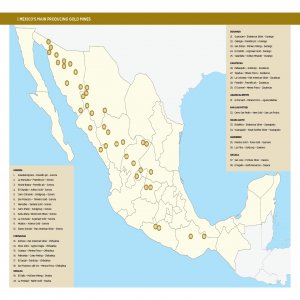
A: In 2001, the precursor of Goldcorp, Wheaton River, took over Minera Luismin, a company with a long history of mining in Mexico which owned the San Dimas mine in Durango. Because San Dimas produces significant byproduct silver along with its gold, it made the creation of Silver Wheaton possible through the first streaming deal ever made, in October 2004. It continues to improve under the ownership of Primero Mining, which has done a very good job of advancing the project. It completed an expansion to 2,500 t/d earlier this year, and has now decided to undertake another expansion to 3,000 t/d through 2015. The second largest asset we work with in Mexico is Peñasquito, owned and operated by Goldcorp. We stepped in when Goldcorp needed capital to build Peñasquito. They chose to use a stream to help fund the project capital. We paid around 40% of the capital cost at Peñasquito for 25% of the silver production, which at that time represented around 6.5% of the revenue. It was very attractive for Goldcorp’s shareholders because their share base was not diluted, and it was also very beneficial for Silver Wheaton because it is a great asset. This year it looks like Peñasquito may become the largest silver producing mine in the world, and our 25% of that silver production may finally surpass San Dimas as that largest contributor of silver production in our portfolio. We also work with the Cozamin mine, which is owned by Capstone, where we get 100% of the silver that is produced. This is one of the streams we acquired when we took over our competitor, Silverstone. The Cozamin mine is an underground copper mine in Zacatecas which produces around 1.5 million ounces of silver per year. Capstone has done a very good job of getting the project up and running again. Next on the list is Campo Morado in Guerrero, which originally belonged to Farallon when we signed the initial agreement but is now owned by Nyrstar, which is a zinc smelting company that has been making investments into zinc mines, and has done well at Campo Morado. Our smallest producer in Mexico is Goldcorp’s gold heap leach project in Guerrero, Los Filos, where we get 100% of the silver byproduct. Our five different assets in Mexico are good assets.
Q: What are Silver Wheaton’s objectives for the coming three to five years?
A: While both are valuable, Silver Wheaton still prefers silver streams over gold streams, since we believe there is a better upside in silver prices. However, we are more than happy to take on gold streams on good quality assets. We think that in Mexico there are a lot of very exciting earlier stage exploration projects, and we do think that with the early deposit structure that we announced on November 2013, these are projects that the company can begin to support more widely. Mexico is a target area for Silver Wheaton, and there are some big opportunities that we would love to be a part of. When looking at potential acquisitions we always compete against issuing shares, and while the market remains as it is, there are many opportunities for us. Mexico has always been very important to Silver Wheaton; it is where we founded the company. In terms of projects and growth, Mexico and Peru are the key countries for Silver Wheaton.
You May Like




Most popular








