US Adds Copper, Potash, and Silicon to Critical Minerals List
 By Paloma Duran | Journalist and Industry Analyst -
Wed, 08/27/2025 - 13:13
By Paloma Duran | Journalist and Industry Analyst -
Wed, 08/27/2025 - 13:13
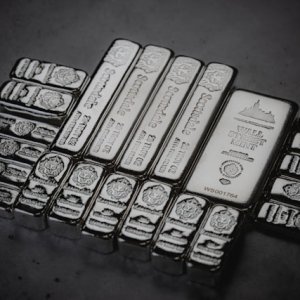
The US government has proposed adding copper, potash, and silicon to its critical minerals list, the biggest update since 2018. The move reflects changing market conditions and new data shaping US mineral security policy. A final list will be published after a 30-day public comment period. Updated every three years under the Energy Act of 2020, the list now features 54 minerals in its 2025 draft. Six minerals, copper, silicon, potash, silver, lead and rhenium, were proposed for inclusion, while tellurium and arsenic were removed.
According to the US Geological Survey (USGS), copper and silicon were added due to the potential economic impact of disruptions in refined supply. Lead and rhenium, which narrowly missed inclusion in 2022, were added under a new methodology. Potash was flagged because of possible trade barriers from key suppliers such as Canada, while silver was included to account for a possible high-impact disruption scenario in Mexico.
Tellurium was dropped after the US became a net exporter, while arsenic was removed following revised data showing Peru, not China, as the main producer, reducing supply risks.
For the first time, critical minerals are classified into three categories of supply risk: high, elevated, and moderate. The methodology also considers the economic consequences of shocks and highlights “single points of failure” where dependence falls on a single producer.
The assessment spans 84 mineral commodities, 402 industries and more than 1,200 scenarios. “Minerals-based industries contributed over US$4 trillion to the US economy in 2024. With this methodology, we can better identify industries most vulnerable to supply disruptions,” said USGS Acting Director Sarah Ryke.
You May Like






Most popular