

Powering Mexico’s Rail Future Through Innovation


STORY INLINE POST







 By Adriana Alarcón | Journalist & Industry Analyst -
Wed, 07/02/2025 - 10:58
By Adriana Alarcón | Journalist & Industry Analyst -
Wed, 07/02/2025 - 10:58
Q: What role does Ferrovalle play in Mexico’s modern logistics network?
A: Ferrovalle is the logistical heart of Mexico and plays a strategic role as the most important intermodal and rail terminal in the country. As a short-line railroad, it connects major Class I railroads across North America from Canada to southeastern Mexico. With a robust operation exceeding 100 trains per day, our strategic location firmly establishes us as the premier gateway linking central and northern Mexico. We serve as a connection and strategic bridge between the north and south of the Mexican rail network. Ferrovalle handles up to 30 trains daily, outperforming even the most prominent and efficient border crossings, reinforcing its role as a critical logistics node in North America.
Ferrovalle operates through two main divisions: rail and intermodal. The rail division manages over 1.3 million railcars annually, the highest figure for any terminal in Mexico. Our classification yard uses a hump yard system, where a single locomotive pushes cars up a slope and they are automatically sorted by gravity. This system not only boosts operational efficiency but is also one of the most sustainable methods for train classification. We serve 160 industries across the Valley of Mexico, including global companies like Procter & Gamble, ExxonMobil, and Ford, as well as iconic Mexican brands like Jabones La Corona and Harinera Elizondo. The agro-industrial sector, especially grains, represents 50% of our volume. We also handle general cargo, chemicals, petrochemicals, steel, cement, and consumer goods. Our infrastructure includes a 500km rail network, 250km of main track and 250km of secondary lines, supported by 45 locomotives and a workforce of 1,500 people, Positioning us as a true logistical lung for a metropolis of over 23 million people, our operations not only enable the seamless flow of goods, but also contribute meaningfully to urban sustainability, reducing congestion, lowering emissions, and advancing a cleaner, more efficient supply chain for the Valley of Mexico.
Q: What role does the intermodal division play in Ferrovalle’s operations?
A: Our intermodal division plays a crucial role. In 2024, we handled 550,000 TEUs, making us the largest inland intermodal terminal in Latin America in terms of volume, connectivity, and service variety. We are the only inland terminal in Mexico that provides comprehensive maritime, cross-border, and domestic intermodal services. We connect with the country’s key ports: Lazaro Cardenas, Manzanillo, and Veracruz. For cross-border services, we have built a successful alliance with Grupo México Transportes, BNSF in the United States, and carrier JB Hunt. This collaboration, operating through the Eagle Pass-Piedras Negras crossing, allowed us to scale from 100 containers in January 2023 to 2,000 by the end of the year. This service reactivated the export potential of the Valley of Mexico, giving industries in areas like Cuautitlan, Naucalpan, and Iztapalapa a direct intermodal route to the United States, eliminating the need to ship goods to hubs like Silao first.
Our domestic corridor, particularly the Mexico-Mexicali route, has seen double-digit growth for seven consecutive years. This 3,000km corridor, which used to be dominated by trucking, is now one of the most efficient intermodal routes in the country. It supports both import and export movements, with containers traveling fully loaded in both directions, unlike maritime routes that often return empty. This balanced and sustainable model strengthens Mexico’s logistics network and confirms Ferrovalle’s role as a critical hub for national and international trade.
Q: How has Ferrovalle adapted its rail and intermodal operations to manage the significant growth in demand, and what role has technology played in that transformation?
A: Over the past three years, Ferrovalle has undergone a significant transformation in both its rail and intermodal operations in response to growing demand. As a logistics company, one of our core priorities is continuous growth. This can be achieved either through infrastructure investment or by improving internal processes. Every year, we implement a parallel strategy focused on increasing capacity, ensuring we are prepared for any eventuality.
External disruptions — such as migrant flows, border issues, or rail blockades — can quickly impact the network. For example, last year’s severe blockades along the Veracruz corridor halted rail traffic for three weeks. Our job is to make sure Ferrovalle has the resilience to absorb that shock without collapsing. That is why our capital expenditures (CAPEX) are always focused on infrastructure and technology that boost efficiency and capacity. These annual investments typically yield a 10%-15% increase in capacity, but they are just one part of the equation. The other critical component is process improvement, which is ongoing throughout the year and increasingly supported by technology. Over the past five years, we have led a full-scale digital transformation. This has involved change management and reshaping the mindset of operators, helping them adopt real-time dashboards and data tools that support faster, smarter decision making.
Thanks to these changes, our teams now rely on instant data to manage and decongest our rail yards and intermodal terminals more efficiently. Without technology, this level of operational control would be impossible. Logistics companies dealing with such complexity can no longer operate effectively without advanced technological tools. Real-time, accurate indicators are essential to maintain efficiency and respond to the ever-changing logistics landscape.
Q: What specific technological innovations has Ferrovalle implemented to improve operational efficiency?
A: Over the past five years, we have carried out a deep technological transformation at Ferrovalle. Previously, it could take us up to two hours each morning and wait for our several operational calls to understand the state of our operations. Now, we can check real-time performance data at any time. Dashboards show color-coded diagnostics of the rail and intermodal terminals, allowing immediate visibility into operational health 24/7, even on weekends. This transformation was made possible thanks to two key teams: our operations team and our in-house innovation and IT development team. They worked together to understand the core processes, define KPIs such as yard occupancy, dwell times, and railcar classification efficiency, and translate those into sophisticated dashboards. These dashboards, built to handle thousands of data points, give us real-time control and better decision-making tools. These teams are some of our most valuable assets, and they have enabled us to think beyond dashboards toward automation and eventually AI.
We have already begun implementing automation. At our intermodal terminal, we are rolling out an automated truck access system (OCR), similar to those used in ports like Rotterdam and New Jersey. This system scans license plates and chassis, preloads truck data, and grants entry with a card scan. What used to take minutes is now taking seconds, reducing fuel use and emissions during wait times. Another major initiative is the ongoing modernization of our hump yard, with a CAPEX of MX$100 million (US$5.26 million) this year. With real-time dashboards, we can now visualize which railcars are being classified and ensure that the process remains orderly.
Q: How has Ferrovalle’s technological transformation and human capital development contributed to improving your operational efficiency?
A: Ferrovalle has undergone a significant technological transformation in recent years, enabling us to deliver a historically high level of service without bottlenecks. We now act as facilitators for both users and rail operators. Our world-class service is driven by our strong human capital, blending seasoned experience with fresh, disruptive talent. This integration took five years of effort but continuous improvement is part of our DNA. We are not just a railroad moving cars; we move the entire Valley of Mexico, powered by our dedicated team.
In recognition of their work, we are proud to say Ferrovalle offers one of Mexico’s best logistics products. To further enhance operations, we will soon inaugurate our new dispatch center, which will serve as the operational brain of the company.
Q: What sustainability initiatives has Ferrovalle implemented to reduce its environmental impact?
A: Sustainability is a core priority for Ferrovalle. While we are not directly in charge of last-mile operations, we partnered with Hapag-Lloyd and Marva to pilot the first fully electric first and last-mile transport service in Mexico, using our terminal as the launch point. This collaboration demonstrates how we can serve as a platform for innovation and sustainable logistics solutions.
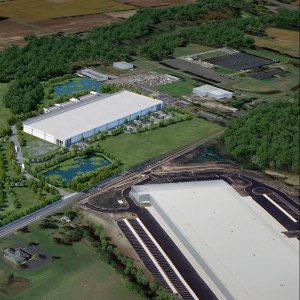
Ferrovalle spans nearly 300ha in the Valley of Mexico and moves over 60 million t of cargo annually, equivalent to 1.2 million railcars and 500,000 containers, using just 40 locomotives. That volume would require over 15,000 trucks per day. That is why we proudly consider ourselves the logistical lungs of the Valley of Mexico, significantly reducing emissions in one of the most congested areas in the country.
Our hump yard classification system, the only one of its kind in Mexico and Latin America and one of just 30 in all of North America, is a unique asset. It allows for highly efficient and low-emission rail operations by using gravity rather than fuel-intensive shunting, making it one of the most sustainable systems in rail logistics. We also invested heavily in cleaner equipment for our intermodal terminal. Over the past five years, we have completely renewed our fleet of cranes and terminal tractors, bringing the average equipment age down to just 1.5 years. These machines feature the latest fuel-efficient engine technologies, minimizing emissions during the handling of our growing container volumes. We also operate a 10km internal perimeter road for outbound intermodal trucks. This shortcut enables containers heading north of the State of Mexico to bypass city traffic, cutting travel time from two hours to just 15-20 minutes, significantly reducing emissions and improving driver quality of life. This initiative has earned us annual recognition from the Federal Environmental Ministry.
Rail emits 75% less CO₂ than trucking. The rail sector is, by far, the most sustainable mode of freight transport. When we combine this inherent efficiency with all the localized initiatives we have implemented at Ferrovalle, we can clearly see our positive impact on the region’s environmental footprint.
Q: What are the main barriers preventing greater adoption of intermodal transport in Mexico, and how can logistics companies and rail operators work together to unlock its full potential?
A: One of the biggest challenges in promoting intermodal transport is helping potential clients understand its real value, particularly those who still rely heavily on trucking. Traditional rail users already know the benefits of rail and where to access it. The true opportunity lies in reaching companies that have not yet explored rail, especially through the intermodal model, which is the most accessible entry point to the rail system. To unlock this opportunity, we need better outreach and education. Many companies stick with trucking because they value immediate availability. They get an order, load the truck, and send it off within hours. It is simple, fast, and familiar, but also expensive. What many do not realize is that with better planning, intermodal can reduce costs by 50% to 70% while maintaining dependable delivery. Beyond cost, intermodal transport reduces dependency on massive in-house trucking fleets. It offers scalability and operational efficiency by combining long-haul rail with first and last-mile trucking.
Intermodal terminals are not D2D delivery points; they serve as regional hubs with a range of up to 200km-300km. In the United States, intermodal logistics became successful when trucking companies evolved. Companies like J.B. Hunt and Schneider recognized that they could maintain control of first and last mile operations, while using rail for the long-haul. They invested in intermodal containers and built integrated services in partnership with railroads. Mexico is not quite there yet, but there are early signs with companies like EASO and Traxión beginning to move in that direction.
The next step for major Mexican carriers is to invest in intermodal containers and embrace this model. Rail operators must also continue expanding terminal infrastructure to meet growing demand. If both carriers and railroads evolve, we will unlock the full potential of intermodal transport in Mexico.
Q: How has Ferrovalle’s collaboration with Hub Group enhanced cross-border logistics?
A: We are excited to have Hub Group as an intermodal client at Ferrovalle, both for origin and destination cargo. Its joint venture with Easo has driven a significant positive increase in volumes. This partnership combines a skilled US container operator with an experienced Mexican carrier, an ideal collaboration that is already showing strong results.
In the Chicago-Ferrovalle corridor, all our cross-border routes serving the Valley of Mexico have experienced double-digit growth compared to the previous year.
Q: What innovations has Ferrovalle implemented to improve truck flow and train turnaround times?
A: About 68% of the containerized cargo we handle goes to destinations within Mexico City, covering key corridors like Naucalpan, the historic center, Iztapalapa, and Vallejo. The remaining 30% is directed northward, primarily serving industrial corridors such as Cuautitlan, Huehuetla, and even Tepeji del Rio.
A major operational improvement has been the implementation of appointment scheduling at the customs facility for truck arrivals, which has been in place for nearly two years. This system flattens peaks in truck traffic, enabling a smoother, more predictable flow of cargo in and out of the terminal. It reduces congestion both within the terminal and on the city streets, improving the quality of life around the terminal and making the operation more efficient. We will soon activate automated entry and exit arches (OCR) for trucks in the customs area. This system integrates with the appointment scheduling to further regulate truck arrivals, distributing traffic evenly throughout the day instead of concentrated peaks early in the morning. This ensures a more manageable, safer operation that benefits both operators and the city.
The truck operators are our most important customers, as they directly impact the overall logistics flow. We have drastically reduced train turnaround times. Three years ago, trains took up to 48 hours to unload and reload 240 containers; now, this process takes just 18 hours. This efficiency positions Ferrovalle as the most efficient intermodal terminal in Mexico. By focusing on the truck operator experience, minimizing wait times and facilitating quick load and unload cycles, we maximize truck utilization and allow multiple trips per day. This enhances service quality and makes Ferrovalle the preferred terminal for operators and clients alike.
Q; How has Ferrovalle been impacted by recent tariff adjustments and trade policy shifts between Mexico, the United States, and other global partners?
A: We observed an unusual volume spike in January and February 2024, likely in anticipation of tariff and trade policy changes. However, from March to May, volumes slightly declined or flattened compared to the previous year. Since June, we have seen a positive recovery as supply chains stabilize and importers and exporters regain confidence and production momentum.
Despite these fluctuations, Cross-border intermodal container traffic was not disrupted, but slightly grew throughout the period. This demonstrates that some sectors continued moving goods regardless of tariff uncertainties, showing resilience in the logistics chain. Overall, while trade policy shifts caused some short-term adjustments, the market is quickly adapting and recovering.
Q: What role will Ferrovalle play in shaping the future of the freight and logistics industry, and what strategies are you implementing to drive growth, improve efficiency, and encourage the migration of cargo from road to rail?
A: We see a promising future for the industry despite challenges like theft, migration, and tariffs. Ferrovalle is focused on modernizing operations through technology and infrastructure investment to increase efficiency and attract more customers, driving a shift of cargo from road to rail.
For example, we handle large volumes of wheat — about 110 railcars of 90t each — coming from the United States and Canada to mills in the Valley of Mexico. This cargo moves quickly through our terminals in less than 24 hours and supports a virtuous cycle of production and distribution. Our goal is to replicate this success across other markets served by trucks by offering a better, more sustainable rail service with short-haul rail “last mile” solutions.
From an operational standpoint, we have achieved a sustained reduction in terminal yard occupancy, from critical levels of 90% down to a stable 45%, maintained consistently over the past 24 months, reflecting a step-change in efficiency, asset utilization, and network fluidity, freeing capacity for growth. We emphasize fast cargo turnover because terminal storage (dwell time) reduces efficiency and capacity. Our 98% delivery effectiveness across 28 industrial services proves our reliability
Ferrovalle aims to continuously expand capacity, improve processes, and build rail routes to serve underserved corridors and commodities, helping more clients migrate freight from trucks to rail while providing high service levels with rapid cargo handling and turnover. This is the future we are actively building.
Q: What are Ferrovalle’s top operational, technological, or infrastructure priorities for the remainder of the year?
A: Despite ongoing uncertainties, Ferrovalle expects positive results and growth for the rest of 2025. We are navigating disruptions related to ports, borders, and customs by closely collaborating with authorities to maintain smooth network operations. Our operational focus centers on four key principles: efficiency, consistency, predictability, and repeatability. These ensure that customers receive reliable, stable service with the same expected outcomes every time, which is critical in logistics.
Looking ahead to the 2Q25, our peak season, we anticipate a volume recovery driven by inventory buildup and year-end sales, positioning us to meet our annual goals.
Technologically, a major priority is implementing advanced automation, such as the new automated rail gates system (OCR). This technology will enable real-time train identification and automated classification, reducing processes that once took four hours down to near-instantaneous operations. This innovation is part of our ongoing CAPEX investments to enhance operational efficiency as we prepare for strategic growth into 2026.
Ferrocarril y Terminal del Valle de México (Ferrovalle) is a Mexican railway and intermodal terminal company operating in the Valley of Mexico. It is a key logistics hub, connecting the northern and southern parts of the country and serving as the "last mile" for rail freight. It is jointly owned by Canadian Pacific Kansas City and Ferromex.
You May Like





Most popular








