


Mexico Advances Toward NDC 3.0 With Stakeholder Input
 By Eliza Galeana | Junior Journalist & Industry Analyst -
Tue, 08/12/2025 - 16:04
By Eliza Galeana | Junior Journalist & Industry Analyst -
Tue, 08/12/2025 - 16:04
Over the past month, Mexico has convened academia, gender experts, and state authorities, to advance its climate policy goals and shape its Nationally Determined Contribution (NDC 3.0), the updated commitment all Paris Agreement signatories must submit in 2025 as part of the third global stocktake.
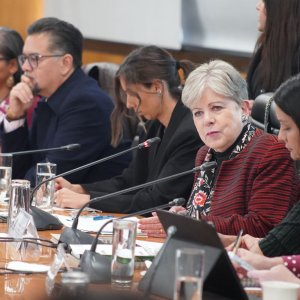
During a participatory workshop with the academic sector for the third NDC update, organized by the Ministry of Environment and Natural Resources (SEMARNAT) in collaboration with the Sustainable Development Solutions Network (SDSN) Mexico, representatives from 19 universities gathered to contribute input from academia to the process of updating Mexico’s commitments under the United Nations Framework Convention on Climate Change (UNFCCC).
Participants engaged in working groups to share gaps, opportunities, and lessons learned regarding the update and implementation of Mexico’s NDC 3.0. They also discussed strategies to drive climate action within and from their institutions, focusing their reflections on developing significant, feasible proposals with the potential to be incorporated into the draft document currently being prepared by SEMARNAT.
Andrea Hurtado, Director General of Climate Action Policies, SEMARNAT, emphasized that collaboration between government and universities is essential for developing robust, science-based climate strategies. Karina Ruiz, Strategic Engagement Lead and SDSN Mexico Manager, Tecnologico de Monterrey, highlighted the valuable opportunity this gathering provided for universities to share existing climate actions and identify areas for collaboration—both among themselves and with environmental institutions.
Regarding the gender perspective within the NDC, SEMARNAT met with representatives from UN Women to ensure that the country’s climate commitments effectively integrate gender and human rights considerations.
Hurtado explained that the third edition of the NDC will incorporate three new components, in addition to mitigation and adaptation: loss and damage associated with climate change, means of implementation, and multi-sector issues. The latter will include specific measures on gender equality, human rights, a just transition for the workforce, intergenerational equity, and support for priority populations.
Participants explored guiding questions in thematic groups on mitigation, adaptation, loss and damage, and means of implementation. In addition, mechanisms for ongoing collaboration were established to follow up on the implementation of NDC 3.0, ensuring that gender equality remains an overarching priority in all climate actions.
Good practice examples were presented to showcase the contributions of women to climate action in various Mexican states, with projects such as Oceans and Gender Perspective, Integrating Gender into Public Policy, and The Role of Women in Extreme Climate Events. UN Women and UNDP also shared tools and specialized projects to promote gender equality in climate policy, including the Women’s Voices initiative, which seeks to amplify women’s participation in climate action decision-making.
Recently, SEMARNAT and WWF held the second participatory workshop with state environmental authorities. The meeting focused on incorporating a resilience perspective in food systems, the gradual phase-out of fossil fuels within an energy security context, and the protection of human and ecosystem health within the NDC 3.0 framework.
Attending authorities stressed the importance of having dialogue spaces to inform decision-making, as these foster governance and effectiveness in public policy design and implementation. They also highlighted the need for a standardized reporting system with methodologies for inventory development, federal support to strengthen coordination and integrate municipal agendas, and the identification of common issues that can link agendas and financing initiatives for climate action implementation and monitoring through the NDC.
In general, state representatives reported significant progress in adaptation, mitigation, institutional arrangements, and the legal framework, but acknowledged the need for stronger regional and federal coordination on climate action training, financing, data generation, communication, and capacity building.
Like all Paris Agreement signatories, Mexico must update its NDC in 2025, and must demonstrate an increase in climate ambition in line with the principle of progression and based on scientific evidence. It is expected that signatory countries, including Mexico, will submit their updated NDCs ideally ahead of COP30, to be held in Brazil this year. So far, countries that have met this requirement include the Marshall Islands, Singapore, Saint Lucia, Andorra, New Zealand, United Kingdom, Switzerland, Uruguay, United States of America, Ecuador, Brazil, and the United Arab Emirates.
Mexico’s most recent NDC, submitted in 2022, increased its greenhouse gas reduction target from 22% to 35% by 2030 compared to the baseline, with at least 30% to be achieved using national resources and an additional 5% supported through international cooperation and financing earmarked for clean energy.
You May Like





Most popular








