


Mexico Aims to Turn Sargassum Into Sustainable Products
 By Duncan Randall | Journalist & Industry Analyst -
Mon, 09/01/2025 - 17:32
By Duncan Randall | Journalist & Industry Analyst -
Mon, 09/01/2025 - 17:32
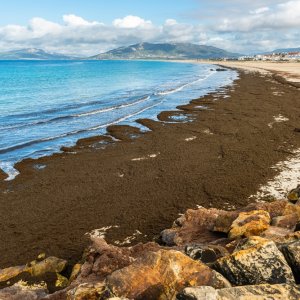
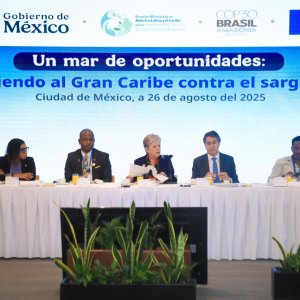
Mexico’s Ministry of Environment and Natural Resources (SEMARNAT) is spearheading a regional effort to transform sargassum—a fast-spreading algae that has become a recurring hazard along Caribbean coasts—into a resource for sustainable industries. The program aims to create new pathways for circular economy projects and strengthen regional climate resilience. The initiative was launched during the Ministerial Reunion of Latin America and the Caribbean for the Implementation of Regional Action, where SEMARNAT, in partnership with the European Union, hosted a technical session titled “A Sea of Opportunities: Uniting the Greater Caribbean Against Sargassum.”
According to SEMARNAT Minister Alicia Bárcena, the scale of the problem is unprecedented. “Sargassum is a phenomenon without borders,” she said. “Today, the Caribbean faces more than 50 million metric tons of this algae. Regional cooperation is not optional—it is the only way to turn a threat into an opportunity.” The meeting brought together representatives from across the Caribbean, including Grenada, the Dominican Republic, Venezuela, Colombia, Saint Kitts and Nevis, Costa Rica, Cuba, and Guatemala. Mexico’s Coordinator for Sargassum Containment, Topiltzin Flores, also participated.
Delegates agreed to develop a Regional Action Plan on Sargassum in the coming months, to be presented at the COP30 summit in Belem, Brazil. The plan is expected to include prevention strategies, early-warning systems, improved collection methods, and value-creation projects based on circular economy models. It will serve as a shared roadmap for Caribbean governments and industries seeking to mitigate the environmental impact of sargassum while unlocking new opportunities for innovation.
A 19-point declaration issued after the meeting highlighted the urgency of the issue. Point 16 expressed “deep concern about the growing impact of sargassum on our coasts” on behalf of all 22 participating nations. Bárcena warned that the influx of sargassum is “concretely affecting the Caribbean, causing coral bleaching, coastal erosion, deforestation, and degradation of marine ecosystems.”
EU Ambassador Francisco André reaffirmed the bloc’s support for the Regional Action Plan, calling it a model of environmental cooperation: “Together we can turn one of the region’s greatest environmental challenges into a driver of sustainable development.”
SEMARNAT highlighted this potential in May with the launch of Mexico’s first Sargassum Circular Economy Park in Quintana Roo. Designed as an industrial hub, the facility will process sargassum into products such as biogas, organic fertilizers, bioplastics, building materials, and cosmetics.
Quintana Roo Governor Mara Lezama emphasized that this project will convert environmental liabilities into economic assets. She noted that managing sargassum currently costs about 11% of the state’s GDP—approximately US$2 billion annually. “This project will transform sargassum into an opportunity, fostering new sustainable industries, creating jobs, and reducing environmental impacts,” she said.
Mexico has also updated its National Fisheries Charter to classify sargassum as a potential fishery resource. This change allows for regulated, sustainable use of the algae within national waters, creating opportunities in aquaculture, feedstock development, and marine biotechnology. The reclassification also establishes a legal framework for economic activities linked to sargassum, enabling businesses to explore commercial uses while maintaining strict environmental oversight.
You May Like

Most popular








