


Santander México Awards Top 2025 Sustainable-Finance Deals
Santander México has recognized 11 companies and public entities for standout sustainable-finance transactions in 2025, underscoring the bank’s role in shaping one of Latin America’s most activeESG markets. The awards, presented during the Santander Sustainable 2025 Event, highlighted operations that introduced new sustainability labels, opened financing pathways in untapped sectors, or set size records in the Mexican market.
The event brought together government officials, financial leaders, and corporate executives to review progress in labeled and sustainability-linked financing, which continues to channel capital toward projects with lower environmental impact, resource efficiency and stronger social outcomes. The 11 recognized operations spanned infrastructure, tourism, education, fishing, manufacturing, agriculture, real estate and energy—reflecting broadening demand across sectors for financing aligned with global sustainability standards.
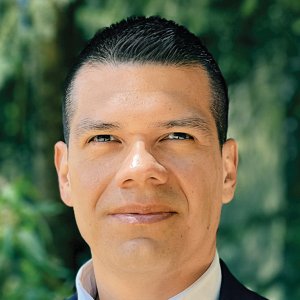
Javier Perochena, head of Sustainable Finance, Santander México, said the country is undergoing “accelerated maturation” in adopting sustainable instruments. He noted that this year’s transactions stand out not only for their scale but also for their innovation. Each deal, he said, “marks a clear step toward a more inclusive economy with a smaller environmental footprint.”
Among the highlighted transactions was the Ministry of Finance’s BondESG, the largest local use-of-proceeds bond in the market. The State of Sinaloa received recognition for securing the largest sustainable credit granted to a subnational government. In real estate, Fibra Uno was acknowledged for sustainability-linked bonds issued both locally and cross-border, while Vesta earned recognition for the largest sustainability-linked labeled credit in Mexico. Grupo Lomas was cited for a green loan tied to environmental certifications for hotels in the Caribbean.
Companies securing their first sustainable financing included Fibra Shop, FibraeMX and Linde, which obtained labeled loans aimed at energy-efficiency upgrades, emissions reductions and renewable-energy use. Additional awardees included Edilar, recognized for a social loan supporting teacher-training programs, ABC Aluminum Solutions for a green loan in metals manufacturing and Grupomar for sustainable financing in the fishing sector.
The Santander Sustainable 2025 Event came during a year of active sustainable financing by the bank. In November, Santander announced a strategic alliance with solar solutions company Solfium to accelerate renewable energy adoption among small and medium-sized enterprises (SMEs) through accessible financing schemes. Under the partnership, participating SMEs will have access to credit products with preferential interest rates and no opening fees to install photovoltaic systems, making solar investments more attainable and financially viable for businesses of all sizes. As part of the collaboration, Santander and Solfium will launch a corporate digital dashboard that enables companies to monitor their solar projects in real time, tracking energy generation, cost savings, and reductions in carbon emissions. The system will also support clients in reporting sustainability progress and measuring contributions toward net-zero objectives.
Meanwhile, in September, the bank revealed it had financed more than 2,700 Tesla electric vehicles since 2020, totaling nearly MX$1.82 billion (US$98.97 million). Santander also became the first bank in Mexico to join the Electro Mobility Association (EMA), which aims for 100% of new vehicle sales in Mexico to be electric by 2035. As a member, Santander commits to supporting projects that expand charging infrastructure and provide financing for electric vehicle purchases.
According to Perochena, Santander has taken an active role in making Mexico’s decarbonization targets a reality. “Santander is committed to leading the transition toward a low-carbon economy. Through our alliances, we provide tangible financial solutions that help our clients become more sustainable, competitive, and responsible,” he said.
You May Like





Most popular








