


DEI: A Profit Driver for Mexican Businesses
 By Aura Moreno | Journalist & Industry Analyst -
Wed, 06/25/2025 - 10:13
By Aura Moreno | Journalist & Industry Analyst -
Wed, 06/25/2025 - 10:13
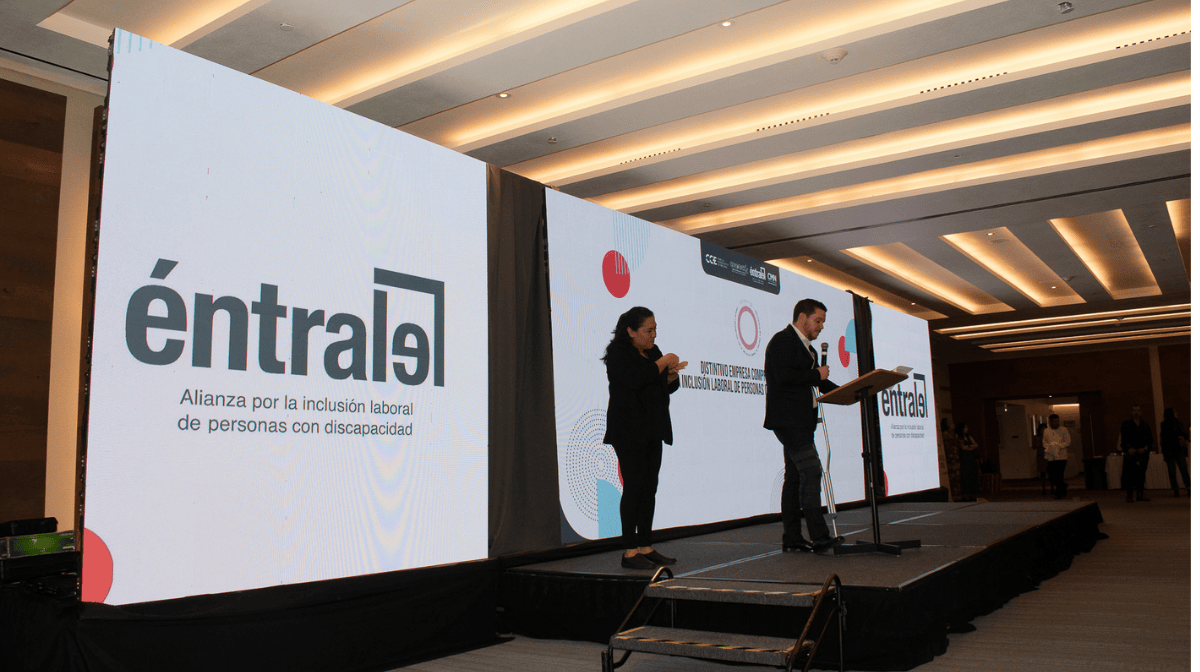
At the event, DEI Beyond a Trend: Building Social Well-Being, held last week in Mexico City, business leaders, inclusion experts, and public officials gathered to discuss the growing impact of labor inclusion for people with disabilities in Mexico. Organized by Éntrale and the Mexican Business Council (CMN), the forum served as the stage to present the 2024 Labor Inclusion Index for People With Disabilities (IILPCD) and recognize 35 companies for their leadership in inclusive workplace practices.
According to the index, companies that implement formal hiring policies for people with disabilities are seeing up to 30% higher profit margins than peers. Inclusive firms also reported 28% more revenue and twice the net income of those without defined strategies, alongside improved productivity and lower turnover rates.
“Labor inclusion has stopped being symbolic or aspirational; it is now a strategic component,” said Fernando Estrada, CEO, Éntrale, for MBN. He emphasized that companies are now integrating measurable inclusion goals, performance indicators, and systems that position diversity as a business advantage rather than a compliance effort.
The 2024 index shows that 95% of participating companies have set hiring goals, and 91% have engaged top leadership in implementing them. Estrada highlighted that executive-level commitment can vary depending on each company’s culture, but successful cases often involve CEOs tying inclusion directly to business metrics, innovation outcomes, or reputational goals.
Representatives from companies large and small noted that inclusion has moved from HR conversations into core business strategy. The case studies presented showed retention among employees with disabilities averaging just 1.27%, compared to 10% in companies without specific retention policies, thus yielding measurable operational savings.
Speakers also addressed the untapped potential of the “purple market” (consumers with disabilities) estimated to have global purchasing power above US$13 trillion, according to The Valuable 500. Companies with inclusive practices were found to be up to 25% more likely to outperform competitors in productivity.
By contrast, the economic cost of exclusion was also discussed. International estimates suggest that not integrating people with disabilities into the labor market may reduce Mexico’s GDP by 3-7% annually.
Recognition was a central element of the day. Thirty-five companies received the “Company Committed to Disability Inclusion” distinction, awarded jointly by the CMN, the Business Coordinating Council (CCE), the Coalition for the Rights of Persons with Disabilities (COAMEX), and Éntrale. The distinction highlights measurable outcomes in accessibility, training, and organizational transformation.
In total, Éntrale has supported more than 50,000 people with disabilities entering the workforce in collaboration with over 800 companies. Since 2018, the number of companies participating in the IILPCD has increased by 188%, from 45 to 130 in 2024. This year, 75% met their hiring goals, 85% trained recruiters in inclusive practices, and 2,690 hours of training were delivered. Additionally, 88% of participants reported physically accessible facilities, and 71% met digital accessibility standards.
“Inclusion is not about quotas or representation,” Estrada said. “It is about building workplaces grounded in belonging, respect, and participation. It is an investment in human capital and long-term business.”
You May Like



Most popular








