


Mexico Focuses on Science Diplomacy to Drive Tech Sovereignty
The Ministry of Science, Humanities, Technology, and Innovation (SECIHTI) has formalized science diplomacy as a central pillar of foreign policy to advance technological sovereignty and industrial development. This strategic integration aims to align international cooperation with national scientific priorities.
The strategy seeks to turn academic knowledge into a high-value asset for international negotiation. “We can make Mexico a scientific and technological power, because the country has a relevant place worldwide in science and especially in the humanities; we have much to give to the world,” says Rosaura Ruiz, Minister of Science, Humanities, Technology, and Innovation.
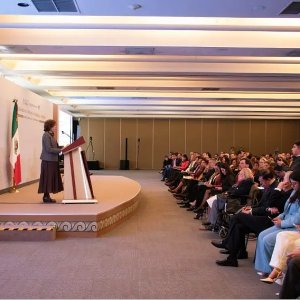
During the 37th Meeting of Ambassadors and Consuls, the Mexican government referred to the Mexican Foreign Service as the operational arm for knowledge transfer and technical investment. The establishment of SECIHTI as a governing body represents a shift in public administration, moving from fragmented scientific management to a centralized strategic planning scheme.
The initiative aims to address critical challenges through bilateral and multilateral cooperation. Priority areas include the energy transition, health security, and climate change mitigation. By positioning diplomatic offices as innovation hubs, the Mexican state seeks to reduce the technological gap and strengthen autonomy in high-value-added production processes. This framework establishes a state policy that links scientific rigor with macroeconomic stability and global competitiveness.
The SECIHTI roadmap includes plans for the management of critical infrastructure and high-specialization projects. Key technological pillars include the Coatlicue supercomputer, electromobility programs, and the strengthening of the aerospace industry through national satellite development. Furthermore, the ministry emphasizes the lithium value chain and the manufacturing of high-performance batteries, which are essential for energy independence.
To support these advancements, the administration proposed the 3:2:3 educational model to accelerate the training of specialized human capital. This scheme seeks a direct link between academia and national industrial projects, adopting technology transfer models from leading nations such as France, Spain, and India. The objective is to standardize Mexican technical capabilities with international market requirements.
“We can make Mexico a scientific and technological powerhouse, because the country has a prominent place in the world in science and especially in the humanities; we have a lot to give to the world," says Ruiz.
The government also plans to expand academic mobility agreements with international agencies, aiming to facilitate the flow of researchers and the connection of specialized talent. Ambassadors and consuls will operate under specific guidelines to identify co-investment opportunities in applied science and to strengthen legal frameworks for intellectual property and technology transfer.
SECIHTI expects Mexico to increase its influence in global technical forums, where diplomacy functions as a mechanism for scientific validation. Under the administration of President Claudia Sheinbaum, the ministry seeks to consolidate humanities and innovation as the drivers of a new industrial phase.
You May Like






Most popular








