Mexico, Singapore Celebrate 50 Years With Embassy and Trade Push
 By Fernando Mares | Journalist & Industry Analyst -
Mon, 12/08/2025 - 15:56
By Fernando Mares | Journalist & Industry Analyst -
Mon, 12/08/2025 - 15:56
Mexico and Singapore officially marked the 50th anniversary of their diplomatic relations this week by announcing the opening of a resident Singaporean embassy in Mexico City in 2026. The opening of this diplomatic representation aligns with both countries’ goal of creating certainty amid an unstable and protectionist trade environment.
The announcement was made during the Mexico-Singapore Business Forum 2025, where officials and business leaders from both nations outlined a strategy to deepen economic cooperation and diversify supply chains.
Singaporean President Tharman Shanmugaratnam, who led the delegation, described the current moment as a historical opportunity to relaunch the bilateral relationship. Following a meeting with Mexican President Claudia Sheinbaum, Shanmugaratnam confirmed that the new diplomatic representation will be Singapore's first resident embassy in the Spanish-speaking world. He stated that the mission aims to provide a bridge for more frequent contact and partnership building.
President Shanmugaratnam’s intention to strengthen bilateral ties comes amid a more protectionist approach from the United States, the world’s largest economy and individual consuming market. "We know that a weakened and less predictable international economic order is very likely here to stay. It makes it all the more important for the business community to diversify and develop wide networks that provide resilience amidst uncertainty,” he added.
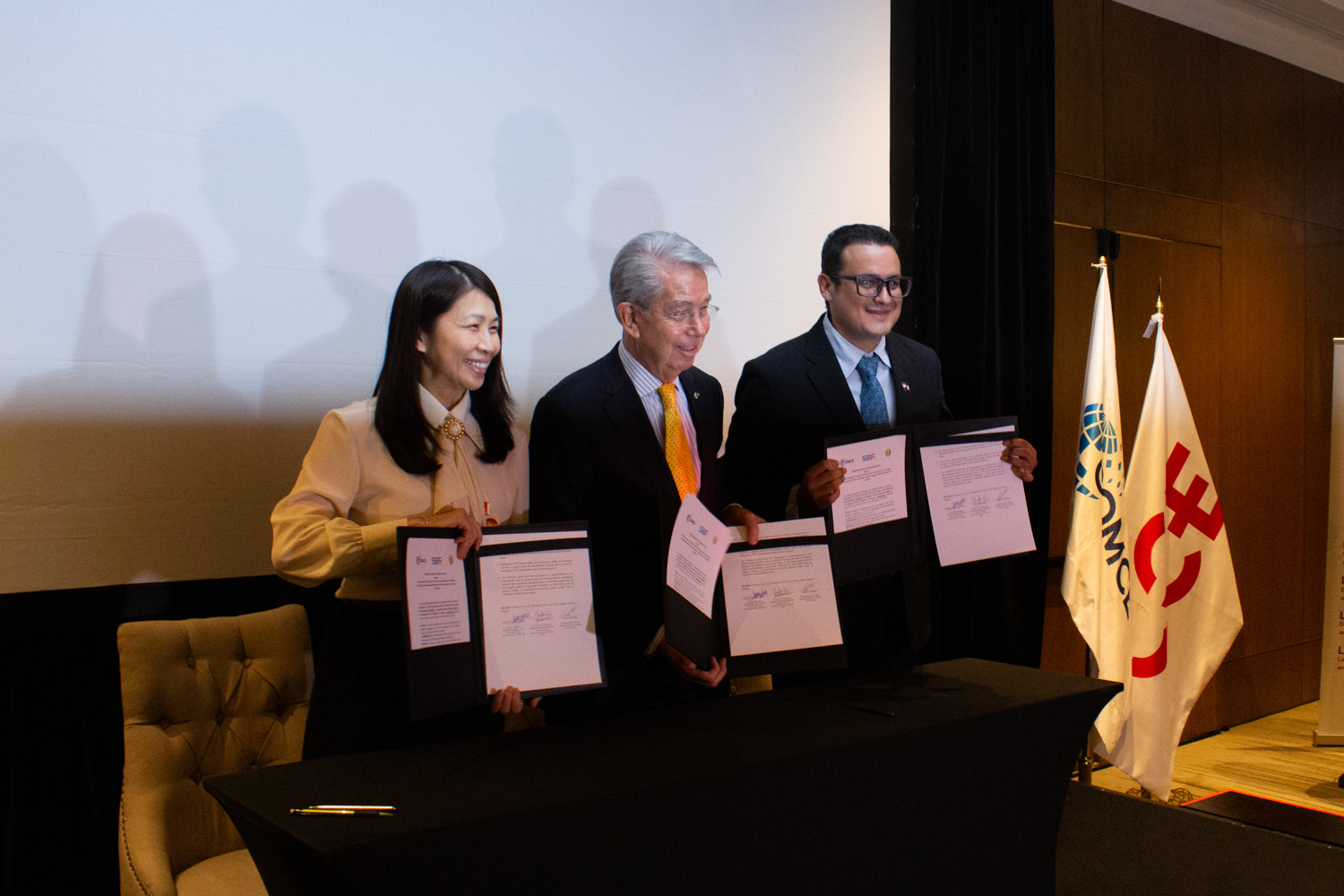
During the forum, organized by the Mexican Business Council for Foreign Trade (COMCE), the Business Coordinating Council (CCE), and the Singapore Business Federation (SBF), stakeholders highlighted that the relationship has evolved from diplomatic ties into a strategic collaboration based on innovation and investment. “In this meeting, we aspire to strengthen our bilateral ties of friendship and economic cooperation by boosting business alliances in supply chains and joint projects, both in Mexico and in other open economies in Latin America and Southeast Asia. This effort aligns with our country's strategy, known as Plan México, to diversify our trade and promote investment opportunities across various regions of the country,” said Francisco Cervantes, President, CCE.
Trade and Investment Dynamics
Bilateral trade between the two nations surpassed US$4.7 billion in 2024, a figure that has doubled over the last decade. The exchange is driven primarily by high-technology goods, including advanced manufacturing, data processing units, telephony, integrated circuits, and semiconductors. Singapore currently ranks as the fifth-largest destination for Mexican exports in the Asia-Pacific region and the top destination among ASEAN countries. "Mexican companies are looking to Singapore as a trusted gateway to Asia, a launchpad to reach the fast-growing ASEAN market of a combined GDP of US$3.6 trillion and over 650 million consumers," President Shanmugaratnam noted.
In terms of investment, Mexico received over US$1 billion in FDI from Singapore between 1999 and 2024. This trend has accelerated recently, with US$70.3 million recorded in 2024 alone. The most dynamic sectors for this capital inflow include energy, electronics, construction, and tourism.
President Shanmugaratnam noted that the next phase of the relationship will focus on strengthening links in advanced manufacturing, logistics, agribusiness, medical devices, and the green transition. He emphasized that in a weakened global economic order, diversification is critical for prosperity.
The economic partnership is supported by existing institutional frameworks, including the Asia-Pacific Economic Cooperation (APEC) forum and the Comprehensive and Progressive Agreement for Trans-Pacific Partnership (CPTPP). Additionally, the Free Trade Agreement between the Pacific Alliance and Singapore is expected to provide further benefits once Mexico concludes its ratification process.
Sergio Contreras Pérez, Executive President, COMCE, highlighted Mexico's industrial strength as a key asset for Singaporean investors. He noted that Mexico exported US$617 billion last year, with manufactured goods accounting for 90% of that total. Contreras added that Singapore’s position as a global leader in competitiveness and port operations makes it a strategic logistical and financial hub for Mexican companies looking to scale into Asia.
Singaporean Commitments to Mexico
Beyond the diplomatic milestones, the private sector is actively mobilizing capital. Gerson Garduño, Executive Director, Singapore-Mexico Chamber of Commerce, revealed that at least 15 Singaporean companies are analyzing investments in Mexico for the medium term. While some of these firms already have a footprint in the country, approximately 40% would represent new market entries.
The business mission accompanying President Shanmugaratnam held meetings with state economic development secretariats to channel capital into key sectors, including logistics, advanced manufacturing, e-commerce, medical devices, digital transformation, and fintech. Garduño noted that if pending projects materialize, Singapore's foreign direct investment in Mexico, which currently stands near US$2 billion according to chamber data, could double in the coming years.
A primary area of interest is logistics, where Singaporean firms are already deeply involved in Mexico's strategic projects. Surbana Jurong, a global infrastructure consultancy based in Singapore, played a key role in developing the master plan for the Interoceanic Corridor of the Isthmus of Tehuantepec (CIIT), designing the strategic roadmap to connect the Gulf of Mexico with the Pacific, as noted by Agustín García-López, Mexican Ambassador to Singapore.
Building on this foundation, PSA International, one of the world's leading port operators, has expressed interest in participating in the modernization and expansion of Mexico's Pacific ports. According to García-López, the company is exploring opportunities to transfer its automated technology and operational expertise to Mexican terminals, potentially participating in future public tenders to enhance connectivity with Asian markets.
You May Like




Most popular