

Mexico-Türkiye Relations Boost Global Position Amid Uncertainty



STORY INLINE POST




 By Fernando Mares | Journalist & Industry Analyst -
Mon, 11/03/2025 - 09:17
By Fernando Mares | Journalist & Industry Analyst -
Mon, 11/03/2025 - 09:17
Q: What is the core political and cultural difference a foreign policy leader or CEO must adjust to when shifting from a system like the US to Türkiye’s Eurasian context?
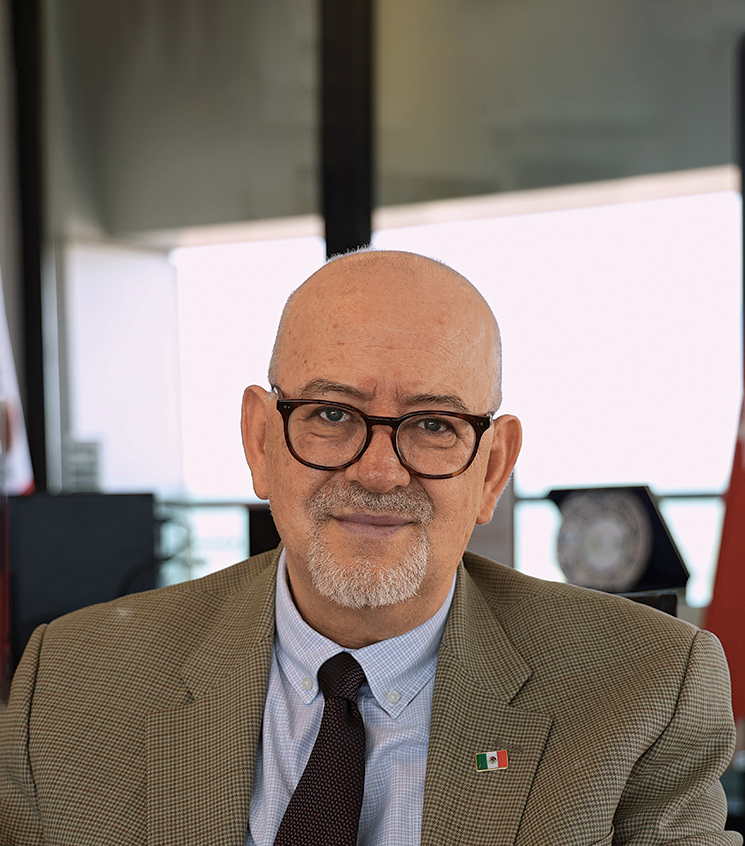
A: While proximity to the US is a tremendous advantage and opportunity for Mexico, it also presents a significant challenge for Mexican diplomacy: promoting Mexican business in other regions. When Mexican exporters look for a foreign market, they almost instinctively look north. My new role as Ambassador to Türkiye involves overcoming this inertia. The core challenge is making Mexican companies explore geographically distant markets that may be unknown to them, despite having significant potential.
My goal in Türkiye, along with the teams at the Embassy and the Consulate in Istanbul, is to bring together the Mexican and Turkish business communities and deepen economic ties. To achieve this, we must guide Mexican businesspeople through the Turkish culture and regulatory landscape so they can navigate it effectively.
Culturally, Mexican and Turkish businesspeople share many similarities that facilitate interaction. We both favor face-to-face communication, informal chatting, and building rapport over coffee or tea, often including conversations about family or personal interests, a dynamic distinct from the standard business culture in North America or Europe. However, I must also advise Mexican companies that while Turkish people are warm, they maintain a very strong sense of respect and formality, especially toward hierarchy and institutions. Furthermore, Turks are renowned as excellent, confident negotiators who are eager for business. Mexican companies must be ready to utilize their own skills to maximize results in this highly capable environment.
We are confident that the potential for deepening ties is high. There are already important Mexican success stories in Türkiye, with companies like Gruma, Kidzania, and Semolina Azteca operating here successfully. We aim to leverage these established achievements to encourage further engagement in this new environment.
Q: What is the political and diplomatic significance of the term "propositive bilateral agenda" for this Embassy, and how does it shift the relationship from maintaining ties to actively generating new areas of cooperation?
A: During my confirmation hearing and subsequent research, we highlighted the importance of the history of the Mexico-Türkiye relationship. There is certainly a historical friendship and a significant amount of potential. Although we have ongoing relationships, we could deepen our engagement. We are both G20 economies, ranking among the Top 20 largest in the world, yet this status is not reflected in the size of our bilateral trade and investment.
We are good partners in trade and share common views on many global issues. Our bilateral relationship is solid, and we have strong collaborative institutions set up at the bilateral and multilateral levels. However, we need to be more proactive. We must work together to promote and strengthen our communities, people, and especially our business sectors.
This brings me back to the challenge of making our business communities recognize this potential instead of just looking for the so-called low-hanging fruit in North America.
During my time in Ankara, I have been part of numerous events organized by the Embassy, including a Mexican photographer’s exhibition, a mezcal tasting in Istanbul, and a Mexican ceramics workshop here in Ankara. A local radio station here also promotes Mexican music. Our consulate in Istanbul, ably led by Alberto Fierro, is also pushing many initiatives.
However, we definitely need more high-level political contacts. High-level Turkish officials have visited Mexico in the past; President Recep Tayyip Erdoğan visited when he was Prime Minister, but has not yet done it since Turkiye adopted a presidential system. The Turkish Minister of Foreign Affairs has visited Mexico recently. Conversely, we want to see new high-level visits from Mexico to Türkiye, as we have not had them for some time. We deeply appreciate that Türkiye considers Mexico a high priority in Latin America, but we want to move forward beyond that. This is what I mean by pursuing a propositive agenda.
Q: Senators noted during your nomination that the Mexico-Türkiye relationship is stable but holds immense potential. What economic and trade opportunities can both nations strategically leverage to increase trade and investment volumes amid the current climate of geopolitical and supply chain uncertainty?
A: We are all living in an era defined by uncertainty, which is precisely the last word the business and investing communities want to hear. This presents a tremendous challenge. Mexico and Türkiye have established mechanisms for collaboration, including a bilateral commission with dedicated committees in both governments focused on strengthening our economic and trade relationships.
From the Mexican viewpoint, we are a supply chain powerhouse. The current global uncertainty, driven by global tariff threats, has eroded the predictability of trading with the largest economy in the world for many countries, including Mexico to a certain extent. However, Mexico's membership in the USMCA provides preferential access to the US market. This crucial advantage is the core driver of the global nearshoring phenomenon. The convergence of global uncertainty and Mexico's nearshoring advantage creates tremendous opportunities, especially for our relationship with Türkiye. These opportunities span a wide range of sectors: the auto industry and smart mobility, consumer electronics, medical devices, aerospace, renewable energy, and industrial machinery.
Turkish companies and producers can potentially benefit by integrating into this nearshoring plan. President Sheinbaum's Plan México serves as the guideline for presenting Mexico to the world in terms of investment and the nearshoring opportunity. This plan emphasizes areas where Mexican and Turkish companies can collaborate and share research capabilities, including science and technology, advanced manufacturing, battery storage and grid digitalization, health biotech, medical technologies, agri-tech, and water. While this moment brings worries, uncertainty can also bring about opportunities, and we view this environment as an ideal chance to strengthen our relationship with our Turkish friends.
This matches the goal for cooperation in the scientific field. Both nations possess a strong base for engineering and knowledge development at the academic and corporate levels. The key objective is to effectively connect this research foundation to production and manufacturing. Mexico has a wide range of expertise to share with a similarly sized economy like Türkiye, and these opportunities are substantial.
Q: Given the strong interest from the Turkish private sector to negotiate an FTA, what is Mexico’s position on the pace of negotiations, and what are the key protective measures or market access issues that remain the largest sticking points for Mexican producers?
A: There has been a long-standing conversation between Mexico and Türkiye to advance a Free Trade Agreement (FTA). We have already completed seven rounds of negotiations, and both nations recognize that finalizing and implementing an FTA would be the perfect vehicle to significantly expand our mutual trade and investment flows. The interest and will from the business communities in both countries are definitely present.
However, due to the current geopolitical and trade climate, Mexico is presently concentrating all its free trade negotiating efforts on the North American region. This is simply because the Mexican economy is deeply integrated into this market. Millions of jobs in Mexico rely entirely on our trade and investment relationship with the United States and Canada. It is part of our diplomatic work at the Embassy to explain that this focus in no way implies a lack of interest in Türkiye. Instead, it reflects the crucial need to secure a more stable position regarding North America, which is essential to the welfare of millions of Mexicans. Once we stabilize and reinforce that foundational relationship, Mexico will then look to the rest of the world, and Türkiye would certainly be one of the first countries with which we would restart negotiations.
Q: To close the current trade deficit and reach the US$5 billion target aimed by Turkish authorities, what underutilized sectors, beyond automobiles, does the Embassy prioritize for Mexican export promotion into the Turkish market?
A: This topic is intrinsically linked to the incentive for an FTA. While our total bilateral trade is approximately US$2.5 billion, Mexico currently maintains a significant deficit with Türkiye of about $1.6$ billion. We are, therefore, interested in expanding and increasing opportunities for Mexican exporters into Türkiye to reduce this gap, and an FTA would be the ideal vehicle.
Mexico's incentive for an FTA is strong because we have specific products and industries with tremendous potential in the Turkish market. We would prioritize sectors such as agribusiness, which is already a main Mexican export to Türkiye and would benefit immediately from an FTA. There is high potential for exporting construction materials, as well, specifically metals, steel, and iron products. Our Jewelry and Precious Minerals, particularly silver exports, are highly important.
We are also looking at manufacturing inputs such as resins and plastics. The Mexican industry is a strong supplier of these to North America; similarly, the country can support and strengthen manufacturing supply chains in Türkiye. Furthermore, auto parts and electronic components connected to car manufacturing are key. Mexico is one of the world's strongest suppliers in these areas, and our experienced companies could establish a much stronger presence in Türkiye's economy.
In processed foods, items like chocolate, salsas, and snacks show strong possibility. Finally, specialized and performance chemicals, including additives that aid in the production of textiles and paper, are typically successful exports for Mexico into advanced manufacturing nations, indicating they would perform very strongly in the Turkish economy.
Q: What will be the main economic and political drivers steering the Mexico-Türkiye bilateral relationship forward over the next five years, and how will these drivers boost the partnership beyond its current potential?
A: Mexico and Türkiye enjoy a very strong and positive relationship that we are actively cultivating. Our primary focus is on activating and strengthening the mechanisms already in place, such as the Mexico-Türkiye Bilateral Commission. We are working with colleagues in the Turkish government and the Turkish Embassy in Mexico City to ensure the committees meet in the near future. The goal is to bring together political officials and business leaders from both sides to discuss vital areas, including boosting our economic ties, technical exchanges, and extending our collaboration on shared international perspectives.
We maintain a frequent high-level political dialogue. For example, our countries meet at major events like the upcoming G20 summit in South Africa. We are also founding members of the MIKTA consultative group, shared with Indonesia, Korea, and Australia, where the five nations collaborate on shared concerns. Mexico and Türkiye are closely aligned on core principles, including resolving conflicts through pacific negotiation, establishing clear multilateral rules for trade, and vigorously promoting international law. These shared values form a deep bedrock for our diplomatic work.
Building on this solid foundation, we recently established a parliamentary friendship group between Mexico and Türkiye. Our legislators met in Mexico City recently to begin direct discussions with their Turkish counterparts. I am highly confident that this dense web of political, economic, and institutional collaboration provides a very strong base from which to advance our bilateral relationship significantly.
Q: What message would you like to share with the Turkish and Mexican business communities regarding the strategic benefits of deepening their partnership?
A: Our nations are remarkably similar in many ways. We both stand at major crossroads: Mexico at the intersection of Latin America and North America, and Türkiye at the crossroads of the global East and West. We are nations deeply proud of our heritage and identity. At the same time, we are medium-sized but significant global economies, closely connected to the world’s largest production centers. However, we have not paid as much attention to each other as we should.
My message to our Turkish friends is to look at Mexico as a potential partner. We are already friends, but we must strengthen that partnership. I believe that a partnership with a country like Mexico will inherently strengthen Türkiye. And I fully believe that Mexico, by strengthening its relationships with other parts of the world, will strengthen its own position. Diversifying trade strengthens our negotiating hand with North America. Equally, building a deeper partnership with Mexico will strengthen Türkiye in its negotiations with its traditional economic partners, such as Europe. By consistently looking toward each other, we make both our nations stronger.
The Mexican Embassy in Türkiye is a diplomatic mission representing the Mexican government in the Republic of Türkiye. It focuses on strengthening bilateral relations across political, economic, cultural, and cooperation spheres. The Embassy also actively provides essential consular services to Mexican citizens and aims to increase high-level political contacts between the two nations.
You May Like




Most popular








