


Tariffs, Trade, Risk Management: North America, China and USMCA
 By Perla Velasco | Journalist & Industry Analyst -
Wed, 03/26/2025 - 13:33
By Perla Velasco | Journalist & Industry Analyst -
Wed, 03/26/2025 - 13:33
North American trade is at a crossroads due to the constant threat of the United States imposing tariffs on Mexican imports. Despite these tariffs not yet materializing, the business sector must evaluate strategies to face upcoming challenges, amid tense Mexico-United States relations. In this regard, Larry Rubin, President, AMSOC, acknowledges that Mexico is positioned as a key and central part of US policy, demonstrating the significant impact and importance of the country for the North American region.
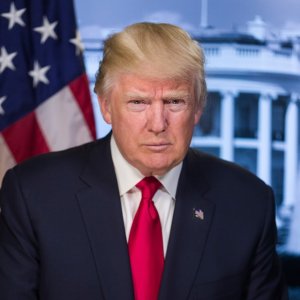
Since the beginning of his administration, US President Donald Trump has threatened a 25% tariff on imports from the United States' main trade partners, Mexico and Canada, creating uncertainty surrounding the future of USMCA, as these tariffs would de facto eliminate the trade agreement’s benefits. While the Mexican government has called for a “cool head” approach, the business sector is still cautious about the potential effects of tariffs and the possibility of Mexico imposing retaliatory tariffs, which could undermine the USMCA region’s competitiveness.
Experts recognize that these tactics are part of Trump’s negotiation approach. “Trump had already used tariffs as a tool of pressure and had spoken about the possibility of leaving NAFTA. As in the past, these measures are being used to achieve the objectives of his political platform,” explains Alejandro Schtulmann, Founder and President, Head of Research, Emerging Markets Political Risk Analysis (EMPRA).
In this scenario, Schtulmann acknowledges that Mexico has made progress in terms of security amid negotiations with the US regarding migration and drug trafficking. Although the president’s handling of the situation has been delayed and reactive, according to Schtulmann, she has managed it well, gaining points in her favor and receiving support from the private sector.
This context has created uncertainty, nonetheless, which has been reflected in the pace and the way nearshoring is developing in Mexico. Though tariffs have been delayed until April 2, 2025, and even if a 25% tariff on all goods is unlikely, if they occur, the electronics and automotive industries would see major impacts, with the automotive sector seeing 31.9% of its FDI coming from the United States.
To understand the impact of negotiating through tariffs, Juan Pablo Cervantes, President, COMCE International Section for North America, believes it is worth considering that last year exports reached US$617 billion, with a 4% annual growth. "These figures are key to avoiding falling into panic. While the change of government creates expectations, Mexico remains part of the world’s most dynamic economic bloc, North America, and continues to be a manufacturing leader."
Trilateral trade amounts to US$1.6 trillion annually, highlighting the importance of preserving, protecting, and strengthening USMCA. "More than falling into rhetoric, it is essential to remember that the bilateral relationship with the United States is structural and helps us better understand Mexico's true position in the global context. While it is a moment of uncertainty, it also represents a great opportunity," adds Cervantes.
Daniel Linsker, Partner and Regional Director for Central America and the Caribbean, Control Risks, identifies that nervousness comes from the fact that politically, everyone assumed that the US president would understand the importance of Mexico and the symbiotic nature of their relationship. "However, in reality, he sees it as a zero-sum game and has not conceded."
The current hold on US tariffs applies to goods covered by USMCA, prompting increased interest from companies, particularly SMEs, in obtaining an USMCA certification. However, only 48.9% of these companies currently meet the requirements for tariff protection under the agreement. To access the US market, companies exporting from Mexico have two primary options: complying with USMCA’s Regional Value Content (RVC) requirement of 75%, allowing tariff-free entry, or utilizing the Most-Favored-Nation (MFN) mechanism, which imposes a lower 2.5% tariff. Many companies that do not yet meet USMCA standards rely on the MFN framework.
In this context, experts highlight two key points: the Mexican government's focus on a more socially oriented policy and the leadership that the business sector has shown in navigating nearshoring opportunities. Regarding Mexico's social policy, Schtulmann mentions that although Trump has pressured Mexico on trade issues, there has yet to be a policy aimed at promoting Mexican democracy.
Additionally, the contrast between the technology and energy sectors reflects these challenges. "The technology sector in Mexico has thrived due to appropriate regulation without excessive government intervention, while the energy sector faces obstacles that hinder growth. If current barriers were removed, the energy sector could contribute up to two additional points to the GDP," Schtulmann believes.
Regarding the leadership of the business sector, Cervantes mentions that this is a favorable moment to explore other markets and consider what Mexico can also do at the bilateral level: diversification. "Within COMCE itself, which reflects our commercial vocation, we are joining efforts to approach these markets, renew and strengthen communication channels, and mobilize trade missions," says Cervantes. However, Linsker considers that "Mexican entrepreneurs have had a comfortable position. Having the world's largest economy within a free trade agreement has made seeking other markets not as attractive. But, it is time to go out and compete.”
Experts have called for Mexico to explore alternative markets, leveraging its 14 free trade agreements with over 52 countries. This extensive network, along with Mexico's participation in multilateral and regional organizations like the WTO, APEC, OECD, and ALADI, offers a broad foundation for trade diversification. However, some argue that reshaping the entire trade relationship is unrealistic, given that over 82% of Mexican exports are destined for the United States. They contend that the US market's purchasing power and volume cannot be easily replaced. Nevertheless, Mexico could potentially substitute certain inputs or agricultural products to mitigate the impact of potential tariffs. "Despite the 15% tariffs, Mexico remains an attractive market. The real concern is whether the government will focus on improving competitiveness by addressing issues such as energy, water and environmental permits to foster investment. That is the key to seizing the opportunity," says Linsker.
For Schtulmann, "Mexico can withstand the situation, although the window of opportunity for nearshoring has closed. Mexican companies have the chance to strengthen the domestic market, which would help increase economic resilience and consolidate the country's position in the region."
You May Like






Most popular








