


AICM Renovation Leads LATAM Aviation Priorities: ALTA
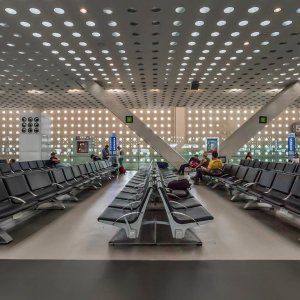
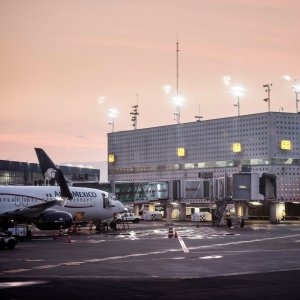
Mexico City International Airport (AICM) is undergoing a remodeling process to address long-standing operational and infrastructural challenges, identified as the most urgent in Latin America’s commercial aviation sector. The airport has reported 15% progress in its renovations, with completion expected to reach 70–80% by the 2026 FIFA World Cup, according to AICM General Director Juan Padilla.
Despite these efforts, AICM continues to face structural and operational constraints. “Urgently, we need to improve the infrastructure, terminal, taxiways, and overall facilities. We see many inefficiencies with an airport that has high demand,” said Peter Cerdá, Director General, Latin American and Caribbean Air Transport Association (ALTA). He noted that although passenger volume and operations per hour have been reduced, the airport remains saturated for most of the day.
The increase in seats per aircraft has intensified passenger flow despite fewer flights. “Regionally, the most urgent infrastructure need is at AICM, a government-controlled airport dependent on public funds for rehabilitation,” Cerdá told El Financiero, explaining that revenues are largely directed to service bonds from the canceled Texcoco airport project.
Cerdá stressed the need for a comprehensive investment and rehabilitation master plan, involving the entire aviation sector. “AICM is the number one regional priority because of its importance and decades of neglect,” he said, warning that without government-industry coordination, opportunities to enhance operational capacity and attract international travelers could be lost.
He emphasized that improvements at AICM must be a state priority, as it remains Mexico’s main international gateway. “It is urgent because Felipe Ángeles International Airport (AIFA) cannot replace AICM, particularly for international operations,” Cerdá concluded.
Since mid-May, refurbishment has been underway in both terminals. Terminal 1 renovations focus on the outpatient area (gates 1–3), Bravo Hall, modules V and XI, and F2 Hall. Terminal 2 improvements include N Hall, arrival and departure outpatient areas, the airport train, filters M and K, and connecting corridors. A commemorative fiberglass soccer ball has been installed in Terminal 2’s rotunda to mark the upcoming World Cup. Renovation activity is scheduled to pause by mid-May 2026 to accommodate an expected five million arriving fans, resuming in August to complete remaining work, including administrative offices and warehouses. The total investment is approximately US$460 million, with US$162 million already spent.
You May Like






Most popular








