


Delta Restores 2025 Outlook, Eyes US$4 Billion Free Cash Flow
 By Teresa De Alba | Jr Journalist & Industry Analyst -
Fri, 07/11/2025 - 16:31
By Teresa De Alba | Jr Journalist & Industry Analyst -
Fri, 07/11/2025 - 16:31
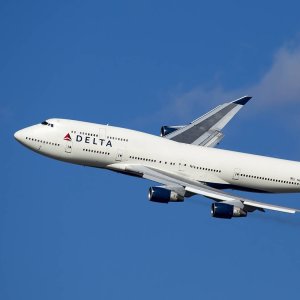
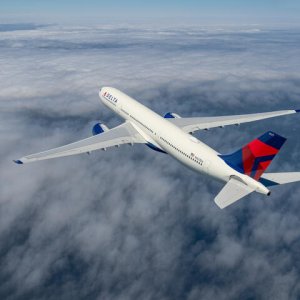
Delta Air Lines has reinstated its full-year 2025 earnings guidance, becoming one of the first major US corporations to resume forward-looking financial projections amid ongoing economic uncertainty. The company now expects earnings per share (EPS) between US$5.25 and US$6.25, and free cash flow between US$3 billion and US$4 billion. Delta had withdrawn its original guidance in April, citing trade-related uncertainty and macroeconomic volatility.
In January, Delta projected EPS above US$7.35 and free cash flow exceeding US$4 billion, supported by strong demand for premium travel and favorable macroeconomic conditions. However, that outlook was pulled in April as rising geopolitical tensions and tariff pressures disrupted the forecast. The revised projection reflects a more cautious stance, with the upper end of the new range falling short of previous expectations.
Delta’s decision to reinstate guidance followed its second-quarter results, which slightly exceeded analyst forecasts. The airline reported adjusted earnings of US$2.10 per share on US$15.5 billion in revenue—a 1% increase from 2Q24. Unit revenue declined 3% year-over-year, and operating margins dipped slightly. However, premium ticket sales rose by 5%, offsetting a comparable decline in main cabin revenue. Company officials attributed the stronger-than-expected performance to high-margin revenue segments, including premium services and loyalty program contributions. International revenue also rose 2%, driven by expanded transatlantic and transpacific routes.
The market responded positively. Delta shares rose 13% in premarket trading following the announcement, signaling investor confidence in the airline’s leadership and outlook. Industry analysts viewed Delta’s move as a potential leading indicator for other firms, many of which—including Ford, UPS, and Southwest Airlines—had suspended guidance earlier in the year amid similar macroeconomic concerns.
Delta CEO Ed Bastian noted that summer travel demand, while initially sluggish, had rebounded. “People are still traveling,” Bastian said. “What they have done is they have shifted their booking patterns a little bit. They are holding off making plans until they are a little closer to their travel dates. And so that has shifted some of our bookings and yield management strategies.” This shift has required adjustments in Delta’s revenue management approach, with a focus on short-term bookings.
Across the broader airline sector, first-quarter 2025 financial results were mixed. United Airlines reported pre-tax earnings of US$478 million with a 3.6% margin—its best first-quarter performance since the pandemic. Delta posted US$320 million in pre-tax income with a 2.3% margin. In contrast, Southwest Airlines reported a net loss of US$149 million, American Airlines posted a GAAP loss of US$473 million, and Alaska Air Group recorded a GAAP loss of US$166 million.
Airlines are responding to the challenging demand environment with capacity adjustments and new revenue strategies. Delta plans to keep capacity flat during the second half of 2025. Southwest expects Q2 capacity to increase by just 1% to 2% and plans to introduce basic economy fares, baggage fees, and extra-legroom seating later this year. Meanwhile, American Airlines continues to prioritize debt reduction.
You May Like





Most popular








