


Guadalajara Airport Becomes LatAm’s Only Oshkosh ARFF Site
The Guadalajara International Airport has enhanced its emergency response capabilities with the addition of a next-generation aircraft rescue and firefighting (ARFF) vehicle, following an investment of approximately US$1.5 million. The acquisition makes the airport the only facility in Latin America operating this specific Oshkosh-manufactured unit, according to airport authorities and suppliers involved in the project.
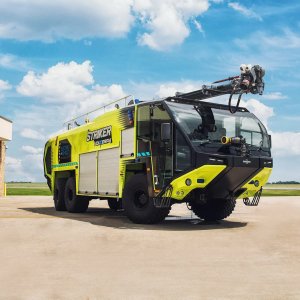
The new ARFF Oshkosh Striker 6x6, now part of the airport’s Rescue and Firefighting Service, strengthens operational capacity, reduces response times, and ensures compliance with international aviation safety standards. The vehicle represents the latest generation of specialized firefighting equipment used at high-traffic airports in the United States and Europe.
“This is a cutting-edge vehicle in Latin America, featuring all the latest technological advances in airport firefighting worldwide,” said Eduardo Palacio, president of Autobuses Especializados, the company that supplied the unit.
Manufactured in Wisconsin, the Striker 6x6 carries 3,000 gallons of water and 420 gallons of foam, exceeding the capacity of other vehicles with similar configurations. It also includes dry chemical powder systems, enabling the simultaneous deployment of water, foam, and chemical agents during emergencies.
A key feature is its monitor cannon, capable of discharging all three extinguishing agents simultaneously, allowing continuous firefighting on aircraft engines without reconfiguration. The vehicle also includes front and roof-mounted cannons, as well as lateral outlets for preconnected hoses, enabling multi-point response.
The unit’s independent suspension ensures stability on complex terrain, while a centrally positioned driver’s seat provides 360-degree visibility. Permanent all-wheel traction, a 670-hp engine, and thermal vision systems allow the vehicle to reach any point within the airport perimeter in under three minutes.
Guadalajara currently operates five Oshkosh emergency vehicles from different generations, with this Striker 6x6 being the most advanced model in production. Manufacturing these specialized units typically takes 10–11 months.
The airport holds a protection level of 9 on a 10-point international scale, which requires a minimum of three specialized firefighting vehicles. With the addition of this unit, Guadalajara now operates five, exceeding regulatory requirements, according to Martín Zazueta, director of Airports and Regulated Business at Grupo Aeroportuario del Pacífico.
“Guadalajara has not experienced fatal incidents in recent years, and we expect that to continue. These vehicles serve as insurance—passengers and airlines can be confident that the airport has state-of-the-art equipment and highly trained personnel available 24/7,” Zazueta said.
The airport’s Rescue and Firefighting Service operates continuously with 29 firefighters, four shift supervisors, and one commander across three shifts. In addition to the five specialized ARFF vehicles, the service maintains two units for forest fires and one tanker truck for water replenishment.
You May Like






Most popular








