IATA Backs Low-Cost Carriers, Dismissing United CEO’s Critique
 By Teresa De Alba | Jr Journalist & Industry Analyst -
Fri, 10/10/2025 - 16:04
By Teresa De Alba | Jr Journalist & Industry Analyst -
Fri, 10/10/2025 - 16:04
The International Air Transport Association (IATA) reaffirmed the strength and viability of the low-cost carrier (LCC) model after United Airlines CEO Scott Kirby declared it “dead” and “terrible.” IATA Director General Willie Walsh rejected the claim, emphasizing that low-cost airlines remain essential and continue expanding globally.
IATA counts 364 member airlines, including about 50 low-cost carriers, representing roughly 25% of its membership. Speaking at the World Aviation Festival in Lisbon, Walsh said the US experience cited by Kirby does not reflect global conditions. “I do not agree with Scott. He has been very vocal about this topic in the United States, but I believe what is happening there is not representative of the rest of the world,” Walsh said. “The low-cost model is alive and will remain so. In Europe, there are no signs of it slowing down. It remains strong in Asia and many other regions and will continue to grow.”
Kirby argued in September that the low-cost approach is flawed because it frustrates customers and fails to foster loyalty, claiming such airlines “grew enough to need recurring customers, and they do not have them.” Walsh countered that this perspective is limited to the US market and that “there is no evidence the low-cost model is under threat.”
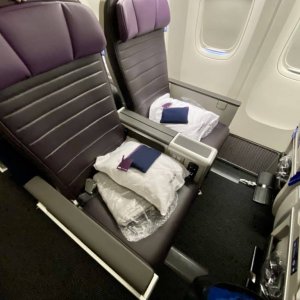
Meanwhile, US carriers are investing more heavily in premium cabins, driven by growing demand from higher-income leisure travelers seeking greater comfort. United reported a 5.6% year-over-year increase in premium cabin revenue in 2Q25 and plans to expand its premium offerings. “Premium leisure demand appears to be more resilient,” said Henry Harteveldt, president, Atmosphere Research, to USA Today. Airlines view premium seating as a key profit driver, even as overall travel demand stabilizes.
To accommodate this trend, carriers are reconfiguring aircraft interiors. “It is real estate—the aircraft is real estate,” said Ahmed Abdelghany, associate dean, Embry-Riddle Aeronautical University. “It has limited space, and it is up to you to decide how many premium or economy seats to include—but the revenue from premium seats must be equal or higher.”
American Airlines recently introduced its Flagship Suite business class and confirmed plans to add more premium seats. Southwest Airlines is also adapting by offering extra-legroom options while slightly reducing seat pitch in other parts of its economy cabin to maintain total capacity.
You May Like







Most popular