

More to Offer than Just Great Location

STORY INLINE POST





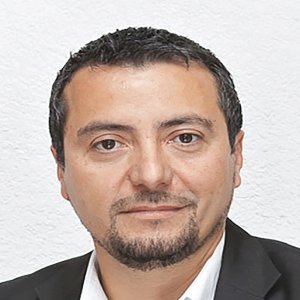

Q: Which primary characteristics differentiate the Chihuahua Aerospace Cluster from other aerospace hubs in Mexico?
A: We complement the Mexican aerospace industry with diverse expertise. Manufacturing operations in the state started over 50 years ago in Ciudad Juarez, followed by Chihuahua City 10 years later. Chihuahua became the first state to house a company that manufactured wire harnesses for the aerospace industry. This company was later acquired by Safran Labinal, which led to its exponential growth and it now supplies over 40 percent of worldwide demand for aerospace wire harnesses.
Chihuahua Aerospace Cluster has developed a wide range of processes in the past years, including expertise in aerostructures, sheet metal, machining and composites thanks to the companies established in the state, including Textron Aviation, Honeywell, Bell Helicopter and others. Over 70 percent of the sheet metal structural parts that Bombardier buys in Mexico come from the aero cluster in Chihuahua. Zodiac Aerospace started operations in Mexico with two plants and now runs nine diverse business units in five plants, plus a joint venture with Embraer, called EZ Air. The state also supplies to Airbus, Boeing, HondaJet and Bell Helicopter, among many others.
The state’s location is frequently mentioned as a strategic advantage but this blanket statement does not show the entire picture. Companies have to analyze what they need from the region as a whole. Chihuahua has many different services that cater to the needs of companies interested in entering the country. The state has a strong vocation and tradition in manufacturing and experience in engineering and design, sheet metal, machining, aerostructures, processing and heat treatment, interiors, evacuation systems, wire harnesses and other components. It is important for all companies in the cluster to show their abilities so that newcomers can analyze whether local industry suits their needs.
Q: How does the cluster appeal for governmental and private sector support?
A: The aerospace industry in Chihuahua has attracted over US$1 billion in foreign direct investment over its history and in 2015, it exported over US$1.5 billion. The cluster is now comprised of 45 companies, five of which are OEMs, and has implemented a strong triple helix model. We worked closely with the government, including the Ministries of Economy and Education, to develop a comprehensive technological road map in 2013, plotting the cluster’s abilities to set up a growth plan. We will implement this up until 2023. This map will show us what we still need to acquire and which companies we must incorporate into the cluster to consolidate the industry in the state.
The country’s northwest region is growing the fastest in aerospace but it faces challenges, such as the mountain range that separates us from Sonora and the difficult transport links with this state. Customs and logistics have presented a problem because companies find highway tolls and import and export taxes to be prohibitively expensive. Nonetheless, all local operations in the aerospace industry are expanding and attracting the attention of aerospace giants such as Boeing. The state can provide a wide set of services, products and solutions for the entire industry. For instance, Textron Aviation is manufacturing a plane here exclusively using composites.
Q: How is the cluster attracting OEMs such as Boeing?
A: We have a strong promotional division through companies such as American Industries and INTERMEX, which has been one of the largest motors for the industry for the past five years. All the companies in the state also are committed to its promotion, approaching it as a team effort. Companies in the state are integrated and possess complementary capabilities so new projects imply participation from several industry players.
While attracting other companies is important for us, it is a higher priority to take care of companies that are already located in the state. A greater success than simply attracting many new businesses would be for every single company that enters the state to stay long term and grow sustainably.
Q: What are the greatest challenges aerospace companies face in the state?
A: The challenge of acquiring human capital and suppliers is the first hurdle faced by aerospace companies in Mexico. One of the state’s greatest strengths is our triple helix model, targeted at providing qualified individuals for emerging aerospace companies. Through this model, we have managed to close the gap between the classroom and the facility, which was a first for education in Mexico. We had found in some cases that academic curricula did not match the needs of the industry. Local universities were generating a significant number of engineers but overlooking qualified and specialized technicians, which aerospace manufacturing companies need in high numbers. Newly arriving international entities would often need to make large investments to train the necessary personnel. To address this problem, we joined an alliance called Rutas, established by a youth organization and an employer’s association. The goal of this alliance is to develop training programs. We helped modify the first 270 hours of course time to satisfy a series of industry needs, including quality systems, maintenance and assembly. The goal is to modify 720 hours out of the entire program.
The second significant problem for the industry is the consolidation of its supply chain. The aerospace industry is rigid due to all the necessary certifications that require substantial investment and time. While processes may seem long and complex, some local companies, such as Soisa Aerospace, have been successful. To support these companies, we bring together different players. -in December 2015, for example, we held a workshop with TechBa in which we connected startups with companies that have been successful in the state to promote and share best practices and policies.
We have identified several continuing needs. For instance, Chihuahua still needs a local casting and forging supplier. The state has the largest high-precision machining center in Latin America in Honeywell Aerospace. It has over 1,100 CNC machines that manufacture turbine parts and blades but the company outsources all its casting and forging needs to other countries. Mexico faces an inverted pyramid, meaning that the country has a significant number of OEMs but lacks a strong supplier base. In other economic sectors, such as the automotive industry, once an OEM is established suppliers flock to the surrounding area. Aerospace is different as the companies capable of attracting suppliers are mainly Tier 1s. The state also needs a series of distribution centers for all tooling and machining companies here.
Q: How is the cluster actively contributing to improve its talent offering?
A: The state has a training center for machining and every other process that a company may consider necessary, called CENALTEC. This center has trained people for all local companies, including Fokker GKN, mainly on aerostructures, welding and high-precision machining. CENALTEC saves companies time and money to acquire qualified technicians. Chihuahua also has respected universities that train engineers. La Salle University, for example, has an engineering design program, which caught Safran’s attention. While other states may have created entirely new universities to train engineers and technicians, with admirable success, we decided it would be more efficient to build on our existing university network.
Q: What specific steps is the cluster taking to consolidate the local aerospace industry?
A: The cluster is committed to the construction of an MRO at the Roberto Fierro Airport, which will locate all the necessary processes, technologies and experience in the region. Another goal is to continue strengthening our highprecision machining operations. There are several projects in the state that show off our machining capabilities but we need to expand this area through the development and attraction of more machining workshops. We must also focus more on composites, which is the next challenge that the Mexican industry must overcome. Some companies have developed expertise in this area but tend to use it exclusively for internal operations. It is necessary to develop a strong supply network for these materials. Finally, we must develop avionics. The state is home to important electronic and telecommunications companies and it is one of the strongest regions in the country housing companies that could participate in this niche. It would be beneficial for the state to start using these entities to develop avionics and other telecommunications products needed in the aerospace industry.
You May Like




Most popular





