

Safran’s Strategic Axes in Mexico: Sovereignty, Decarbonization

STORY INLINE POST





 By Fernando Mares | Journalist & Industry Analyst -
Thu, 11/28/2024 - 10:49
By Fernando Mares | Journalist & Industry Analyst -
Thu, 11/28/2024 - 10:49
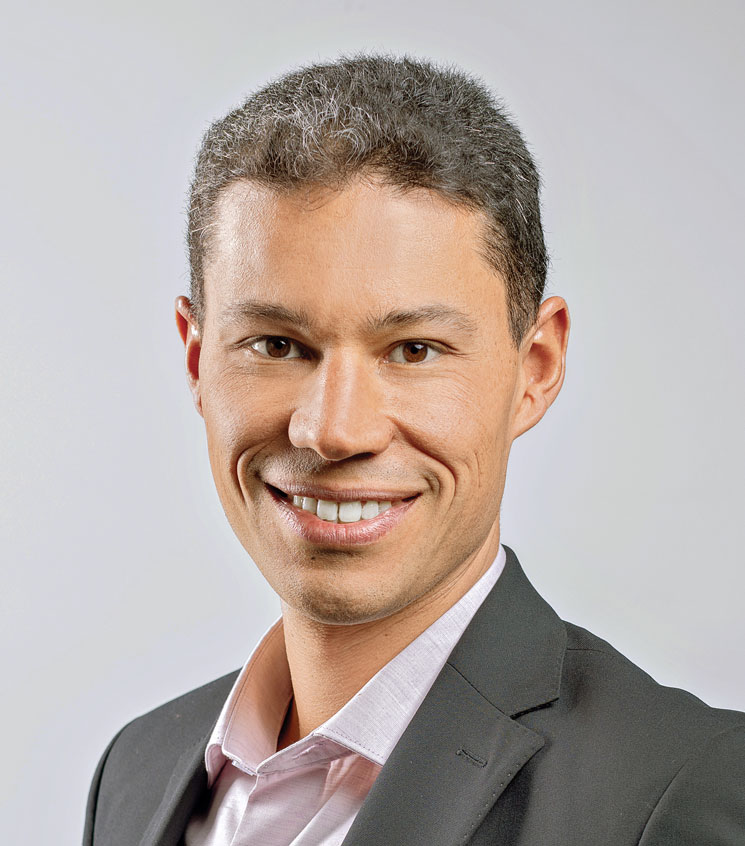
Alejandro began his professional career in 2012 at Safran in the field of commercial aircraft propulsion as Maintenance Management (MRO) Manager for the CFM56 and SaM146 at Safran Aircraft Engines in Querétaro, serving North American customers. Subsequently, in 2015, he became Head of Military Sales for Latin America at Safran Helicopter Engines in Mexico City. From 2017 to 2020, he moved to France within the Defense Division at Safran Electronics & Defense, where he was responsible for Business Development in airborne optronics and space telemetry across the Asia-Pacific, Europe, Africa, the Middle East, and Eastern Europe.
In 2020, he returned to Mexico to join Aeroméxico as Director of Propulsion.
A Mexican national and French speaker, Alejandro holds a degree in Aerospace Engineering from Embry-Riddle Aeronautical University in the United States and an MBA from ITAM, as well as training in global management from ESSEC Paris. Additionally, he completed advanced training in Defense and Aerospace at Sciences Po in Paris.
Q: What are the highlights of the “Safran Space” initiative being promoted in Mexico as part of the strengthening of its role in the sovereignty activities?
A: Mexico’s defense and space sector have seen minimal development. Following the change in government, we are seeking to promote greater exchange of technological developments. A country that does not develop technology does not progress. Mexico cannot continue only as a manufacturing country; it must develop technology. Safran has been in Mexico for 34 years and is the largest aerospace employer in the country. We have supported the specialization of Mexico’s workforce, which allowed us to create a high-quality manufacturing industry. We now want to take the next step toward technological development through our design Group’s already present in the country.
Safran is also focusing on the "New Space" concept, which is making access to space more accessible for everyone. It is not necessary to spend millions of dollars on creating or launching a satellite; it can even be done by universities and students through CubeSats. These satellites need a link with the Earth, and Safran offers space telemetry technology to do so. Mexico, however, does not have an ecosystem that facilitates this. The country has a ground station in Chetumal, Quintana Roo, but it needs investment and modernization so that students can receive images from their satellites and send commands. Safran wants to support the development of this space ecosystem.
Q: What satellite technology is Safran introducing in Mexico, and what are the benefits for the country?
A: Safran offers advanced satellite technologies, such as inertial navigation and ion thrusters that enable satellites to position themselves and remain in their orbit. These technologies, along with our ground stations, would allow Mexico to enter the "New Space" ecosystem more effectively, enabling universities to develop technological initiatives locally.
Safran has the capacity to cover the entire space technology chain, from ground stations to satellite operations. This presents a unique opportunity for Mexico to participate in space development and leverage local talent. However, we need an environment that supports and promotes these technologies to prevent talent from seeking opportunities outside the country.
Q: What recent global developments in the defense sector is Safran introducing to the Mexican market?
A: Safran aims to be a key player in global sovereignty technologies. The company recently completed several strategic acquisitions that have allowed us to expand our portfolio of technological solutions. These include the acquisition of Preligens, now Safran Artificial Intelligence, and Orolia, which has become Safran Navigation and Timing. The primary goal of these acquisitions is to leverage Safran’s technologies to offer advanced solutions in the maritime, land, and air sectors.
Our military division offers full systems such as the Patroller drone, which was designed for aerial surveillance missions and precision reconnaissance. We also have a land remote vehicle, used to explore dangerous areas without risk to soldiers. For the space sector, Safran developed Space Awareness technologies after the acquisition of Zodiac, which allows us to monitor objects in low earth orbit (LEO) and geostationary orbit (GEO). This solution allows governments to create regulations that ensure the responsible use of space.
Q: How could Safran’s defense technologies benefit Mexico?
A: Safran offers technologies that can help better map Mexico’s territorial risks. For example, we can identify migratory flows from South and Central America, which would allow the government to make better-informed decisions on how to address this humanitarian challenge. Equipping the air platforms of the Armed Forces and the National Guard with these technologies would provide key data for managing these situations.
Mexico also needs to protect its natural resources and oil platforms. Safran has the technology to equip frigates and Navy ships to assist military personnel in protecting these resources. Safran, with its significant presence in Mexico, could be a strategic ally of the country, but the potential of our technologies in national development has yet to be fully leveraged.
Q: How does your dual application technology benefit the civil aerospace sector?
A: Safran’s business model focuses on technological sovereignty. Many technologies originating from the military realm have significant potential applications in the civil environment, enabling us to offer solutions that help markets address challenges. An example of such challenges is the geopolitical landscape that has been increasingly changing since the pandemic, prompting the industry to reinforce its capacity for resilience.
Resilience in dual-use technologies includes supply chain strategies such as fortifying the titanium supply chain, which faced significant disruption following Russia's invasion of Ukraine. Titanium is used to manufacture some dual-use components and primary sources of this metal were located in Russia. The geopolitical situation forced us to adapt quickly and strengthen our business continuity industrial resilience. Safran works closely with partners to establish an ecosystem that can anticipate and withstand such disruptions. This collaborative model is essential to keep both the aerospace and defense sectors operational in the face of global challenges.
Q: What is the expected economic impact of Safran's expansion in Chihuahua and Queretaro?
A: Safran is opening its AeroSystems' Plant 6 in Chihuahua, which represents the consolidation of a center of excellence in manufacturing of on-board survival systems, including evacuation and oxygen systems. This positions Chihuahua as one of the Top 3 global hubs for the production of evacuation systems, supporting key programs for Airbus, Boeing, and Embraer in commercial aviation.
We also expanded our facilities in Queretaro, hitting two milestones. First, the maintenance center will become the largest in the world within the Safran network, capable of receiving 350 engines per year. The second milestone is the construction of a testing cell where engine runs will be conducted for certification. Production line capacity for engines is also being expanded. These expansions mark a milestone in Mexico, as the country will now assemble and test complete engines that will be delivered directly to new aircraft production lines. This repositioning of the aerospace production chain in Mexico entails a level of reliability and accountability that previously only existed in France and the United States, making Mexico the third country capable of delivering a completely new Tier 1 product to the aerospace industry.
Q: Linked to Safran’s industrial expansion in Mexico, what initiatives and technologies has Safran implemented to reduce its carbon footprint and meet its sustainability objectives?
A: Safran is committed to the decarbonization of the aerospace industry and to the achievement of net-zero emissions, as outlined in its commitment to the International Air Transport Association (IATA). We approach sustainability from two main angles in Scope 3. The first is through technological development, such as the RISE program, a collaboration with General Electric to develop a new engine based on an Open Fan design. This program aims to optimize emission reduction, surpassing the success achieved by previous engines like the LEAP, which has already achieved an additional 25% reduction in emissions from its predecessor, the CFM56. Safran expects RISE to achieve an even greater level of emission reduction, both in carbon and acoustic footprints, which is crucial for decreasing pollution in urban areas.
The second angle in Scope 3 pertains to the decarbonization of the supply chain, leveraging nearshoring to reduce emissions associated with intercontinental transportation. This involves local production in Mexico and minimizing the carbon footprint through a more efficient supply chain. Scope 3 also addresses emission reduction in employee transportation, encouraging the use of bicycles, public transport, and electric or hybrid vehicles.
Scope 2 focuses on decarbonizing industrial operations, such as using green energy and waste management. Scope 1 encompasses the use of biomass and sustainable fuels in Safran’s industrial operations.
We have faced challenges in implementing these strategies in Mexico. For example, infrastructure for bicycles and EVs is limited in Mexico City, Queretaro, and Chihuahua. Current legislation also restricts self-produced solar energy consumption to 0.5MW, while Safran could generate up to 2.5MW. For this reason, we hope that the government will implement policies that allow us to meet our ambitious carbon reduction targets.
Q: How does Safran attract and retain the talent it needs to accompany its growth in Mexico?
A: We establish partnerships with universities and help fund doctoral research projects. This allows us to develop technological innovations without being limited by the regulatory environment, which is strict in this industry. The results of these studies are then adapted to the needs of the industry and its regulatory realm. We see a great opportunity to implement a similar model in Mexico, although there is little government support to encourage doctoral students to conduct their research in the country.
On the other hand, Mexico has a developed ecosystem for manufacturing. To support this area, we work with universities and offer internships or experiences in our plants. We integrate students into controlled environments that replicate our production lines, but in an academic setting.
Additionally, the group offers numerous mobility options in Mexico and abroad. We have several success stories of Mexicans who have been transferred to countries such as France, Morocco, and China. We also promote internal mobility within the different divisions of the group, which consists of 10 divisions covering all aerospace and defense ecosystems. This allows our employees to have an almost limitless horizon of opportunities within the organization.
Q: What are Safran Group's key objectives in Mexico for the remainder of 2024 and the medium term?
A: Safran has three key objectives in Mexico. The first is business development. We want to be closer to our partners in the defense and civil sectors. For example, Aeroméxico operates Embraer aircraft, with most of the cabins being manufactured in Chihuahua. The second objective is to strengthen our positioning as a major investor. The third objective is to enhance the local supply chain. There are still specialized processes that are not found in Mexico, which affects efficiency. It would be crucial to develop them locally to maintain production in Mexico and reduce transportation times for parts between countries.
|
Safran is an international high-technology group, operating in the aviation (propulsion, equipment and interiors), defense, and space markets. Its core purpose is to contribute to a safer, more sustainable world, where air transport is more environmentally friendly, comfortable and accessible. Safran has a global presence, with 92,000 employees and sales of €23.2 billion in 2023, and holds, alone or in partnership, world or regional leadership positions in its core markets. Safran undertakes research and development programs to maintain the environmental priorities of its R&T and innovation roadmap. |


Most popular








