Volaris and Viva Agree 2026 Merger of Holding Companies
 By Óscar Goytia | Journalist & Industry Analyst -
Fri, 12/19/2025 - 15:27
By Óscar Goytia | Journalist & Industry Analyst -
Fri, 12/19/2025 - 15:27
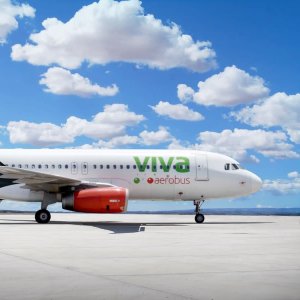
Volaris and Viva have announced an agreement to combine their holding companies to form a new Mexican airline group, in a transaction expected to close in 2026 and structured as a merger of equals. The move, unanimously approved by the boards of both carriers, comes as Mexico prepares for rising air travel demand linked to economic growth and major international events later this decade.
Under the terms of the agreement, Volaris and Viva will continue to operate independently as airlines, each maintaining its own air operator certificate, concession titles, management teams, and brand identity. Passengers will see no immediate changes to routes, fares, ticketing, or onboard service. At the corporate level, however, the transaction establishes a single holding company designed to enhance scale, strengthen financial flexibility, and improve access to capital, while preserving competition between the two ultra-low-cost carriers.
“The transaction is expected to be completed in 2026, and the shares of the holding company will continue to trade on both the Mexican Stock Exchange and the New York Stock Exchange,” the companies said in a joint statement. Completion remains subject to regulatory approvals, customary closing conditions, and shareholder approval at both airlines.
Once finalized, Viva shareholders will receive newly issued shares of Volaris’ holding company, while Volaris shareholders will retain their existing stakes. On a fully diluted basis, ownership of the new airline group will be evenly split, with each shareholder group holding 50%. Executives framed the combination as a strategic move to reinforce the ultra-low-cost, point-to-point model that has transformed Mexico’s aviation market over the past two decades.
“The creation of this new airline group will allow us to further stimulate air travel in Mexico, in line with the low-fare model that has driven industry growth over the last 20 years,” said Enrique Beltranena, president and CEO, Volaris.
Juan Carlos Zuazua, CEO, Viva, said the increased scale would strengthen both carriers’ ability to compete across domestic and international markets. “Greater economies of scale and expanded distribution capacity will help lower aircraft ownership costs and allow us to offer affordable fares to a broader base of passengers, while maintaining a sustainable growth path,” he said.
The companies highlighted that the combined group will be better positioned to manage rising costs and operational volatility, citing recent supply chain disruptions and ongoing challenges at aircraft and engine manufacturers. These factors, they said, have placed disproportionate pressure on smaller and ultra-low-cost carriers, making scale a critical advantage.
For employees, both airlines stressed operational continuity. Volaris and Viva will retain their respective operating certificates, and day-to-day operations will continue without disruption, preserving existing jobs. Over the medium term, the group plans to invest in fleet growth, technology, training centers, maintenance capabilities, and infrastructure, supporting long-term workforce development.
The new holding company will be governed by a board comprising members from both airlines. Roberto Alcántara Rojas, current chairman of Viva’s board, will assume the role of chairman of the combined airline group.
You May Like






Most popular