


Argentina Ships First Wheat Cargo to China Amid Export Tax Cuts
Argentina has completed its first commercial shipment of wheat to China, a milestone that coincides with a broader push by the government to reduce export taxes on grains in an effort to boost competitiveness and expand agricultural trade.
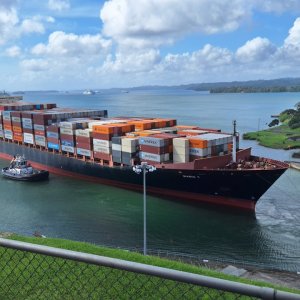
A cargo vessel carrying 65,000t of Argentine wheat departed Saturday from the Santa Fe province, bound for China.. The shipment marks Argentina’s first commercial wheat export to the Asian market since China granted import authorization in January 2024, according to China’s Xinhua News Agency.
Zhou Zhiwei, Chinese Analyst, Chinese Academy of Social Sciences, said the shipment reflects a broader expansion of agricultural cooperation between China and Latin America. Zhou noted that agricultural trade is a core pillar of China–South America relations, driven by supply and demand dynamics. He added that wheat is one of Argentina’s main crops, with strong production capacity, and that access to the Chinese market could support local economic development.
Gustavo Puccini, Santa Fe’s Minister of Productive Development, described the shipment as a key milestone in bilateral economic relations. He said its success reflects efficient coordination between teams in both countries and will further strengthen ties. Maximiliano Pullaro, Santa Fe Governor, highlighted the economic complementarity between Argentina and China, noting that deeper trade links could drive growth and job creation.
China is a major global food market, while Argentina is a significant food exporter. Argentina is China’s sixth-largest trading partner in Latin America, and China is Argentina’s second-largest trading partner worldwide, according to China’s Ministry of Foreign Affairs. In 2024, China’s main agricultural imports from Argentina included frozen beef, soybeans, barley and sorghum, according to China’s Ministry of Commerce. Zhou said there is room for both countries to expand agricultural trade further, pointing to a trend toward product diversification and potential growth in Argentine exports such as seafood, wine and corn.
The wheat shipment comes as Argentina’s government moves to lower export taxes on agricultural products, a policy shift that could reinforce the country’s ability to compete in markets such as China. Luis Caputo, Economy Minister, announced a new round of reductions in export duties, calling it another step toward easing the tax burden on the agricultural sector.
Under the changes, export tax rates will be reduced as follows: soybeans from 26% to 24%; soy byproducts from 24.5% to 22.5%; wheat and barley from 9.5% to 7.5%; corn and sorghum from 9.5% to 8.5%; and sunflower from 5.5% to 4.5%. Caputo said the cuts aim to improve the competitiveness of agribusiness, which accounts for nearly 60% of Argentina’s exports.
“We are taking another step today on the path of fiscal relief for the agricultural sector, moving forward with the permanent reduction of export duties for grain and byproduct chains,” Caputo wrote on X. He added that eliminating export taxes has always been a priority for President Javier Milei and said the government would continue advancing toward that goal as macroeconomic conditions allow.
The Argentine Oilseed Industry Chamber–Cereal Exporters Center (CIARA-CEC) welcomed the decision.“This measure is a very positive step that we must value. We will need to continue working to reduce the enormous tax burden, especially in the soybean agro-industrial complex,” the statement said.
Marcos Pereda, Vice President, Argentine Rural Society (SRA), highlighted that this is an important step to restore the sector’s strength. “Fewer taxes mean more investment, more jobs and more exports. This is how Argentina is reactivated,” Similarly, the Argentine Agroindustrial Council welcomed the decision and reaffirmed that the path of fiscal relief is the right one for the agroindustry to generate more exports, jobs and foreign currency inflows.
The reduction of export taxes has long been one of the historic demands of organizations representing the agricultural sector. Caputo did not refer to the next administrative steps, but justified the measure as part of the government’s strategy to boost economic activity and the inflow of foreign currency.
You May Like


Most popular








