The Consumer Journey to Electric Vehicle Adoption


STORY INLINE POST







 By Raul Moreno | President Founder & CEO -
Mon, 09/22/2025 - 06:00
By Raul Moreno | President Founder & CEO -
Mon, 09/22/2025 - 06:00
Electric vehicles (EVs) are no longer confined to prototypes or niche markets. They are entering mainstream conversations across industries, governments, and households. Yet, the real story of adoption cannot be understood solely through statistics on sales or production. At the heart of the transition lies the consumer: the individual who weighs risks and rewards, who is both skeptical and curious, and whose decisions ultimately determine the pace at which electromobility reshapes global transportation.
This article explores the electric vehicle through the consumer’s eyes, delving into their fears, expectations, and discoveries. By understanding these dimensions, we can better assess the opportunities and challenges that lie ahead for policymakers, manufacturers, and infrastructure providers.
1. Fears: The Psychological and Practical Barriers to EV Adoption
Although EV adoption is accelerating worldwide, surveys consistently reveal that consumers harbor significant concerns that slow down decision-making. These fears are not irrational; rather, they reflect real gaps between the promises of technology and the realities of infrastructure, affordability, and information.
1.1 Range anxiety
The most cited concern is “range anxiety” — the fear of running out of battery power before reaching a charging station. For decades, drivers have been conditioned by the ubiquity of gasoline stations, where refueling takes minutes and locations are predictable. In contrast, charging infrastructure is still unevenly distributed, especially outside urban centers.
Even though modern EVs often offer ranges exceeding 400km per charge, perception lags behind reality. For consumers, it is not only about the maximum advertised range but also about how that range varies with driving style, weather conditions, and the use of auxiliary systems such as heating or air conditioning.
1.2 Charging time and convenience
Another obstacle lies in charging time. Fast-charging technology has improved significantly, reducing charging sessions to 20–30 minutes for an 80% charge in many models. Yet, consumers still compare this to the five minutes needed at a gas pump. The idea of waiting — even with amenities at charging hubs — remains a barrier, especially for drivers who rely on their vehicles for long commutes or professional use.
1.3 Battery degradation and replacement costs
Consumers often express uncertainty about the durability of EV batteries. Will the performance of the battery decline significantly after a few years? How much will replacement cost, and will warranties cover it? Despite evidence that most EV batteries retain the majority of their capacity after eight years or more, the perception of rapid degradation remains strong, fueled by early-generation EVs and anecdotes.
1.4 Purchase price and affordability
Price is perhaps the most tangible concern. Even though total cost of ownership (TCO) often favors EVs due to lower fuel and maintenance costs, the upfront purchase price is typically higher than comparable internal combustion engine (ICE) vehicles. For middle-income consumers, this remains a decisive factor, especially in markets with limited government incentives.
1.5 Resale value and technological obsolescence
Rapid technological advances create an additional layer of uncertainty. Potential buyers worry that their EV may lose value quickly as newer models enter the market with longer ranges, better software, and faster charging. This fear of obsolescence mirrors consumer behavior in the smartphone industry, where yearly upgrades shift perceptions of value.
2. Expectations: The Consumer’s Vision of EVs
While fears are powerful, they coexist with a set of expectations that motivate interest and exploration. Consumers view EVs not only as vehicles but as symbols of a broader shift in technology, lifestyle, and environmental responsibility.
2.1 Environmental responsibility and sustainability
For many, EVs represent a tangible way to reduce personal carbon footprints. Consumers increasingly expect that their purchasing choices should reflect their values, and sustainability is central to that equation. Surveys show that younger generations, in particular, associate EV ownership with climate action and social responsibility.
2.2 Affordability through incentives and innovation
Consumers expect that governments and manufacturers will work together to make EVs more affordable. Subsidies, tax breaks, reduced registration fees, and free access to urban toll zones are all incentives that shape expectations. At the same time, many consumers anticipate that technological progress will naturally reduce costs, much like the declining price trajectory of smartphones and solar panels.
2.3 Convenience and infrastructure parity
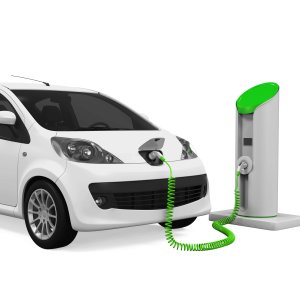
The ideal consumer expectation is parity with ICE vehicles in terms of convenience. That means charging stations should be as abundant and reliable as gas stations, and charging times should continue to decrease. Home charging is often viewed as a potential game-changer, offering unmatched convenience for those with access to private parking.
2.4 Innovation and digital integration
Consumers expect EVs to be more than just cars with batteries. They envision vehicles integrated into digital ecosystems: smart navigation that optimizes charging stops, over-the-air software updates, advanced driver-assistance systems (ADAS), and seamless connectivity with smartphones and smart homes. In many ways, EVs are perceived as “computers on wheels,” and consumers expect a level of innovation that justifies the transition.
2.5 Status and lifestyle
In certain markets, EVs are associated with status and modernity. Just as early adopters of smartphones were seen as forward-thinking, EV owners often view their choice as a statement about being aligned with innovation, sustainability, and the future of mobility.
3. Discoveries: When Perception Meets Reality
The most transformative part of the consumer journey occurs when individuals move from abstract concerns to firsthand experiences. Test drives, ownership, and peer influence all play critical roles in reshaping attitudes.
3.1 The driving experience
One of the most surprising discoveries for new EV drivers is the quality of the driving experience. Instant torque provides rapid acceleration, while the absence of engine noise creates a smoother, quieter ride. For many, these features turn EV driving into a revelation.
3.2 Range anxiety diminishes with experience
Surveys reveal that actual EV owners report significantly lower levels of range anxiety than those who have never driven one. Daily commutes are often well within the range of most EVs, and home charging eliminates the need for frequent public charging. This discovery helps normalize EV use and gradually reduces fears.
3.3 Financial benefits over time
Consumers who track their expenses often discover substantial savings in fuel and maintenance. EVs have fewer moving parts, no oil changes, and reduced wear on brakes thanks to regenerative braking. Over the vehicle’s lifetime, these savings can offset the higher initial cost, reinforcing the economic case for adoption.
3.4 Lifestyle integration
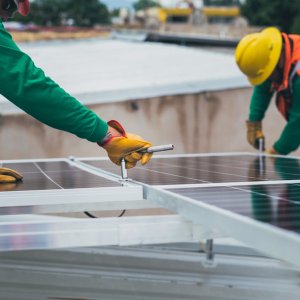
Discoveries extend beyond economics and performance. Many owners integrate EVs into broader lifestyle choices, such as pairing home solar panels with EV charging or participating in vehicle-to-grid (V2G) programs. These experiences deepen the sense of being part of a sustainable, technology-driven movement.
3.5 Community and identity
EV ownership often fosters a sense of belonging to a community of early adopters and innovators. Online forums, local clubs, and shared charging experiences create social value that goes beyond the utility of transportation.
4. Regional Perspectives on Consumer Adoption
4.1 Europe: Incentives and urban restrictions
European consumers often face strong policy-driven incentives. In cities like Oslo, EVs benefit from free tolls, parking privileges, and access to bus lanes. These measures not only reduce fears but also align with expectations of convenience and cost savings. Discoveries in Europe often revolve around the seamless integration of EVs into daily urban life.
4.2 North America: Lifestyle and infrastructure gaps
In the United States and Canada, consumer adoption varies by region. While California leads with incentives and infrastructure, other states lag behind. Consumers often fear limited charging availability during road trips but discover the benefits of home charging for daily use. Lifestyle and status also play a role, with Tesla serving as a cultural symbol of innovation.
4.3 Asia: Affordability and mass adoption
China demonstrates how large-scale infrastructure investment and aggressive government policies can reshape consumer perceptions. Fears are mitigated by widespread charging networks, while expectations are fulfilled by affordable domestic models. Discoveries in China often highlight the practicality of EVs in densely populated cities.
4.4 Latin America: Early adoption challenges
In Latin America, consumers often face high upfront costs and limited infrastructure. Fears about affordability dominate, while expectations center on government support and future infrastructure growth. Discoveries, for now, are concentrated among early adopters who value environmental responsibility and status.
5. The Role of Communication and Education
Bridging the gap between fears and discoveries requires effective communication. Misinformation about battery degradation, exaggerated concerns about charging times, and lack of awareness of incentives can all slow adoption. Transparent data, consumer education campaigns, and hands-on experiences such as test drive events are critical tools for reshaping perceptions.
6. From Fears to Discoveries
The journey of the electric vehicle through the consumer’s eyes is a story of transformation. It begins with fears rooted in uncertainty, evolves through expectations shaped by values and aspirations, and culminates in discoveries that redefine mobility.
Manufacturers, governments, and infrastructure providers must recognize that this journey is not only technological but also emotional. Addressing practical concerns, fulfilling expectations, and facilitating positive discoveries will determine the speed of EV adoption worldwide.
In the end, consumers are not just buying vehicles, they are investing in a vision of the future. The challenge and opportunity lie in ensuring that this vision aligns with their everyday realities.
You May Like





Most popular