Talent, Tech Will Cement Mexico’s Auto Parts Leadership: INA



STORY INLINE POST



 By Óscar Goytia | Journalist & Industry Analyst -
Mon, 08/25/2025 - 17:13
By Óscar Goytia | Journalist & Industry Analyst -
Mon, 08/25/2025 - 17:13
Q: What strategies is INA pushing to enhance Mexico’s competitiveness as a global auto parts manufacturing hub?
A: We recently launched a collaboration with INEGI to obtain accurate data on the aftermarket sector. Although this segment represents a market value of over US$30 billion, we previously lacked clear information on how much is imported, how much is exported, and how it is managed domestically. For the first time in the country’s history, a working group has been formed to generate reliable statistics on this market.
Another important milestone was the introduction of the “right to repair” concept. This policy, already in place in countries like Spain, Germany, and other Latin American nations, allows vehicles to be repaired at any certified workshop without voiding the warranty, as long as the proper equipment is used. This promotes competitiveness, gives consumers more options, and professionalizes the work of technicians and mechanics.
We also held, for the first time, a joint meeting between the automotive sector and the Ministries of Education, Labor, Economy, and Science and Technology. The goal was to review topics such as academic curricula, digitalization, credentialing, and the certification of Mexican talent. This forum, hosted by INA, was attended by sister associations AMIA, ANPACT and AMIVE, as well as various universities and government authorities. This effort was part of the activities for INA-PAACE Automechanika.
In parallel, we continue to promote supplier development in coordination with the Ministry of Economy. This program is part of Plan México and aims to strengthen the auto parts industry, one of the sectors with the highest number of jobs, better pay, and greater stability. Our goal is to reinforce the supply chain, especially at the Tier 2, Tier 3, and Tier 4 levels, to increase the participation of Mexican companies and raise the national added value. We are also promoting specialized knowledge in mobility and auto parts manufacturing through specialized training. A Just as we work to certify talent, we also encourage companies to produce parts according to quality standards.
Q: What are the main challenges INA members face when expanding their operations in Mexico?
A: The industry is a victim of its own success. Over the past four years, the sector has grown by 40%, which has put considerable pressure on existing infrastructure such as roads, water supply, and energy availability. One of the major challenges has been the legislative framework around energy. Although there were challenges in the past, the new administration offers a clearer path forward on this matter.
The foundations have been laid to move forward, even in areas like port management, which has also been saturated due to increased cargo. Growth has created tensions in certain regions due to the high volume of traffic, especially heavy transport on highways. This demands urgent expansion of infrastructure.
Finally, the international context has introduced some uncertainty. Projects have not been canceled, but a “wait and see” stance has been adopted. Nevertheless, the sector is seeing sustained growth.
Q: How are you supporting or promoting the development of regional ecosystems in the automotive sector?
A: We are working closely with state governments to promote regional development hubs. In Ciudad Victoria, which is in an ideal location, we are collaborating with authorities to develop an ecosystem focused on materials that were not previously produced in Mexico and had to be imported, mainly from Asia. This initiative will strengthen the value chain, especially in the Altamira region.
Another important hub is forming in the western part of the country — particularly in Guanajuato, Aguascalientes, and Jalisco — focused on software development. By 2035, software is expected to account for up to 35% of a vehicle’s total value, making it a critical focus area to ensure the competitiveness of the Mexican automotive industry.
Q: How would you rate the level of technology adoption in the auto parts sector, considering it requires significant investment?
A: Over the past two years, we have been surveying medium and large companies in collaboration with CONCAMIN and Siemens to assess their understanding of Industry 4.0. Digitalization is not just about scanning documents or invoices; it encompasses a comprehensive technological infrastructure that transforms production processes. In the auto parts sector, the findings show that Mexico has made significant progress in adopting Industry 4.0 technologies. According to Siemens, Mexico is among the countries advancing most rapidly in the implementation of these technologies, particularly within the auto parts sector.
Q: What does the cancellation of projects like BYD’s indicate about foreign investor confidence in Mexico?
A: While some OEM projects may be postponed or canceled, this does not reflect a loss of confidence in Mexico’s automotive sector. The auto parts industry remains strong and resilient, with around 90% of production destined for export—primarily to the US market. Although we support continued vehicle manufacturing in Mexico, our strategic focus is on strengthening our role in global supply chains and increasing our participation in key markets. The fundamentals that make Mexico attractive—location, workforce, and integration with North America—remain solid.
Q: How well aligned are the federal administration’s industrial and sustainability policies with the needs of the auto parts industry?
A: The new administration has shown a clear shift toward sustainability and a genuine interest in electromobility. A well-structured roadmap was developed during the previous administration through a joint study by the the Ministry of Foreign Affairs and the University of California. We see good alignment among industry, government, and academia. Mexico also has universities that are highly committed to these issues. However, one area where the country is still behind is recycling, which needs greater effort, coordination, and concrete actions.
Q: How is the tariff war between the United States and China impacting the supply chains of INA members?
A: This trade conflict has generated great uncertainty that goes beyond tariffs between the United States and China, as it also affects relations between the United States, Mexico, and Canada. The tensions are exacerbated by factors like the dismantling of incentives such as the Inflation Reduction Act (IRA), which provided subsidies for EVs. Contracts that previously contemplated volumes of 200,000 units for models like the Ford Lightning have drastically been cut to 20,000. This instability has led several of our members to react in different ways: some clients are overstocking, while others have increased purchases due to significant exchange rate volatility seen since December.
Each company is adopting different strategies. Some are buying more, some have opted for future dollar hedging, and others are seeking strategic partnerships with companies in South Korea or the European Union to diversify risks.
Q: What issues do you think will be opened in this upcoming review of the USMCA?
A: We have a list of 10 priorities, but three key topics will surely be on the table. The first is software and new technologies, especially in the context of electromobility and connectivity. Mexico is a powerhouse in these areas, as it has a significant number of developers and a high capacity to handle complex projects. Mexico has one of the three largest telecommunications companies in the world, which strengthens its position in connectivity. This aspect will be crucial for the United States, which seeks to bolster its technological supply chains in North America as a strategic alternative to China. Competition will no longer be just about tariffs but about technology.
The second point will be the rapid response mechanism, which currently applies only against Mexico. We will seek to ensure this instrument is applied fairly and reciprocally. If it works to point out irregularities in Mexico, it should also work in the opposite direction. This will be a priority in the negotiation. The third topic involves cross-cutting issues and previous disputes, such as the panel that Mexico and Canada won against the United States under the USMCA framework. It is likely the United States will seek to renegotiate that outcome.
The landscape has changed and renegotiation is the most probable scenario. US President Donald Trump could insist on bringing more vehicle production to the United States, setting limits or specific targets. However, the United States buys 43% of its auto parts from Mexico. The next supplier is Canada, which sells only about a quarter of what Mexico sells. Even adding the next seven countries together does not match what Mexico provides.
Q: How can INA help strengthen Mexico's position as a reliable and strategic trade partner amid growing protectionism from the United States and global geopolitical uncertainties?
A: Mexico must first maintain its strong and stable industry. The figures speak for themselves: the auto parts sector exports US$106 billion annually, far surpassing other major income sources such as remittances (US$65 billion), food and beverages, tourism, or oil (each about US$30 billion). These figures show that the auto parts sector forms the backbone of Mexico’s exports.
The industry generates nearly 900,000 well-paid jobs, with strong benefits and low turnover. Even when workers move, they tend to stay within the sector, reflecting a solid structure and a well-trained, valued workforce that companies aim to retain. The auto parts industry is not only productive but also dependable, as it contributes significantly in terms of taxes and employment. That consistency and reliability make it highly valued by institutions like the Ministry of Economy. Therefore, strengthening the industry’s position is clearly the path forward.
Q: What are INA’s main strategic priorities for the remainder of 2025?
A: We have two main priorities that will guide us for the next three years. The first is talent development, as we aim to train new specialists and attract young people to the industry. The second is fostering domestic supply chains by developing more Mexican suppliers. For years, companies from around the world have shown great interest in Mexico. Now, the focus is on nurturing local enterprises to strengthen the supply chain. As for nearshoring, we continue to see significant interest and ongoing projects. However, many are in a “wait-and-see” phase, evaluating how much to invest in Mexico versus other locations.
INA will continue to work on expanding the industry’s role as a key driver of Mexico’s economy, and strive for deeper integration with international partners, including the United States, Canada, the European Union, or members of the Pacific Alliance. Success means having greater global weight and relevance.
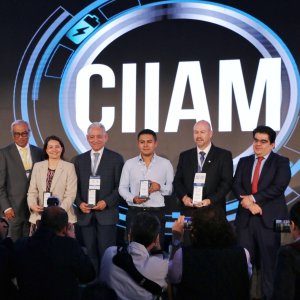
Francisco N. González Díaz, CEO of the National Auto Parts Industry Association (INA), warmly invites participation in the 23rd edition of the International Automotive Industry Congress in Mexico (CIIAM), taking place on Oct. 1–2 at Hacienda de los Morales in Mexico City. This prominent forum will address key topics such as technological transformation in the sector, nearshoring, supplier development, public policy, smart mobility, and sustainability.
He also encourages companies and executives to submit nominations for the 4th National Automotive Industry Award, which recognizes high-impact and innovative projects. The deadline for submissions is Sept. 10, 2025.
Automotive Parts Manufacturers’ Association (INA), founded in 1961, is an association that represents over 700 auto parts manufacturing plants operating in Mexico. It works closely with the federal and state governments to drive national and regional development by enhancing existing investments and promoting new investments in the auto parts sector.
You May Like






Most popular