

Data-Driven Energy, Sustainability as a Competitive Edge


STORY INLINE POST




 By Perla Velasco | Journalist & Industry Analyst -
Tue, 07/01/2025 - 15:14
By Perla Velasco | Journalist & Industry Analyst -
Tue, 07/01/2025 - 15:14
Q: ENERGi Color describes itself as a specialist in intelligent energy and sustainability. How do you define "intelligent energy" in the context of Mexico’s industrial and commercial transformation?
A: Sustainability is at the core of our identity. Sustainability and energy are deeply intertwined. Based on our experience in Mexico’s power sector, we believe that energy management should not fall solely under the responsibility of governmental entities such as CFE, CENACE, or PEMEX. It must also involve the active participation of private sector players, including suppliers like us, and, more importantly, end users from the residential, commercial, and institutional segments.
In this regard, "intelligent energy" means understanding and managing energy as a shared responsibility. This encompasses generation, especially relevant now as intermittent sources like solar power are increasingly integrated into the grid, and consumption.
Industrial users, whether in automotive, pharmaceutical, or any other sector, must take ownership of their energy use. To do so, they must first measure and monitor it. Intelligent energy management requires access to real-time information and performance indicators (KPIs) that enable informed decision-making. This is precisely where ENERGi Color positions itself: providing the tools and services to enable smarter, more sustainable energy use across sectors.
Q: Your portfolio spans from electrical installations to energy-saving technologies and digital systems. How do you integrate these services to offer clients a unified, future-ready energy strategy?
A: We originally entered the market as a distributor. A key milestone was when SACI, a Spanish company specializing in energy efficiency equipment, selected us as their representative in Mexico. At the time, I was still a student balancing my academic commitments with this business venture. The convergence of what I was learning in school, our work with SACI, and our understanding of Mexico's energy context led us to a realization: companies in Mexico urgently need integrated solutions in energy and sustainability.
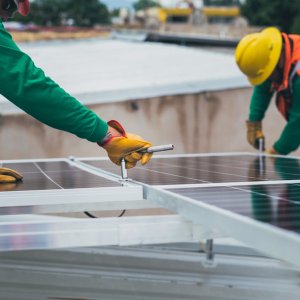
From there, we built a two-pronged offering. On one side, we act as distributors and representatives of specialized equipment. SACI and Circutor are our main partners in this regard. These brands allow us to cover a large portion of the low-voltage energy efficiency market. We also collaborate with other manufacturers such as Schneider Electric, particularly as we align with new Mexican regulatory requirements through continuous certification. We do not simply sell solar panels. We deliver complete turnkey photovoltaic systems designed to ensure an attractive return on investment (ROI) for our clients, whether residential, commercial, or industrial. These systems are also designed to generate measurable reductions in greenhouse gas emissions and raise awareness of each project's contribution to global sustainability goals.
On the other side, a fundamental part of our business is ensuring regulatory compliance through grid code solutions. Beyond energy efficiency and regulatory compliance, we are also exploring corporate sustainability through digital transformation. While still new in Mexico, we see growing demand for this. Many companies perceive sustainability as distant, complex, or expensive, but it does not have to be.
We partnered with AuraQuantic, a global leader in digital process automation, and are bringing their platform to Mexico through Grupo Plus, which handles implementation across the Americas. AuraQuantic overlays a company’s existing systems and consolidates all relevant data into a single platform. This provides leadership teams with real-time insights for decision-making, while simultaneously improving efficiency, shortening execution times, and allowing teams to shift focus from operational tasks to strategic planning.
We are also active in the electric vehicle (EV) charging segment. We work with Circutor and Volvo to offer both slow (experiential) and fast-charging solutions under our ENERGi brand. These are not just standalone products; we provide complete installation services and manage all related processes with CFE to ensure full system integration and compliance.
Q: What trends are you seeing in terms of new players entering the market or existing ones reinvesting?
A: In recent months, uncertainty has been a defining factor. The nearshoring phenomenon is not progressing as originally anticipated; it has stalled. Currently, the prevailing perception among the industrial players already established in Mexico is marked by hesitation. Uncertainty has begun to ease, nonetheless. It is largely tied to the natural process that unfolds during a change in government, and to the time it takes for new regulations to be defined and implemented.
Another critical factor has been the United States tariffs, which are expected to remain in place for at least another six years. The weight of the United States as Mexico’s primary economic partner has added another layer of complexity.
At ENERGi Color, we support incoming companies and those planning to enter the market by offering energy consulting. Our role involves helping clients identify the optimal interconnection node, reviewing their contracts, and navigating the regulatory landscape. We are not tied to any specific energy supplier, which gives us flexibility and independence in our assessments.
We help our clients to identify what can be controlled within that uncertainty. For instance, we cannot accelerate regulatory timelines or influence US policy directly, but we can offer a roadmap for how to navigate and manage uncertainty.
A crucial component that I have not yet mentioned is sustainability reporting, specifically Sustainability Information Standards (NIS). This is something new that we are actively promoting. These standards are designed to provide clear, region-specific sustainability metrics. For medium and large companies, gathering this data from multiple sources can be complex. Through our platform, we consolidate this information so decision-makers have clear visibility. We begin by conducting a diagnostic and then help companies build tailored solutions.
Large enterprises, such as PEMEX, CFE, and Walmart are already required to comply with these standards as entities of public interest. According to the Official Gazette, they must extend this compliance down their supply chains.
While companies like ours may not yet face a formal legal mandate under the Gazette, there is a de facto requirement to comply if we wish to remain part of the value chain.
Q: What opportunities might Mexico’s industrial and manufacturing sectors be missing if they fail to adopt sustainable strategies?
A: As outlined in the NIS, compliance acts as a risk filter. It provides a comprehensive and holistic view of a company's operations. For instance, while the NIS does not explicitly state that companies must comply with the grid code among its 30 indicators, failure to do so can result in financial penalties, increased warranty costs, or even more severe consequences, such as risks to employee safety.
Complying with the NIS places companies in a more competitive position, especially in relation to public entities. These include large corporations listed on the stock exchange as well as financial institutions, all subject to even more stringent standards, such as the ISRPE.
This regulation also has important implications for occupational safety. It requires companies to evaluate their energy sources and consumption practices, ensuring alignment with legal requirements. Traditionally, companies might engage several specialized providers to manage greenhouse gas assessments, energy efficiency, hazardous waste, and more. Although these services may be individually effective, the information remains scattered. The NIS consolidates this data, saving time and enabling better resource and budget management.
Q: What are your objectives for 2025 and what do you need to ensure a successful close to the year?
A: One of our primary goals is to strengthen our brand’s position within the electricity sector. We want to be recognized as a company capable of offering adaptive, client-specific solutions in energy and sustainability. Our aim is to be known for our ability to deliver cross-cutting, sustainable strategies tailored to each client’s needs.
We also have significant sustainability-related targets. We are a woman-led company, and currently, around 80% of our team are women. We are actively working toward certifications within the electrical sector, and our mission includes contributing meaningfully to a traditionally male-dominated industry. In Mexico, the electrical engineering field, including installation and maintenance, remains overwhelmingly male. Our intention is to challenge that dynamic.
In fact, under the new regulations for electric vehicle charger installation, companies must be certified under standard ECO-118. We have already taken that step. That means our entire team, including electrical engineers with 25 years of experience and newly trained technicians, are going through the same certification process together. It has also allowed us to explore new technologies and refresh critical knowledge.
Geographically, our main focus has been Mexico City and the surrounding metropolitan area. However, we have also worked with clients in Morelia, Monterrey, and Cancún. Our objective this year is to consolidate our presence in the central region and establish stronger roots in the Valley of Mexico.
Energi Color is a Mexican company specialized in sustainable energy solutions and digital transformation services. Established in 2022 and headquartered in Mexico City, the company offers a range of services aimed at enhancing energy efficiency and promoting renewable energy adoption across various sectors.



Most popular








