

Mexico City Exposes the Limits of Copy-Paste 'Best Practices'



STORY INLINE POST






 By Guillermo Bernal | Executive Director -
Fri, 01/16/2026 - 07:00
By Guillermo Bernal | Executive Director -
Fri, 01/16/2026 - 07:00
Across cities worldwide, the same urban solutions keep circulating. The iconic plaza. The innovation district. The pedestrian corridor. The imported bike lane. They are packaged as “best practices,” ready to be deployed anywhere. The intention is often positive. The cost usually appears later.
Cities are not products. They are living systems. Yet, many urban decisions continue to treat them as scalable assets, assuming that what worked in one place can simply be replicated elsewhere. When leaders repeat “best practices” without translating them to local conditions, they introduce long-term risk, not only for cities, but also for the companies and institutions that invest in them.
The issue is not ambition or lack of capital. It is a misunderstanding of how cities actually work.
In my work, I often use a simple metaphor: cities are kitchens, not factories. You can share recipes, but you cannot assume the same ingredients, tools, timing, or skills. A dish that works in one kitchen may fail in another if you ignore what is locally available and how people actually cook and eat. Urban “best practices” fail for the same reason. Too often, we copy the image and skip the recipe.
Mexico City offers a clear illustration.
Over the last two decades, the city has repeatedly experimented with imported mobility and public space ideas framed as symbols of progress. One influential global reference has been the High Line in New York City, an elevated linear park that opened in 2009 on a former freight rail line and quickly became a global model for urban regeneration.
Inspired by that success, Mexico City announced the Corredor Cultural Chapultepec in 2014. The proposal, made public in 2015, sought to create an elevated cultural promenade along Avenida Chapultepec, rebalance a car-dominated corridor, and attract investment. Comparisons to the High Line were immediate. What the project lacked was local legitimacy and trust. After public debate and a citizen consultation in December 2015, the proposal was rejected and ultimately canceled. The opposition was not to public space itself, but to a copied symbol without sufficient adaptation to governance, everyday use, and local priorities. The image traveled. The process did not.
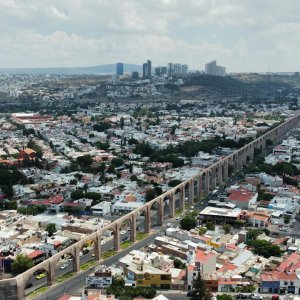
A similar question emerges today along Calzada de Tlalpan, where an elevated pedestrian corridor and linear park is currently under construction as part of Mexico City’s preparations for the FIFA World Cup 2026. The project aims to improve pedestrian safety and connectivity along a heavily trafficked avenue by separating foot traffic from street level and adding new public space above the Metro Line 2 right-of-way. The ambition is clear. The symbolism is strong. What remains uncertain is whether the project will meaningfully transform everyday street life below or simply add another layer of infrastructure without addressing ground-level crossings, commerce, and social interaction. The form is arriving first. The lived experience will determine its value.
These are not design mistakes. They are strategic errors.
For the C-suite and government officials, this is not an aesthetic debate. It is an operational risk.
When “best practices” are copied without local translation, the consequences appear quickly in familiar terms: capital inefficiency, reputational exposure, and declining performance. Projects become overbuilt and underused. Activation turns into a permanent operating cost. Backlash delays permits and partnerships. Even when an asset looks successful at launch, the weak point is rarely the architecture. It is the operating system: governance, maintenance, stewardship, and the ability to adapt over time.
Markets and street economies offer a counterexample. Mexico City’s food ecosystem evolves quickly, self-regulates, and responds to demand. The taco stand adapts faster than the restaurant. That is entrepreneurship. That is resilience. The solution already exists locally. The challenge is not to replace it with imported models, but to recognize it, support it, and strengthen it.
Best practices are not the problem. Treating them as templates is.
Best practices are signals of what might work. Risk begins when they are treated as finished solutions rather than hypotheses. Copying outcomes without understanding the process turns learning into liability.
The alternative is translation.
A place-led strategy begins with observation before construction. Who uses the space, at what time, and for what purpose. What are the local ingredients: climate, street culture, informal economies, governance capacity, maintenance realities, and trust levels. Who will own the space after the ribbon-cutting, and with what incentives. What can be adjusted quickly when conditions change.
Cities that perform well are not the ones that copy faster. They are the ones that adapt smarter. Moving forward requires shifting beyond the idea of “smart cities” focused only on efficiency, toward emotionally intelligent cities: places that understand human behavior, daily rhythms, and social life as core infrastructure. Value is created locally, even when inspiration comes globally.
For executives engaging with cities, the critical question is no longer, “What worked elsewhere?” but “What will work here, with these people, under these conditions, and who will keep it working?”
You May Like






Most popular








